What is Craniofacial Surgery, Including Craniosynostosis, and what concerns does it address?
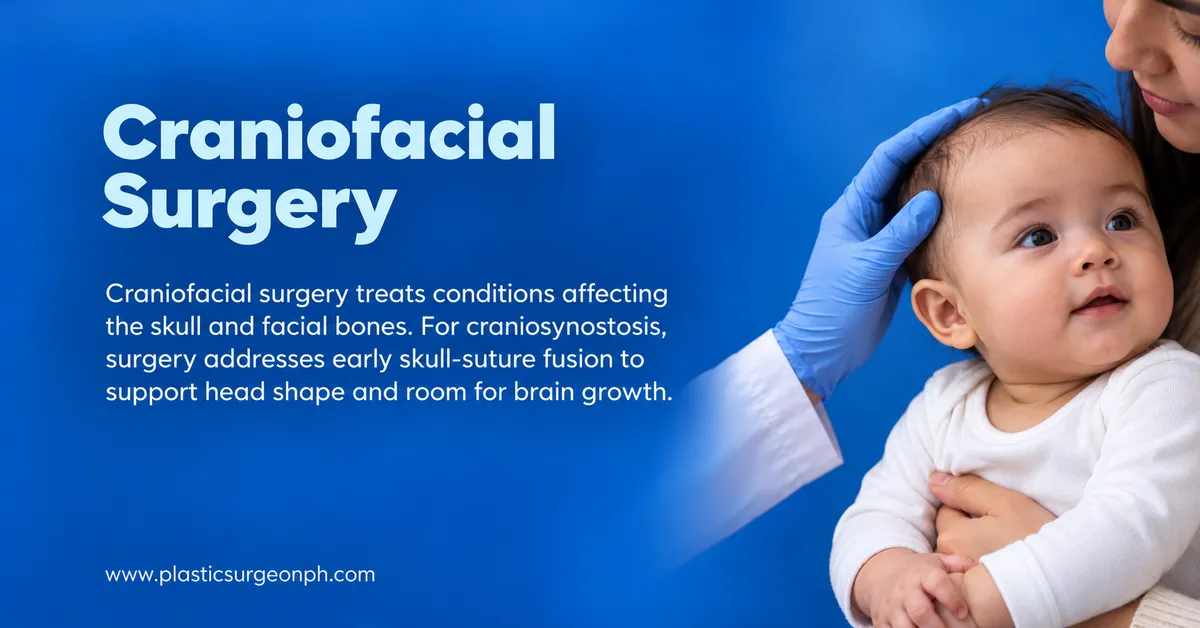
Craniofacial Surgery, Including Craniosynostosis treats differences or injuries of the skull, face, jaws and orbits, often in children and often through a specialized multidisciplinary team. Craniofacial surgery may address craniosynostosis, facial fractures, craniofacial syndromes, skull defects, orbital problems, tumor-related defects and complex congenital differences. Craniosynostosis occurs when one or more skull sutures fuse too early, which can alter head shape and, in some children, contribute to raised pressure inside the skull. This is time-sensitive pediatric care, not a cosmetic procedure. A consultation should distinguish an aesthetic preference from symptoms that need medical assessment first. The safest plan is always based on anatomy, health, skin quality and the change that is genuinely achievable, rather than a filter, a single photograph or a fixed package. This work overlaps with congenital difference reconstruction when differences in skull or facial development need coordinated specialist care. A child with a cleft may also need the staged care described in cleft lip and palate surgery, which follows a different timetable.
Who is a good candidate for Craniofacial Surgery, Including Craniosynostosis, and who is not?
A good candidate is generally children or adults with a confirmed craniofacial condition whose function, brain growth, vision, airway, feeding, speech, protection of the eyes or severe skeletal deformity may benefit from specialist reconstruction. They should be at or near a stable weight, able to stop smoking and vaping as instructed, and prepared to follow aftercare. Craniofacial Surgery, Including Craniosynostosis is usually not appropriate for a child with an unconfirmed head-shape difference who has not first had pediatric and craniofacial assessment, patients with untreated medical instability or infection, or anyone expecting surgery to guarantee normal development, appearance or psychosocial outcomes. An experienced surgeon may recommend treatment of a medical issue, a period of weight stability, counselling, or a different procedure before elective surgery.
What are the different types or techniques used in Craniofacial Surgery, Including Craniosynostosis?
For craniosynostosis, selected infants may be candidates for endoscopic suture release followed by helmet therapy. Open cranial vault remodeling reshapes skull bones and is commonly used for more severe, later-presenting or syndromic cases. Posterior vault expansion may increase intracranial volume in selected syndromes. Other craniofacial operations use bone grafts, distraction devices, plates, resorbable fixation, orthognathic surgery, orbital reconstruction or customized implants depending on diagnosis and age. There is no universally best technique. Your surgeon should explain the incision, tissue plane, device or graft if relevant, what is reversible, and why a more conservative or staged approach may be safer for your body.
Are there non-surgical alternatives to Craniofacial Surgery, Including Craniosynostosis?
some positional head-shape differences improve with repositioning, physiotherapy or helmet treatment, but these do not correct true fused sutures. Observation is appropriate for selected stable differences. Any infant with abnormal head shape, developmental concern, vomiting, eye changes or breathing difficulty needs prompt medical assessment. Non-surgical options can be worthwhile when they match the concern, but they should not be sold as equal to a surgical correction when they cannot address the same anatomy. A responsible consultation compares likely benefit, downtime, cost over time and risk rather than treating surgery as the only answer.
How do I prepare for Craniofacial Surgery, Including Craniosynostosis?
Preparation commonly includes pediatric, neurosurgical, craniofacial, ophthalmic and anesthetic evaluation; CT or other imaging when indicated; genetic assessment for syndromic cases; blood planning; airway review; nutrition; vaccination and infection review; and detailed family counselling about timing, hospital stay and follow-up. Give the surgical team a complete list of prescribed medicines, supplements, allergies, previous operations and anesthesia problems. Do not stop prescribed blood thinners or other medicines without the doctor who prescribed them. Arrange a responsible adult, transport and recovery support if anesthesia or sedation is planned.
How is Craniofacial Surgery, Including Craniosynostosis performed, and how long does it take?
The surgical team exposes the affected skull or facial bones, releases fused sutures or repositions bone segments, and fixes them with age-appropriate plates, sutures, springs, distractors or grafts. In endoscopic surgery, smaller incisions are used in eligible young infants, followed by carefully supervised helmet therapy. Some syndromic children need staged cranial, orbital and facial operations as they grow. The length of surgery is usually about two to eight hours, depending on the diagnosis, child’s age, approach and whether neurosurgery or other specialties are involved. Timing varies with anatomy, safety checks, whether both sides are treated and whether another operation is combined. A longer operation is not automatically a better one. Careful planning, meticulous bleeding control and safe closure are more important than speed.
What type of anesthesia is used, and who administers it?
general anesthesia administered by a pediatric consultant anesthesiologist in a tertiary hospital, often with blood-conservation and intensive-monitoring capabilities. Before surgery, disclose snoring or sleep apnea, heart or lung disease, allergies, previous nausea after anesthesia and every medicine or supplement you use. In the Philippines, ask who will administer the anesthetic, what credentials they hold, and whether the facility is equipped for the planned level of care.
What results can I realistically expect, and when will I see them?
Head and facial shape changes are visible early but swelling can be substantial. The aim includes safe space for brain growth, protection of vision and airway, and improved skeletal form. Developmental outcome varies with the underlying condition and cannot be promised by surgery alone. Further growth may require later procedures. The aim is improvement in proportion, function or reconstruction, not perfection. Natural asymmetry, healing differences and ongoing ageing remain. Review before-and-after photographs of patients with similar anatomy, and ask what would count as an acceptable result, a complication and a possible revision in your own case.
Will I have scars after Craniofacial Surgery, Including Craniosynostosis, and how visible will they be?
Incisions are often placed within the scalp and become largely hidden by hair, but may include facial, eyelid, mouth or jaw scars depending on the reconstruction. Children with limited hair or previous scars may show them more visibly. Scar quality is influenced by incision tension, infection, sun exposure, genetics, skin tone, nicotine use and aftercare. Once the wound has healed, silicone-based scar care, sun protection and, when needed, supervised scar treatment may improve appearance. No surgeon can promise an invisible scar.
What are the risks and possible complications of Craniofacial Surgery, Including Craniosynostosis?
All operations carry general risks such as anesthesia reaction, bleeding, infection, blood clot, delayed healing, pain, numbness, poor scarring, asymmetry and the need for revision. Procedure-specific concerns include blood loss and transfusion, infection, cerebrospinal fluid leak, seizure, neurological injury, vision or eye-movement problems, airway complications, skull contour irregularity, implant or hardware issues, need for helmet therapy or staged surgery, scar problems and risks related to the underlying syndrome. Seek urgent medical advice for severe or escalating pain, sudden swelling, fever, breathlessness, chest pain, wound separation, foul drainage, loss of color or sensation, or any symptom your surgeon identifies as urgent.
What is recovery like after Craniofacial Surgery, Including Craniosynostosis, and how long does it take?
Hospital stay often includes close neurological monitoring, pain management and attention to feeding, sleep, vision and swelling. Families need clear instructions on wound care, safe sleep, warning signs and when to seek emergency care. Recovery extends beyond discharge because head growth and development require surveillance. Recovery is not only about when you feel well enough to go out. Internal healing and scar maturation take longer than the first visible improvement. Follow the written instructions from your own team because the appropriate restrictions can change when procedures are combined, drains are used, or healing is slower than expected.
When can I return to work, exercise, and normal activities?
For work, children usually need several weeks before returning to school or daycare, depending on age and operation. Adults with craniofacial trauma or reconstruction may need several weeks to months. activity is reintroduced gradually. Infants and children require head-injury protection. Contact sports, rough play, swimming and activities that risk a fall or head impact are restricted until the craniofacial team clears them. Return to driving only when you are no longer taking sedating pain medicines and can make an emergency movement comfortably. Household tasks, travel and intimacy should also be cleared according to the operation, because a wound can look healed before deeper tissues are strong enough for strain.
What aftercare and follow-up appointments are required?
long-term team follow-up may include neurosurgery, plastic surgery, ophthalmology, ENT, dentistry, orthodontics, speech therapy, psychology and developmental services. Craniosynostosis surveillance can continue through childhood. Keep all appointments even if you feel well. Follow-up lets the team detect fluid collection, infection, scar problems, implant issues or functional concerns early. Take photographs only as instructed, maintain a list of questions, and contact the clinic promptly instead of relying on online advice if something feels wrong.
How long do the results of Craniofacial Surgery, Including Craniosynostosis last?
The surgical correction is durable, but skull and facial growth continue. Syndromic and complex conditions may need staged procedures. The quality of life benefit comes from coordinated long-term care, not one operation alone. A healthy lifestyle supports but does not freeze a result. Ask how pregnancy, weight change, sun exposure, exercise, illness, devices or implants may affect longevity in your situation, and whether future maintenance, imaging or revision should be part of your financial plan.
How much does Craniofacial Surgery, Including Craniosynostosis cost in the Philippines, and what is included in the price?
As a broad private-sector planning guide in the Philippines, Craniofacial Surgery, Including Craniosynostosis may cost PHP 500,000 to PHP 2,000,000 or more. This is not a quotation and can change with the surgeon’s experience, city, hospital, medical complexity, anesthesia, implants or grafts, and whether the procedure is reconstructive. Quotes must cover imaging, blood products, pediatric anesthesia, neurosurgery, implants or distractors, ICU or high-dependency care, hospital stay, helmet therapy where used, genetic tests, and lifelong multidisciplinary follow-up. Obtain a written, itemized estimate and confirm which costs apply if an overnight stay, pathology, complication treatment or revision becomes necessary.
Thank you for sharing this article...
About the Author: Joan de Alta

View Surgeon Profiles

Completed plastic and reconstructive surgery training at MakatiMed in 2020.



Explore Available Clinics



Browse Other Procedures
Skin cancer reconstruction repairs tissue defects after cancer is removed.