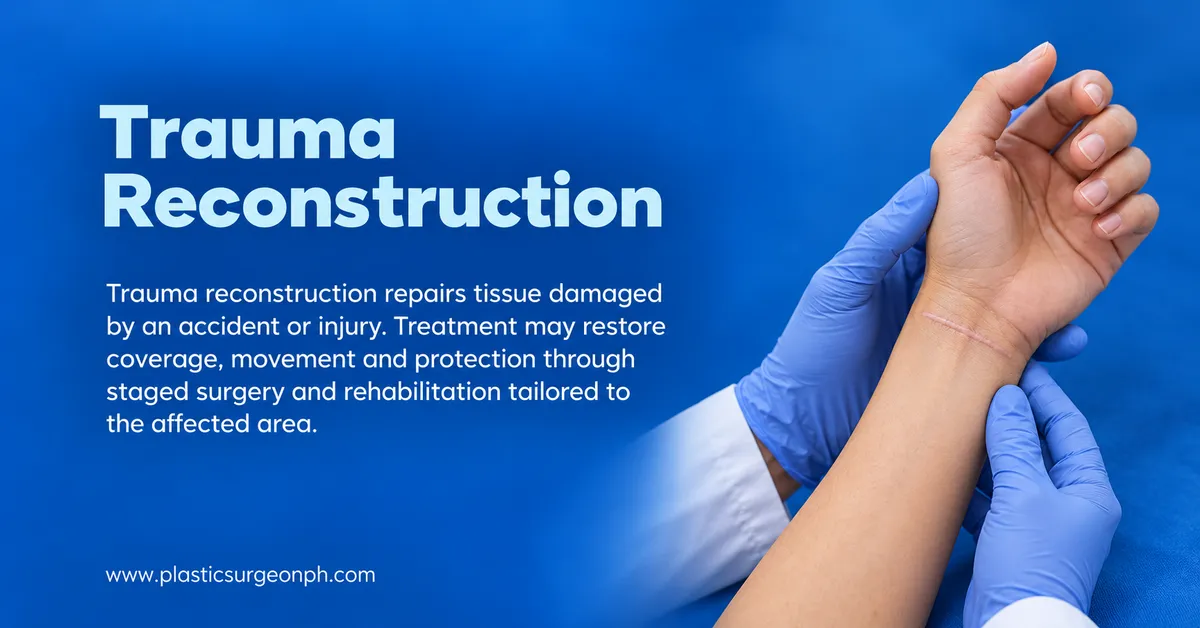
Reconstruction after an accident is rarely one isolated procedure. A road crash, machinery injury, fall, bite, blast or violence can damage skin, muscle, tendon, nerve, vessel and bone at the same time. The first priority is survival and control of bleeding or contamination. Reconstructive planning then aims to save useful tissue, restore protection and movement, and reduce long-term deformity. Treatment may start on the day of injury and continue through rehabilitation and later refinement.
What is Trauma Reconstruction, and what concerns does it address?
Trauma reconstruction repairs body parts damaged by acute injury. It may involve the face, scalp, chest, abdomen, limbs, hands or perineum and can address open wounds, exposed bone or hardware, missing tissue, fractures, severed tendons or nerves, damaged blood vessels and unstable scars. Facial reconstruction also considers eye protection, bite, breathing and expression. Limb reconstruction seeks durable coverage and useful movement while preventing infection and amputation when safely possible. Surgery cannot always restore the exact pre-injury appearance, strength or sensation. Its practical goal is the safest achievable combination of wound closure, function, comfort and form. If an injury also damages a nerve, nerve repair and reconstruction may need to be coordinated with the wound and soft-tissue plan. A clean, well-vascularised trauma wound may be covered with skin grafting when deeper structures do not need a flap.
Who is a good candidate for Trauma Reconstruction, and who is not?
Candidates include medically stable patients with a wound or deformity that benefits from repair, coverage, tissue transfer or staged reconstruction. Urgent surgery may be necessary even when the patient is not yet ideal, but life-threatening bleeding, brain, chest or abdominal injury is treated first. Severe infection, non-viable tissue, poor circulation, uncontrolled diabetes, malnutrition and nicotine use can limit reconstructive choices. A limb with irreversible muscle death, prolonged loss of blood flow or overwhelming contamination may be safer to amputate than salvage. This is a team decision, not a failure. Age alone does not exclude reconstruction, but health, rehabilitation potential, patient goals and available expertise all influence candidacy.
What are the different types or techniques used in Trauma Reconstruction?
Initial techniques include irrigation, removal of dead or contaminated tissue, fracture fixation and repair of vessels, tendons and nerves. A clean small wound may close directly. Larger defects can need a skin graft, local flap, regional flap or microsurgical free flap. Bone loss may be managed with grafting, vascularised bone, distraction or specialised fixation. Facial fractures use plates and screws to restore position and bite. Tendon or nerve grafts and transfers can restore selected movement later. Negative-pressure wound therapy may temporarily protect a wound between operations. Scar revision, fat grafting, tissue expansion, prosthetic preparation and secondary contouring are possible after healing.
Are there non-surgical alternatives to Trauma Reconstruction?
Minor stable wounds, selected fractures and nerve injuries may be managed with dressings, splints, casts, antibiotics, observation or therapy. Negative-pressure wound treatment can prepare a wound, but it does not permanently cover exposed bone, tendon or major hardware. Physiotherapy, occupational therapy, scar management, pain care, prosthetics and counselling can improve function whether or not surgery is performed. A prosthesis may sometimes provide better overall function than repeated limb-salvage operations. Non-surgical care cannot reconnect a divided tendon, restore blood flow to an ischaemic part or remove dead infected tissue. In urgent trauma, delaying a necessary operation to try an unsuitable alternative can permanently reduce the chance of recovery.
How do I prepare for Trauma Reconstruction?
Emergency preparation happens quickly. Tell the team when and how the injury occurred, including dirty water, soil, animal bites, chemicals or high-pressure injection. Report medicines, allergies, tetanus status, last meal and medical conditions. Do not eat or drink unless staff permit it. Photographs, X-rays, CT scans, angiography, blood tests and wound cultures may guide the plan. For delayed reconstruction, optimise nutrition, anaemia, diabetes and infection control, and stop all nicotine. Discuss donor sites, possible blood transfusion, hardware, expected therapy and what would change the plan during surgery. Arrange caregiving and transport because injured patients often need more help than cosmetic-surgery patients.
How is Trauma Reconstruction performed, and how long does it take?
The team first explores the injury, controls bleeding and repeatedly removes tissue that cannot survive. Bones may be aligned and stabilised, then arteries, veins, tendons and nerves repaired when appropriate. The surgeon chooses the simplest coverage that is safe and durable, from direct closure or graft to local, regional or free flap. The sequence may be completed in one operation or staged until contamination and tissue viability are clear. A straightforward wound repair may take one to two hours. Complex facial fixation, tendon repair or flap coverage may take four to eight hours. Replantation or free-flap limb salvage can take eight to twelve hours or more.
What type of anesthesia is used, and who administers it?
Small clean wounds may be treated with local anaesthesia. Many hand or limb operations can use a regional block, sometimes with sedation. Major, contaminated, paediatric, facial or multisystem injuries usually require general anaesthesia. A qualified anaesthesiologist administers and monitors sedation, blocks or general anaesthesia, manages fluids, temperature, blood loss and transfusion, and coordinates pain control. Emergency patients may have a full stomach, blood loss or hidden injuries, increasing anaesthetic risk. The hospital should have appropriate imaging, blood bank, intensive care and specialty support for the case. For long reconstruction, ask how the team prevents pressure injury, hypothermia and blood clots.
What results can I realistically expect, and when will I see them?
Successful wound coverage may be visible immediately, but swelling, dressings and external fixation hide the final contour. Bone, tendon and nerve recovery takes much longer. Fractures commonly need weeks to months to unite, tendons require protected rehabilitation, and nerves regrow slowly and not always completely. A free flap may look bulky before later thinning. Functional improvement can continue for one to two years, especially after nerve injury. Some weakness, stiffness, numbness, pain, asymmetry or colour difference may remain. The best result is often a stable, pain-controlled part that supports useful activity. Exact restoration of pre-injury strength, sensation or appearance cannot be promised.
Will I have scars after Trauma Reconstruction, and how visible will they be?
Yes. The original injury already creates scarring, and reconstruction adds incisions and possibly graft or flap donor sites. Irregular traumatic wounds may heal less predictably than planned surgical cuts because tissue has been crushed or contaminated. Surgeons preserve viable tissue and place additional incisions along useful lines when the emergency allows. Grafts can differ in colour and texture, while flaps may have a visible border or bulk. Facial scars often fade considerably but remain permanent. Scar maturation takes 12 to 18 months or longer. Later scar revision can improve selected problems, but it should not sacrifice function or delay essential fracture, nerve or wound treatment.
What are the risks and possible complications of Trauma Reconstruction?
Risks include bleeding, transfusion, infection, tetanus, poor healing, tissue death, pain, numbness, stiffness, blood clots and anaesthetic complications. Fractures may not unite or can heal in the wrong position, and plates or screws can become infected or prominent. Repaired tendons may stick or rupture, and nerves may recover incompletely or form painful neuromas. Grafts or flaps can partly or completely fail. Compartment syndrome, loss of blood supply and severe infection can threaten a limb or life and require urgent surgery or amputation. Additional operations are common after complex trauma. Psychological effects such as anxiety, low mood or post-traumatic stress also deserve active treatment.
What is recovery like after Trauma Reconstruction, and how long does it take?
Recovery ranges from days after a simple repair to many months after limb salvage or facial reconstruction. Early care may include antibiotics, drains, dressings, elevation, splints, feeding support, blood-thinning medicine and repeated wound checks. Pain and swelling are expected but should gradually improve. Therapy begins as soon as tissues can tolerate it, balancing protection with prevention of stiffness. Some patients require inpatient rehabilitation or home nursing. Bone healing often takes six to twelve weeks or longer, while nerve and tendon recovery may continue for a year or more. A staged plan can include later bone grafting, scar release, flap thinning, implant removal or functional transfer.
When can I return to work, exercise, and normal activities?
Return depends on the injured structure, not simply wound closure. Desk work after a limited facial or upper-limb repair may be possible in two to four weeks, while construction, driving, factory work or lifting may require three to six months or longer. Weight bearing follows the fracture and flap plan. Contact sport waits until bones, soft tissue and balance are safe. A person with one working hand may need modified duties and transport help. Never drive while taking sedating pain medicine, wearing a restrictive splint or unable to make an emergency manoeuvre. A graded work assessment by the surgical and rehabilitation team is safer than a fixed generic deadline.
What aftercare and follow-up appointments are required?
Take antibiotics and pain medicines exactly as prescribed, protect splints and dressings, elevate injured limbs and follow weight-bearing limits. Attend all wound, fracture and therapy appointments. Seek urgent care for worsening pain, tight swelling, new numbness, fever, pus, foul odour, persistent bleeding, blue or cold fingers or toes, shortness of breath, or a pale, dark or congested flap. Later reviews monitor bone union, hardware, movement, nerve recovery, scars and emotional health. Therapy is part of treatment, not an optional extra. Keep copies of operative notes and imaging because staged care may involve several hospitals or specialists over time.
How long do the results of Trauma Reconstruction last?
Durable bone fixation, healed tendons and stable flap coverage can last for life. Results can change with arthritis, scar tightening, growth, muscle imbalance, chronic infection or wear around hardware. Sensation may improve for years but can remain altered. Some plates and screws stay permanently, while others are removed only if they cause a problem or the surgeon planned removal. A salvaged limb may need later procedures, and a prosthetic user requires periodic fitting and replacement. Avoiding nicotine, maintaining strength and weight, protecting numb skin and seeking early care for wounds help preserve the reconstruction. Long-term success is measured by safe use and quality of life.
How much does Trauma Reconstruction cost in the Philippines, and what is included in the price?
Trauma has no meaningful single package price. A limited wound repair may cost about PHP 50,000 to PHP 150,000 in a private hospital, while fixation plus graft or flap coverage may be PHP 150,000 to PHP 500,000. Complex limb salvage, replantation, intensive care or several stages can exceed PHP 1,000,000. Ask for separate estimates for emergency care, surgeon and anaesthesiologist fees, implants, imaging, pathology or cultures, operating room, blood, hospital or ICU stay, medicines, dressings, rehabilitation and later surgery. PhilHealth case rates may reduce eligible bills, but they are not total charges. Government hospitals, Malasakit Centres and other assistance programmes may help qualified patients with remaining costs.
Thank you for sharing this article...
About the Author: Joan de Alta

View Surgeon Profiles

Certified as a Diplomate by the Philippine Board of Plastic Surgery (PBPS).



Explore Available Clinics



Browse Other Procedures
Buttock implants add volume to improve buttock contour and its projection.
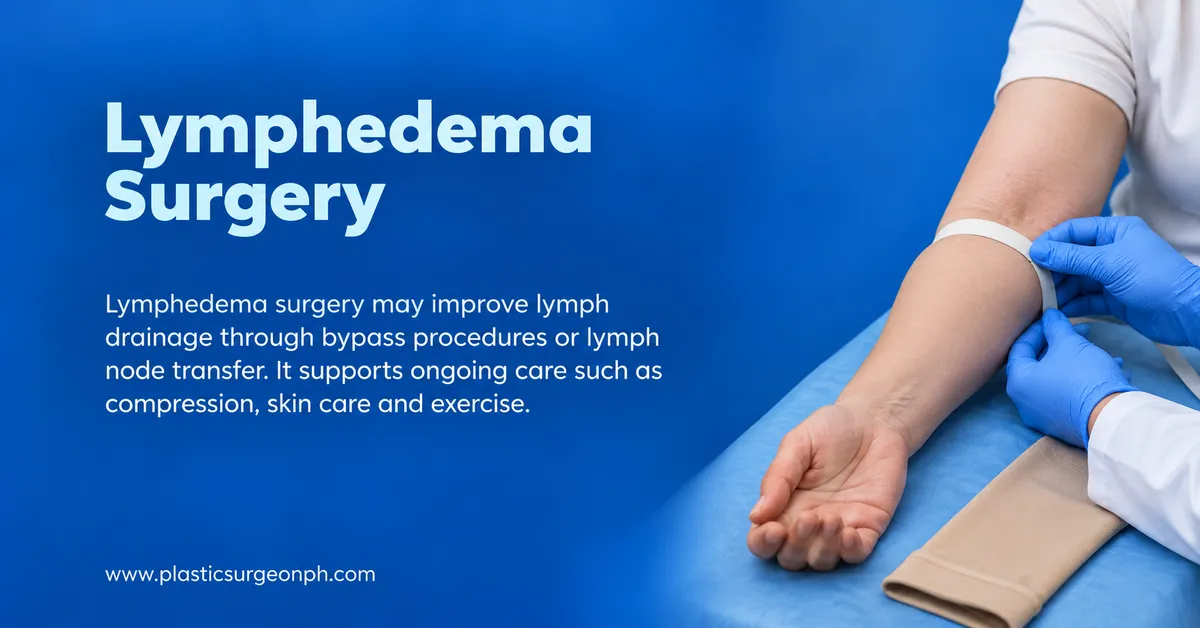
Lymphedema surgery aims to improve lymph drainage or reduce limb swelling.