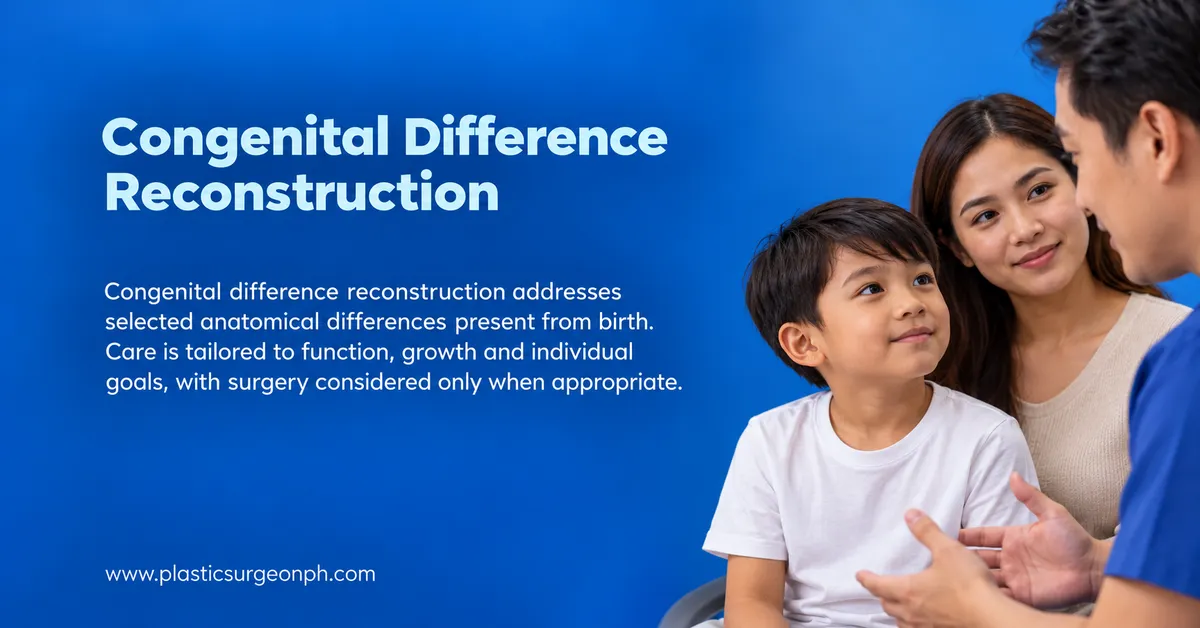
A congenital difference is a body feature present at birth. It may affect appearance, function or both, and it may occur alone or as part of a genetic condition. Respectful care begins by recognising that difference is not the same as defectiveness. Not every child needs or wants surgery. When reconstruction is appropriate, the plan should support health, development, independence and the person’s own goals, with timing chosen around growth and family circumstances rather than social pressure alone.
What is Congenital Difference Reconstruction, and what concerns does it address?
Congenital difference reconstruction includes operations for craniofacial, ear, hand, limb, chest, skin, genital and other anatomical variations present from birth. Examples include craniosynostosis, prominent or underdeveloped ears, facial asymmetry, syndactyly, polydactyly, absent structures, vascular anomalies and differences in bone growth. Cleft lip and palate has its own specialised pathway. Reconstruction may protect the brain or eyes, improve breathing, hearing, feeding, grasp, walking or toileting, and create better balance or symmetry. Some procedures are urgent for health, while others are optional and appearance-focused. The aim is useful, proportionate anatomy and psychosocial wellbeing, not forcing every body to match one narrow idea of normal. A child with a cleft may need the specialised care described in cleft lip and palate surgery, while other congenital differences need different plans. Differences involving skull growth call for the more focused evaluation described in craniofacial surgery, including craniosynostosis.
Who is a good candidate for Congenital Difference Reconstruction, and who is not?
Candidates have a difference for which surgery offers a reasonable functional, protective or personally meaningful benefit. Timing considers diagnosis, growth, anaesthetic safety, developmental milestones and the child’s ability to participate in aftercare. Parents consent for young children, but the child’s developing views should be heard whenever possible. Surgery may be deferred when benefit is uncertain, medical conditions are unstable, infection or malnutrition is present, or intervention would interfere with growth without an urgent reason. A child who functions well may appropriately choose observation. Adults with untreated or previously reconstructed differences can also be candidates. Family distress alone should not outweigh the patient’s welfare and future autonomy.
What are the different types or techniques used in Congenital Difference Reconstruction?
Soft-tissue methods include direct closure, Z-plasty, local flaps, skin grafts, tissue expansion and fat grafting. Bone reconstruction may use osteotomy, reshaping, grafting, plates, springs or distraction osteogenesis, which gradually moves bone as new bone forms. Ear reconstruction can use cartilage, an implant or a prosthesis. Hand surgery may separate joined digits, remove or reconstruct an extra digit, deepen a web space, transfer a tendon or create a more useful thumb. Microsurgery can transfer a toe or other tissue in selected limb differences. Vascular anomalies may need medicines, laser, sclerotherapy or surgery. Procedures are often staged because children grow and one safe operation cannot address every layer.
Are there non-surgical alternatives to Congenital Difference Reconstruction?
Yes. Observation is valid when the difference does not threaten health or function and the patient does not want surgery. Orthoses, prostheses, hearing devices, dental appliances, physiotherapy, occupational therapy, speech therapy and adaptive tools may provide excellent independence. Helmet therapy has a limited role in selected skull-shape conditions but does not replace surgery for true craniosynostosis. Some vascular anomalies respond to medicines, laser or sclerotherapy. Ear moulding may improve certain newborn ear shapes when started early. Psychological and peer support help families navigate questions and stigma. Non-surgical care can be chosen alone or alongside surgery, and a person may reconsider the decision later as needs and preferences change.
How do I prepare for Congenital Difference Reconstruction?
Preparation begins with a precise diagnosis and multidisciplinary assessment. Depending on the condition, this may involve plastic surgery, paediatrics, genetics, neurosurgery, orthopaedics, ear, nose and throat care, dentistry, hearing, therapy and psychology. The team reviews birth history, growth, feeding, development, previous operations and family history. Tests may include photographs, X-rays, CT or MRI, hearing studies and blood work. Ask why the proposed age is preferred and what happens if surgery is delayed or declined. Treat infection, optimise nutrition and follow fasting and medicine instructions. Families should arrange leave, transport, school support, equipment and realistic caregiving for the recovery period.
How is Congenital Difference Reconstruction performed, and how long does it take?
The procedure depends entirely on the anatomy. A small extra digit may be removed and the supporting nerve, tendon or joint reconstructed. Joined fingers may be separated with planned flaps and skin grafts. Skull surgery releases fused sutures and reshapes bone, while distraction uses an implanted device adjusted gradually after surgery. Ear reconstruction builds a framework and covers it with local tissue. Some operations reposition muscles, cartilage or bone and secure them with sutures, wires, plates or resorbable materials. A limited soft-tissue procedure may take one to two hours. Hand, ear or craniofacial reconstruction may take four to eight hours or longer, and staged operations may be separated by months or years.
What type of anesthesia is used, and who administers it?
Most congenital reconstruction in children uses general anaesthesia so the child remains unconscious, still and pain-free with a protected airway. Local anaesthetic or regional blocks may be added to reduce postoperative pain. A paediatric anaesthesiologist or an anaesthesiologist experienced with children administers anaesthesia and monitors breathing, circulation, temperature and blood loss. Small procedures in cooperative older patients may use local anaesthesia with or without sedation. Craniofacial conditions can be associated with difficult airways or significant blood loss, so the hospital’s paediatric intensive care and blood bank capabilities matter. Ask who will provide anaesthesia and how the team handles the child’s specific medical or airway risks.
What results can I realistically expect, and when will I see them?
The structural change may be visible immediately, but swelling, dressings and casts initially hide detail. Function develops with healing, growth and therapy. Separated fingers may need months to gain motion, a reconstructed ear settles over many months, and bone reshaping changes as the face grows. One operation may improve a major concern without producing perfect symmetry or completely typical strength, sensation, hearing or movement. Additional procedures may be planned from the beginning. The result should be assessed by health, comfort, participation and the patient’s own satisfaction, not only by photographs. Families deserve honest discussion of what surgery can improve, what it cannot change and which later stages are likely.
Will I have scars after Congenital Difference Reconstruction, and how visible will they be?
Yes. Scars occur at the reconstructed area and at any graft or donor site. Surgeons place incisions along creases or anatomical boundaries when possible, but safe access and blood supply take priority. Hand separation often creates zigzag scars and may need groin or arm grafts. Ear reconstruction leaves scars around the ear and possibly on the chest if rib cartilage is used. Craniofacial incisions are commonly hidden in the hair but can still widen or affect hair growth. Children’s scars grow with them but may tighten or become raised. Sun protection, silicone or massage may be advised after healing. No responsible surgeon can guarantee that scars will disappear.
What are the risks and possible complications of Congenital Difference Reconstruction?
General risks include bleeding, infection, wound opening, poor healing, pain, anaesthetic problems and an unfavourable scar. Depending on the operation, there may be graft or flap loss, injury to nerves or vessels, stiffness, altered sensation, asymmetry, hair loss, hardware problems, bone relapse or impaired growth. Craniofacial surgery has uncommon but serious risks involving blood loss, brain coverings, vision or airway. A separated web space can creep forward again, and an ear framework can become exposed. Some children need transfusion or intensive care. Further surgery may be required because of complications or expected growth. The condition-specific consent discussion is more useful than a generic list.
What is recovery like after Congenital Difference Reconstruction, and how long does it take?
Recovery ranges from several days after a small procedure to months after major bone or hand reconstruction. Children may wake with dressings, splints, drains or a cast and need scheduled pain relief. Swelling is often most noticeable during the first week. Hand procedures may require elevation and therapy, while craniofacial operations may need several days in hospital and close observation. Basic wounds commonly heal in two to three weeks, but grafts, bones and scars take longer. Keep routines calm and age-appropriate and prepare siblings for temporary changes. Later therapy, device adjustments or a second stage may continue after the child has otherwise returned to usual daily life.
When can I return to work, exercise, and normal activities?
Parents may need one to three weeks away from work after a limited operation and longer after major craniofacial or limb surgery. A child may return to school in one to three weeks when comfortable and able to manage dressings, but physical education, playground activity, swimming and contact sport are restricted until healing is secure. Hand or bone reconstruction may require six to twelve weeks of protection. Adults having congenital revision often resume desk work in one to three weeks, with manual work later. The surgeon should provide a school or employer letter explaining safe activities without disclosing unnecessary personal details. Timing is based on the procedure, not the diagnosis label alone.
What aftercare and follow-up appointments are required?
Follow the written plan for dressings, bathing, medicines, splints, device adjustments and activity. Seek urgent advice for breathing difficulty, persistent bleeding, fever, worsening redness, severe pain, vomiting with poor intake, a cold or blue digit, wound opening or a damaged cast. Early visits check healing and remove sutures, drains or pins. Later reviews measure growth, function, hearing, bite, movement, scar quality and psychosocial adjustment. Therapy or dental care may continue between surgical visits. Keep records and imaging because the care team may change as the child grows. Long-term follow-up should invite the young person’s questions and increasingly involve them in decisions about further treatment.
How long do the results of Congenital Difference Reconstruction last?
Many corrections are durable for life, but childhood growth can reveal new imbalance, tighten scars or alter bone and soft-tissue relationships. A reconstructed ear framework can be permanent, separated digits usually remain separate, and corrected bone can remain stable, yet later refinement may still help. Some devices are removed after healing, while implants may eventually need replacement. Conditions involving progressive growth or vascular tissue may require ongoing treatment. Planned stages are not necessarily repeat failures. They allow reconstruction to match development. Long-term success is best measured by safe function, comfort, participation and the patient’s continuing choice, with further surgery offered only when its expected benefit justifies the burden.
How much does Congenital Difference Reconstruction cost in the Philippines, and what is included in the price?
Cost is highly condition-specific. A limited private soft-tissue or extra-digit procedure may be about PHP 50,000 to PHP 150,000, while hand, ear or bone reconstruction may be PHP 150,000 to PHP 500,000 per stage. Major craniofacial or microsurgical treatment can exceed PHP 800,000, particularly with implants, blood products or intensive care. Obtain an itemised estimate covering all surgeons, anaesthesiologist, hospital, imaging, implants, grafts, tests, medicines, splints, therapy and follow-up. PhilHealth offers procedure-specific case rates for eligible conditions, but they are deductions and do not equal the total bill. Government specialty centres, local foundations and condition-specific missions may reduce cost. Ask about waiting lists, eligibility and which later stages are included.
Thank you for sharing this article...
About the Author: Joan de Alta

View Surgeon Profiles

Completed plastic and reconstructive surgery training at MakatiMed in 2020.



Explore Available Clinics


Browse Other Procedures
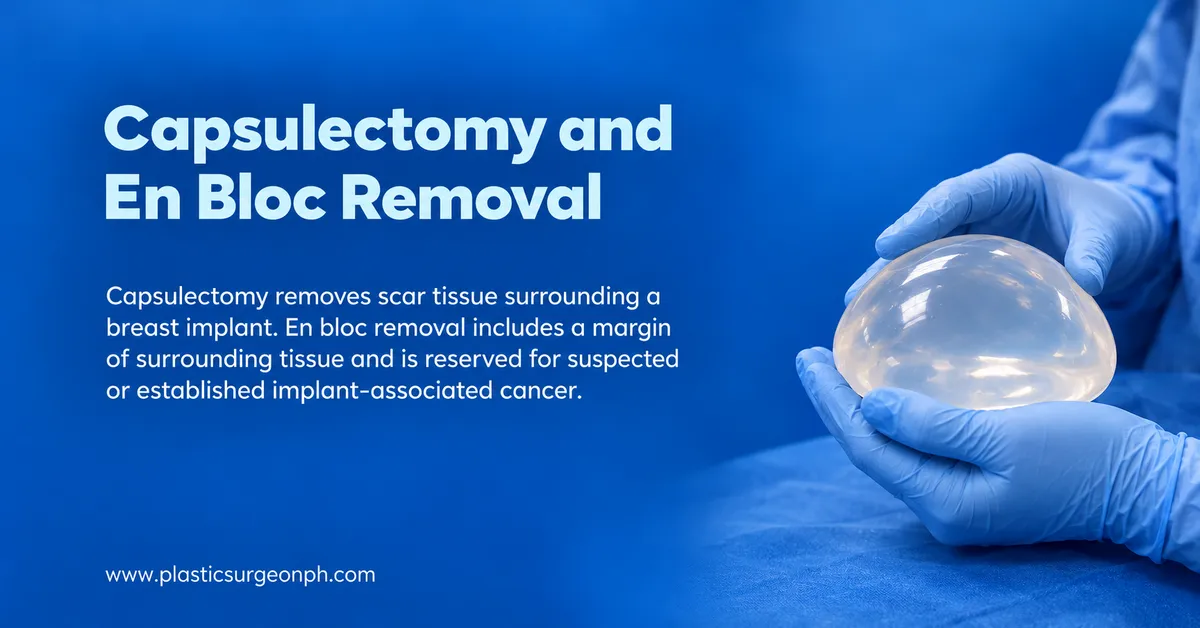
Capsulectomy removes the scar tissue around breast implants when indicated.