Rhinoplasty is one of the most detailed operations in plastic surgery because even a millimetre can affect facial balance or breathing. A good result is not simply a higher bridge or a smaller nose. It should suit the forehead, eyes, cheeks, lips, chin, skin thickness, ethnicity and airway of the individual patient. This guide explains what rhinoplasty can and cannot do, how it is performed, what recovery involves and how patients in the Philippines can evaluate a surgical quotation responsibly.
What is rhinoplasty, and what concerns does it address?
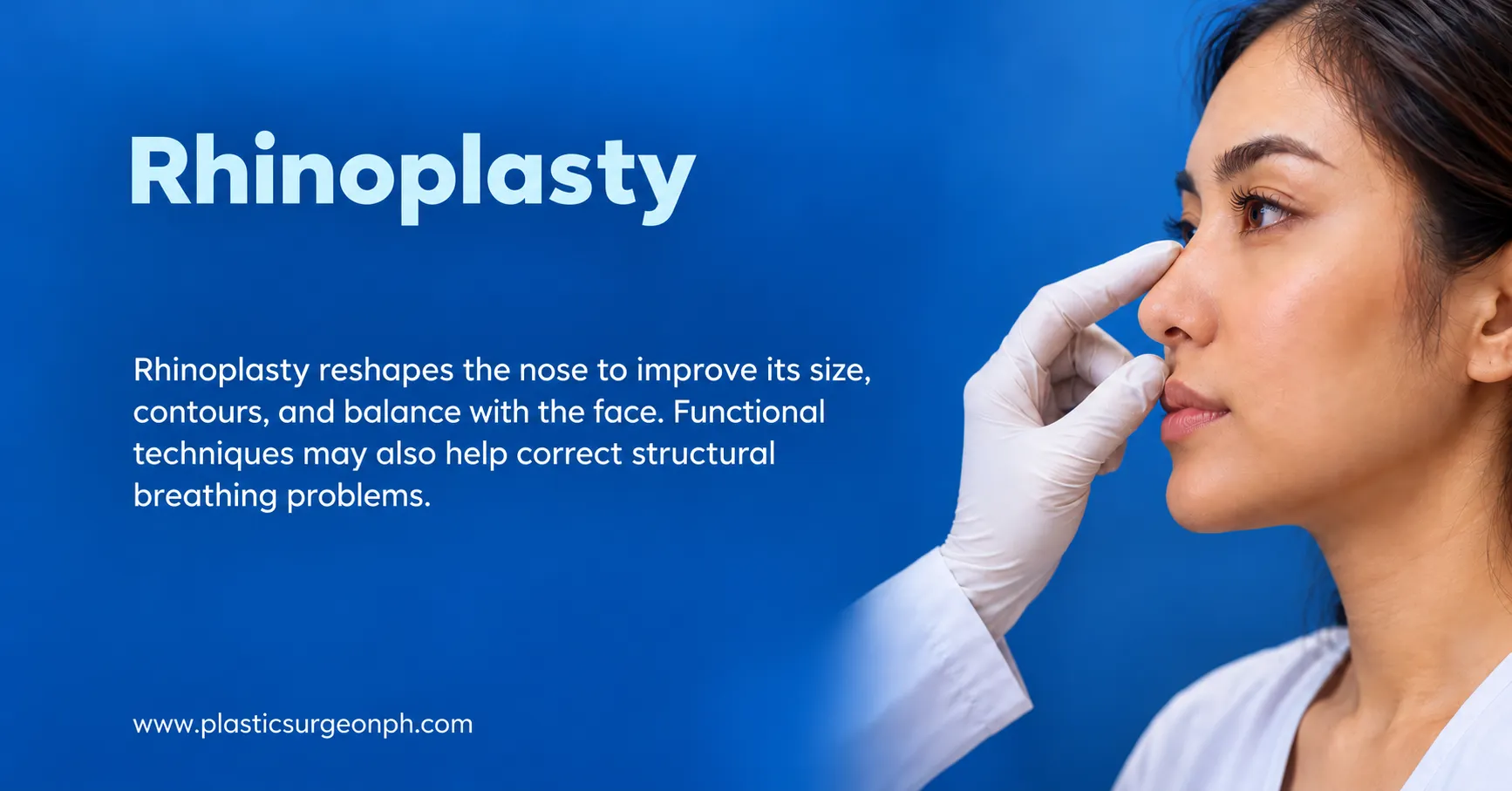
Rhinoplasty is surgery that changes the shape, size, support or proportions of the nose. It may address a low or high bridge, a hump, a broad or drooping tip, wide nostrils, asymmetry, excessive projection, previous injury or an appearance that seems out of balance with the face. It can also improve airflow when structural problems contribute to nasal obstruction. Cosmetic and functional goals frequently overlap because the same cartilage and bone help determine both appearance and breathing.
Rhinoplasty is not one standard operation. Some patients need augmentation, which adds height or support. Others need reduction, reshaping, straightening or reconstruction. In Filipino and other Asian patients, the plan often involves strengthening the tip and bridge while preserving a natural ethnic identity. Suitable materials may include the patient’s septal, ear or rib cartilage, or a carefully selected synthetic implant. Each option has different benefits, limitations and risks. When obstruction or a deviated septum is central, septorhinoplasty puts more emphasis on internal nasal structure. If appearance and airflow are both concerns, the rhinoplasty and septorhinoplasty comparison can help you frame questions about the proposed plan.
Who is a good candidate for rhinoplasty, and who is not?
A good candidate has a specific concern, realistic expectations, reasonably good health and a nose that has completed most of its growth. The person should understand that improvement, not mathematical perfection or exact duplication of a celebrity’s nose, is the goal. Patients with a previous injury, congenital difference or breathing problem may also benefit after a proper internal and external nasal examination.
Surgery should be postponed or reconsidered when medical conditions are uncontrolled, nicotine use has not stopped as instructed, expectations are impossible, or another person is pressuring the patient. Active nasal infection, pregnancy, untreated bleeding problems and unstable mental health concerns also require attention first. Patients who remain intensely distressed by very minor or imagined flaws should be screened for body dysmorphic disorder. Age alone does not decide suitability, but facial growth, health and emotional maturity matter. Discuss the right age for rhinoplasty in terms of growth, readiness, and health rather than a birthday alone.
What are the different types or techniques used in rhinoplasty?
In closed rhinoplasty, incisions remain inside the nostrils. In open rhinoplasty, a small incision crosses the columella, the strip of skin between the nostrils, giving wider access for complex reshaping. Neither approach is automatically better. The anatomy and required changes determine the safer and more precise choice.
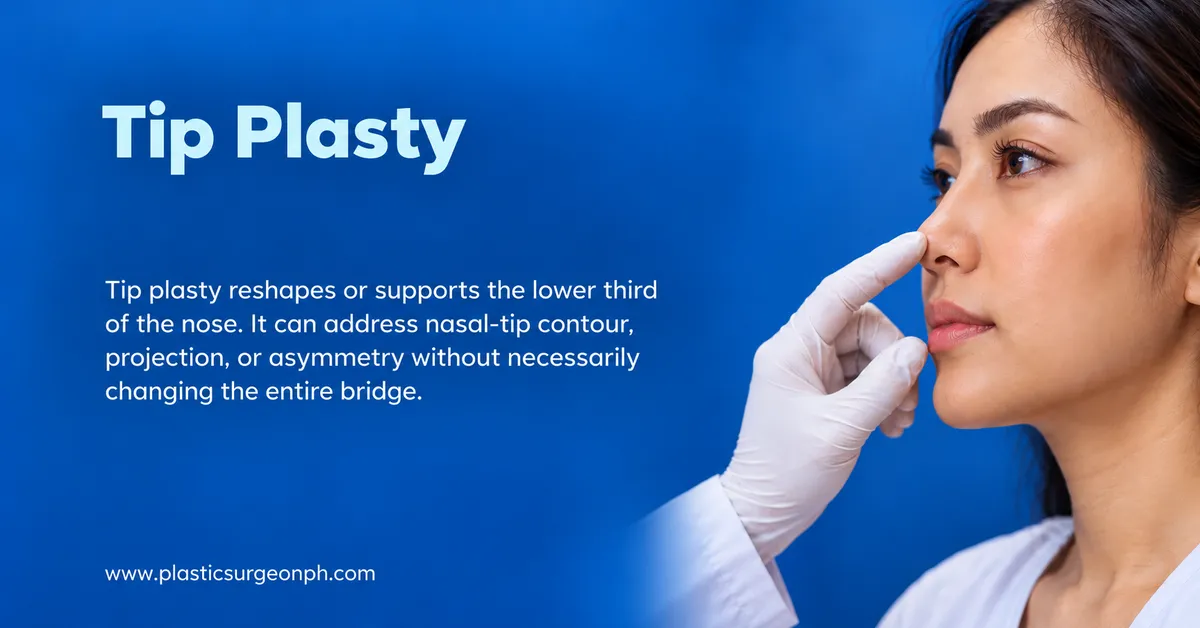
Techniques may include controlled bone cuts, hump reduction, bridge augmentation, tip suturing, cartilage grafting, septal straightening, nostril reduction and nasal valve support. Structural rhinoplasty builds or reinforces support. Preservation techniques try to retain selected natural structures while changing contour. Grafts may come from the septum, ear or rib. Silicone and expanded polytetrafluoroethylene implants are also used in selected augmentation cases, but they introduce implant-specific risks such as infection, movement, visibility or extrusion. A focused tip plasty changes the lower part of the nose when a broader operation is unnecessary.
Are there non-surgical alternatives to rhinoplasty?
Hyaluronic acid filler can temporarily camouflage a small hump, raise a low bridge or improve limited contour irregularities. It cannot make a large nose smaller, truly narrow wide nostrils, correct major deviation or improve a structurally blocked airway. Adding filler may also make the nose larger overall. Results are temporary and repeat treatment is usually required.
Nasal filler is not a risk-free beauty treatment. Accidental injection into a blood vessel can damage skin and, very rarely, eyesight. It should only be performed by a properly trained physician who understands nasal vascular anatomy and can manage vascular occlusion. Threads may create temporary visual lift in selected patients, but they are not a substitute for structural surgery. Breathing symptoms may instead require medical treatment, septoplasty or nasal valve treatment, depending on the cause.
How do I prepare for rhinoplasty?
Preparation begins with a detailed consultation, medical history, medication and supplement review, facial photographs, examination of the skin and cartilage, and assessment of the airway. The surgeon may discuss computer imaging as a communication tool, but an image is not a guarantee. Laboratory tests, medical clearance or further ENT assessment may be requested based on the patient’s health and symptoms.
Stop smoking, vaping and all nicotine products for the period specified by the surgeon because nicotine reduces blood flow and impairs healing. Do not stop prescription medicines or blood thinners on your own. The prescribing doctor and surgeon must coordinate any change. Avoid medicines and supplements that increase bleeding only when medically instructed. Arrange transport, an adult companion for the first night, suitable leave from work and a recovery area where the head can remain elevated. For consultation research, review Dr. Marlon Lajo’s profile, then confirm experience with this operation, credentials, and follow-up arrangements directly.
How is rhinoplasty performed, and how long does it take?
After anaesthesia, the surgeon makes internal incisions and, for an open approach, a short columellar incision. The skin and soft tissue are carefully lifted from the framework. Bone and cartilage are then reduced, repositioned, sutured or reinforced according to the plan. A deviated septum or weak nasal valve may be corrected at the same operation. Grafts or an implant may be placed when additional support or projection is required.
The skin is redraped, incisions are closed and an external splint is usually applied. Internal splints or soft packing may be used selectively. A limited augmentation can take about one to two hours, while comprehensive structural or reconstructive surgery often takes three to four hours. Complex cases may take longer. Surgical time should never be used as a measure of quality because precision and patient safety are more important than speed. Clarify the planned treatment area by comparing rhinoplasty, tip plasty, and alarplasty before agreeing to a package name.
What type of anesthesia is used, and who administers it?
Limited rhinoplasty may be performed under local anaesthesia with carefully monitored sedation. Comprehensive, open, functional or long operations are commonly performed under general anaesthesia. The safest choice depends on the procedure, health status, anxiety level, airway and surgical setting.
When intravenous sedation or general anaesthesia is planned, a qualified anaesthesiologist should assess the patient, administer the anaesthetic and continuously monitor oxygen, breathing, circulation and other vital signs. The surgeon should not be expected to perform a complex operation while also managing deep sedation. Ask who will provide anaesthesia, what credentials that physician holds, what monitoring will be used and whether the hospital or ambulatory surgical facility is appropriately licensed and equipped for emergencies.
What results can I realistically expect, and when will I see them?
The aim is a nose that looks more balanced and, when functional work is included, breathes better. Exact symmetry is not realistic because every face and nose has natural differences. Thick skin may limit very sharp definition, while thin skin may reveal small framework irregularities. The surgeon should explain what the patient’s tissues can reasonably achieve.
The change is visible when the splint comes off, commonly after about one week, but the nose will look swollen and may appear uneven. Much of the obvious swelling improves over the first several weeks. Refinement continues for six to twelve months, and the tip or revision cases may take eighteen months or longer. Early photographs should not be treated as the final outcome.
Will I have scars after rhinoplasty, and how visible will they be?
Closed rhinoplasty leaves incisions inside the nostrils and therefore no planned external scar. Open rhinoplasty leaves a short scar across the columella. It is normally positioned and closed carefully so that it fades into a fine line, although it can remain noticeable in some patients. Alarplasty adds scars in the nostril sill or natural groove where the nostril meets the cheek.
Scar quality depends on technique, infection prevention, tension, genetics, sun exposure and nicotine use. Patients with a personal history of thick or raised scars should tell the surgeon, although the central face does not always scar like the chest or shoulders. Scar massage, silicone products or other treatment should only begin when the surgeon approves them.
What are the risks and possible complications of rhinoplasty?
Possible complications include bleeding, infection, reaction to anaesthesia, poor wound healing, visible scarring, prolonged swelling, numbness, pain, asymmetry and dissatisfaction with appearance. Nasal blockage may persist or worsen. Other concerns include septal perforation, altered smell, skin discolouration, contour irregularities, graft warping or absorption, and the need for revision surgery. An implant may become infected, move, show through the skin or extrude.
Rare but serious problems can occur, including skin loss, severe infection, blood clots or anaesthetic complications. Risk is influenced by the operation, health, nicotine exposure and facility standards. No ethical surgeon can promise a perfect result or zero risk. Urgent review is needed for uncontrolled bleeding, worsening one-sided pain or swelling, fever, foul discharge, breathing difficulty, chest pain, calf swelling or changes in vision.
What is recovery like after rhinoplasty, and how long does it take?
Expect congestion, swelling, bruising and mild to moderate discomfort during the first week. Breathing through the nose may be difficult because of internal swelling, even without packing. The external splint is commonly removed at about seven days. Bruising usually improves over ten to fourteen days, although individual recovery varies.
Sleep with the head elevated, do not blow the nose until permitted and sneeze with the mouth open. Avoid pressure from glasses if the surgeon gives special support instructions. The nose may feel firm, numb or unfamiliar for several months. Social recovery often takes about two weeks, while biological healing continues much longer. Follow the surgeon’s instructions instead of copying another patient’s online recovery routine.
When can I return to work, exercise, and normal activities?
Many patients with desk-based work return after seven to fourteen days, depending on bruising, swelling and comfort in public. Physically demanding work usually requires more time. Gentle walking is encouraged early unless contraindicated, but bending, straining and heavy lifting can increase bleeding and swelling.
Strenuous exercise often resumes gradually after four to six weeks with the surgeon’s clearance. Contact sports and activities that can strike the nose require a longer restriction, commonly at least six to twelve weeks. Driving is unsafe while taking sedating pain medicine or when swelling affects vision. Air travel, swimming, wearing glasses and returning to skincare should each be cleared individually.
What aftercare and follow-up appointments are required?
Aftercare usually includes prescribed medicine, gentle cleaning of incision lines, saline care if advised, head elevation and protection from accidental impact and sun. Do not insert cotton buds or other objects into the nose unless specifically instructed. Antibiotics are not automatically necessary for every patient, and any prescribed course should be taken exactly as directed.
Follow-up commonly occurs within the first week for splint and suture care, then over the next several weeks and months to monitor breathing, swelling, scars and structural stability. Keep every appointment even if healing seems normal. Contact the surgical team promptly about heavy bleeding, fever, increasing redness, severe pain, foul-smelling discharge, sudden obstruction or a change in skin colour.
How long do the results of rhinoplasty last?
Structural changes are intended to be long-lasting and are often permanent. However, the nose continues to age, skin changes over time and cartilage can gradually shift. Injury, scar contraction and graft behaviour can also alter the result. A well-supported nose generally ages more predictably than one weakened by excessive tissue removal.
Not every small irregularity requires another operation. Minor asymmetries are normal, and revision surgery introduces additional scar tissue and uncertainty. If revision is considered, most stable cosmetic concerns are assessed only after the nose has matured, commonly at least twelve months after surgery. Urgent functional or medical problems are exceptions and should be evaluated immediately.
How much does rhinoplasty cost in the Philippines, and what is included in the price?
Public Philippine prices vary widely. As of August 2026, limited implant-based or focused procedures may be advertised from about PHP 30,000 to PHP 90,000. A comprehensive primary structural rhinoplasty may be around PHP 150,000 to PHP 400,000 or more. The wide difference reflects surgical complexity, graft source, implant choice, anaesthesia, facility, surgeon experience and whether functional work is included. A low advertised price may cover only one component.
Request a written quotation stating whether it includes consultation, surgeon’s fee, anaesthesiologist, operating theatre, implant or graft costs, medicines, laboratory tests, medical clearance, splints, overnight stay, follow-ups and taxes. Ask what happens financially if admission, implant removal or revision becomes necessary. Cosmetic surgery is generally paid privately. A medically necessary functional component may have different coverage, but approval must be confirmed directly with the hospital, HMO or insurer before surgery.
Thank you for sharing this article...
About the Author: Joan de Alta

View Surgeon Profiles

Certified as a Diplomate by the Philippine Board of Plastic Surgery (PBPS).



Explore Available Clinics


Browse Other Procedures
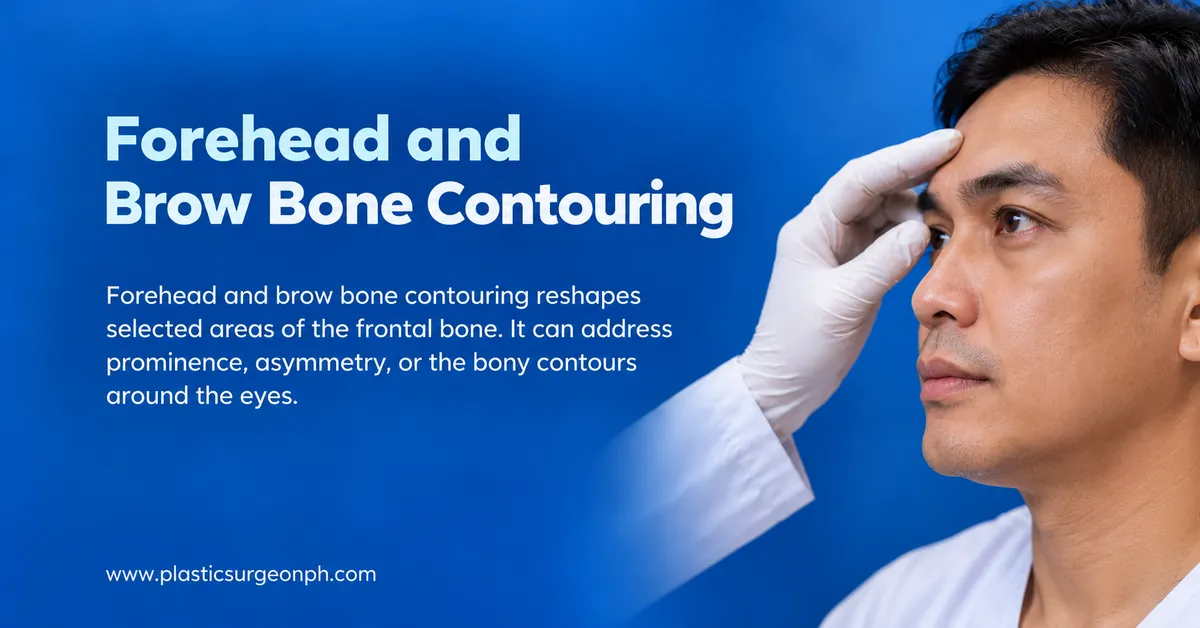
Forehead and brow bone contouring reshapes bone to alter the upper face.