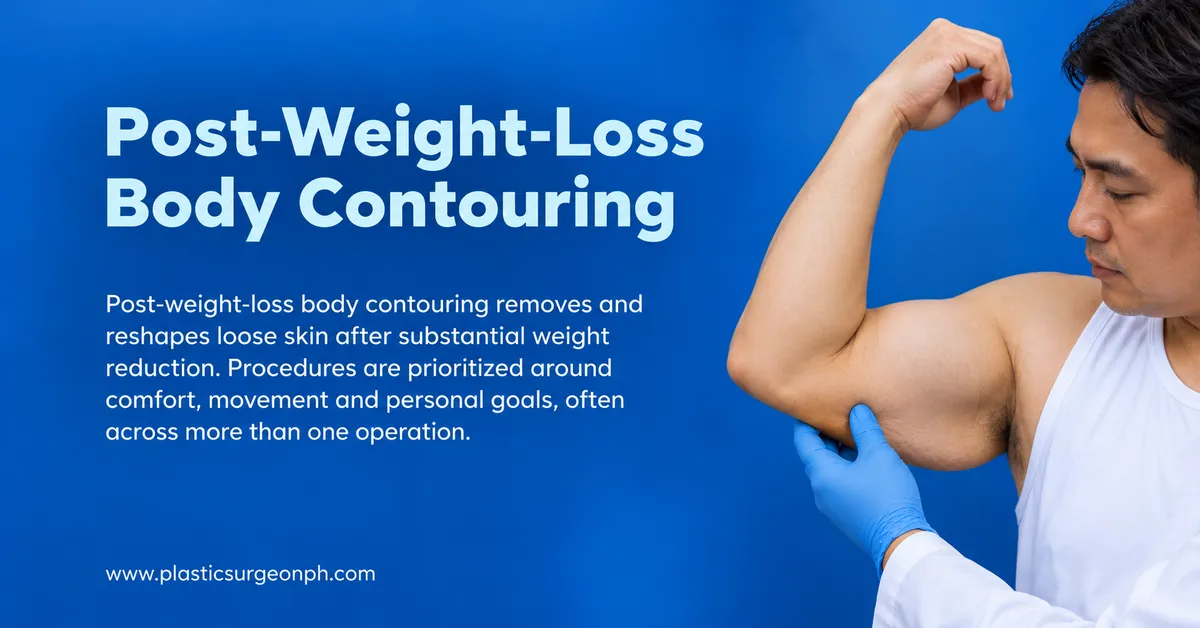
After substantial weight loss, the body may be healthier while loose skin continues to cause rashes, movement difficulty and distress. Post-weight-loss body contouring is a planned series of operations that removes and reshapes this tissue. It is rarely safe or sensible to address every area in one session. The process begins with stable weight and nutritional recovery, then prioritises the regions that create the greatest functional or personal concern. Permanent scars and more than one recovery period are expected.
What is post-weight-loss body contouring, and what concerns does it address?
Post-weight-loss body contouring is an umbrella term for skin-removal and reshaping procedures after major weight reduction from lifestyle treatment, medicines or bariatric surgery. It may include panniculectomy, tummy tuck, lower or upper body lift, breast lift, chest contouring, arm lift, thigh lift, facelift or targeted liposuction. These operations can reduce hanging folds, chafing, recurrent infections, hygiene difficulty and clothing problems. They are not methods for losing the remaining weight. They also cannot remove every wrinkle or guarantee an entirely smooth surface. The plan is individual because patterns of loose skin, health priorities, scars and available recovery time differ widely.
Who is a good candidate for post-weight-loss body contouring, and who is not?
A strong candidate has reached a sustainable weight and usually maintained it for six to twelve months. Nutrition, blood count and chronic conditions should be optimised, and nicotine must be stopped. Candidates need realistic acceptance of extensive scars, staged surgery and the possibility of minor wound problems. Surgery should be delayed during ongoing rapid weight loss, active smoking, untreated anaemia, protein deficiency, uncontrolled diabetes, active infection or pregnancy. Patients with severe body-image distress may benefit from psychological support alongside surgical assessment. A person who cannot arrange help, attend follow-up or maintain supplements after bariatric surgery may need more preparation before an operation is safe.
What are the different types or techniques used in post-weight-loss body contouring?
Lower-body options include panniculectomy, full or fleur-de-lis tummy tuck and circumferential body lift. Upper-body options include breast reshaping, male chest contouring, bra-line back lift and extended arm lift. Vertical medial thigh lift treats long inner-thigh folds. Facial and neck lifting may follow when laxity is prominent. Surgeons commonly organise procedures into stages, combining anatomically related areas while limiting operating time and blood loss. Liposuction refines selected fat deposits but must be conservative around thin skin. Tissue removed from one area may sometimes be rearranged for breast or buttock volume. Sequence depends on symptoms, anatomy, safety and the patient’s priorities.
Are there non-surgical alternatives to post-weight-loss body contouring?
Exercise and resistance training improve strength, posture and body composition but do not remove large skin folds. Stable nutrition protects health and may improve skin quality. Compression garments, supportive bras, barrier creams and meticulous fold care can reduce rubbing and rashes. A dermatologist can treat recurrent fungal or bacterial irritation. Energy-based devices may provide modest tightening for mild laxity but cannot reproduce surgical excision after massive weight loss. Counselling or peer support can help adjustment to a changed body. When medical risk remains high, these measures can provide meaningful symptom relief while the patient continues weight stabilisation, nutrition treatment or evaluation for a smaller functional procedure.
How do I prepare for post-weight-loss body contouring?
Preparation often involves the plastic surgeon, primary doctor, bariatric team and nutrition professional. Document stable weight and review eating tolerance, supplements and symptoms of malabsorption. Tests may include blood count, iron studies, vitamin B12, folate, vitamin D, protein or albumin, glucose and other tests based on history. Correct deficiencies before surgery. Stop nicotine and coordinate anticoagulants, hormones, diabetes medicines and weight-loss drugs. Treat rashes and infections. Plan the order of stages, expected scars, time off work, child care, transport and help at home. Ask what would cause cancellation, admission or a change from combined to staged surgery. The body contouring readiness checklist can help you organize questions about weight stability, nutrition, and recovery support.
How is post-weight-loss body contouring performed, and how long does it take?
Each stage follows the selected operation. The surgeon marks the mobile skin while the patient stands, then excises and reshapes tissue under anaesthesia. Deep sutures support long closures, and drains may reduce fluid collections. A focused arm or breast procedure may take two to four hours. A lower body lift can take five to eight hours, while multiple regions may be divided over several operations spaced months apart. Position changes and careful padding are often required. Tissue may be sent for pathology. Hospital stay ranges from same-day discharge for limited surgery to several nights after circumferential or complex procedures. One timetable cannot describe the entire treatment journey.
What type of anesthesia is used, and who administers it?
Most post-weight-loss skin-removal operations use general anaesthesia administered by a qualified anaesthesiologist. Small functional excisions may sometimes use local anaesthesia with monitored sedation. The anaesthesiologist evaluates airway, sleep apnoea, circulation, anaemia, fluid needs and medicine changes, then monitors breathing, temperature, blood loss and pain. Clot-prevention measures are especially important because operations can be lengthy and mobility limited. Disclose prior clots, bariatric surgery, reflux, heart or lung disease and all supplements. Complex contouring should take place in a facility capable of laboratory checks, transfusion, overnight monitoring and rapid treatment of an emergency.
What results can I realistically expect, and when will I see them?
Patients can expect less hanging tissue, improved hygiene, easier movement and better clothing fit in the treated regions. The body will not look completely free of folds, cellulite, asymmetry or scars. Each stage brings immediate contour change plus swelling and firmness. Major swelling usually improves over six to twelve weeks, while scars and tissue settle for twelve to eighteen months. Untreated areas may appear more noticeable after the first region improves, which is normal in a staged journey. Weight history and tissue quality limit how tightly skin can be closed. The best outcome balances proportion, function and safe healing rather than maximum tissue removal.
Will I have scars after post-weight-loss body contouring, and how visible will they be?
Yes. Long scars are unavoidable because loose skin must be removed. Depending on the plan, scars may circle the waist, run vertically on the abdomen, extend from armpit to elbow, lie along the breast and chest, or travel down the inner thigh. Surgeons position them under common clothing or in natural borders when possible, but exposure varies with movement and fashion. Scars can widen, darken, become raised or heal unevenly. They usually mature over a year or more. Patients with keloid tendencies should discuss this openly. Silicone, sun protection and selected treatments may improve scars after the wounds close, but cannot erase them.
What are the risks and possible complications of post-weight-loss body contouring?
Risks include bleeding, anaemia, infection, seroma, delayed healing, wound separation, skin or fat loss, numbness, chronic pain, asymmetry, contour irregularity and poor scars. Nutritional deficiency increases wound and infection problems. Long procedures and limited mobility raise the risk of deep vein thrombosis and pulmonary embolism. Location-specific risks include breast sensation change, arm or leg lymphatic swelling, navel problems and distortion from tight closure. Reoperation, transfusion or prolonged dressings may be needed. Seek urgent care for breathlessness, chest pain, fainting, calf swelling, heavy bleeding, fever, rapidly spreading redness, dark skin, foul drainage or severe worsening pain.
What is recovery like after post-weight-loss body contouring, and how long does it take?
Recovery depends on the stage. Limited breast or arm surgery may require one to two weeks of substantial help, while lower body lifting may require hospital care and several weeks of assistance. Tightness, swelling, bruising, fatigue and numbness are expected. Multiple drains can remain for one to four weeks. Small wound openings along long closures are not unusual and may need dressings for several weeks. Adequate protein, prescribed vitamins, hydration, early walking and nicotine avoidance support healing. The full contouring journey may last a year or longer because stages are separated by recovery. Emotional adjustment and patience are part of the process.
When can I return to work, exercise, and normal activities?
Return depends on the procedure and job. Desk work may resume in one to two weeks after limited surgery, two to four weeks after tummy or thigh surgery, and three to six weeks after circumferential lifting. Physical work often requires six to eight weeks or longer. Walking begins early in short sessions, while driving waits until movement is safe and sedating medicine has stopped. Heavy lifting and vigorous exercise usually wait at least six weeks. The surgeon may give different restrictions after each stage. Air travel needs clot-risk planning. Work and family schedules should allow flexibility because wound-healing delays cannot always be predicted.
What aftercare and follow-up appointments are required?
Aftercare includes drain records, incision care, compression or support garments, walking, prescribed medicines and continued nutrition supplements. Inspect folds and long wounds daily with help if necessary. Early visits check blood supply, infection, fluid, anaemia and clot symptoms. Drains are removed according to output, not according to a fixed package date. Later visits assess scars, swelling, function, weight stability and readiness for another stage. The surgeon may repeat nutrition tests before subsequent surgery. Report fever, foul drainage, dark skin, wound opening or one-sided limb swelling promptly. Chest pain, breathlessness, fainting or collapse requires emergency care.
How long do the results of post-weight-loss body contouring last?
Removed skin does not regrow, so improvements can last many years. Ageing and gravity continue, and large weight change or pregnancy can stretch the remaining tissue. Maintaining weight, adequate nutrition, regular exercise and prescribed bariatric supplements protects both health and contour. Some recurrent laxity is expected because previously stretched skin has limited elasticity. A staged plan may provide more balanced and durable results than one very long operation. Scar or contour revisions are sometimes needed after full healing. If weight-loss medicine is changed or discontinued, discuss weight-maintenance support with the appropriate doctor because substantial regain can compromise every treated area.
How much does post-weight-loss body contouring cost in the Philippines, and what is included in the price?
The total Philippine cost commonly ranges from about PHP 500,000 to PHP 1.5 million or more because treatment often involves several stages. A single focused operation may be less, while circumferential lifting, multiple hospital admissions and breast or limb procedures increase the total. Each written quotation should specify the stage and include the surgeon, anaesthesiologist, hospital, laboratory tests, medicines, garments, drains, admission and follow-up. Ask whether nutrition tests, pathology, blood products, additional nights, wound supplies and revision are separate. PhilHealth or private insurance may cover selected medically necessary components, but cosmetic contouring is usually self-funded and requires pre-authorisation where coverage is sought.
Thank you for sharing this article...
About the Author: Joan de Alta

View Surgeon Profiles

Completed plastic and reconstructive surgery training at MakatiMed in 2020.