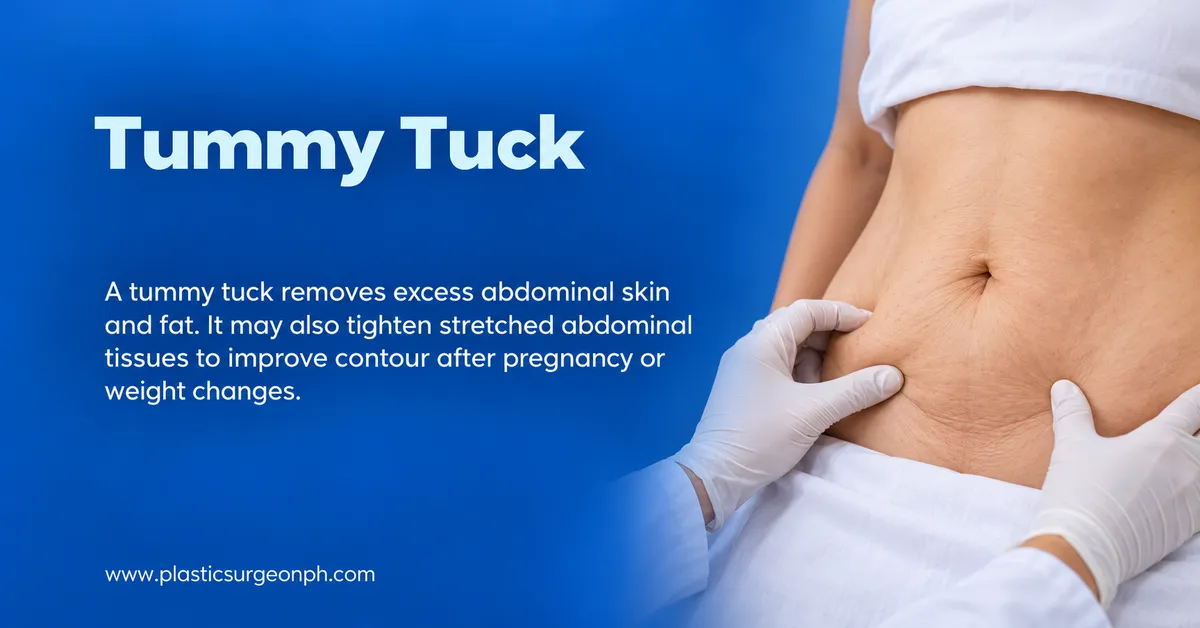
A tummy tuck can remove loose abdominal skin and repair stretched abdominal muscles, but it is a major operation with a long scar and meaningful recovery. It is different from liposuction, which removes fat without excising skin or tightening the abdominal wall. The strongest candidates have stable weight, completed pregnancy plans where possible and enough time for safe healing. A responsible plan also considers hernias, previous scars and blood-clot risk.
What is a tummy tuck, and what concerns does it address?
A tummy tuck, or abdominoplasty, removes excess lower-abdominal skin and fat and may tighten separated rectus muscles, called diastasis. It can improve an overhanging apron, wrinkled skin, lower-abdominal stretch marks and a bulging profile caused partly by loose fascia. It may also reposition the navel and combine with liposuction. It is not a treatment for obesity or visceral fat inside the abdomen, and it cannot remove every stretch mark. A true hernia requires diagnosis and may need a general surgeon. The aim is a smoother, firmer abdominal contour, not a guarantee of a perfectly flat stomach. The liposuction and tummy tuck comparison can help you discuss whether fat, loose skin, or the abdominal wall is the main concern.
If the concern centers on navel shape, the navel reshaping guide explains umbilicoplasty and why a possible hernia needs assessment before cosmetic treatment.
Who is a good candidate for a tummy tuck, and who is not?
Good candidates have stable weight, loose skin or muscle separation that will not respond to exercise, realistic expectations and suitable health. Many seek surgery after pregnancy or major weight loss. Future pregnancy can undo muscle repair and stretch the skin, so waiting is usually sensible. Surgery should be postponed for uncontrolled disease, high untreated clot risk, active infection or nicotine use. Significant obesity raises wound, breathing and clot complications and may require weight management first. Patients who need only removal of a small fat pocket with elastic skin may be better suited to liposuction. Those unwilling to accept a low abdominal scar are not ready.
What are the different types or techniques used in a tummy tuck?
A mini tummy tuck treats limited skin below the navel through a shorter scar and may provide modest lower muscle repair. A full abdominoplasty removes more skin, tightens the abdominal wall and creates a new opening for the navel. An extended tummy tuck continues the scar towards the hips to treat flank skin. Fleur-de-lis abdominoplasty adds a vertical scar for major horizontal and vertical excess, often after massive weight loss. Lipoabdominoplasty combines cautious liposuction with excision. A circumferential lower body lift continues around the back. Drainless techniques use internal sutures but are not suitable or literally drain-free in every case.
Are there non-surgical alternatives to a tummy tuck?
Weight management, exercise and physiotherapy can improve overall fat, posture and core strength. Physiotherapy may help functional diastasis symptoms, although it cannot remove loose skin. Liposuction treats subcutaneous fat when skin recoil is good but does not repair muscle separation or remove an apron. Non-surgical skin-tightening devices can provide modest improvement in mild laxity but cannot reproduce surgical excision. A panniculectomy removes an overhanging skin apron for functional reasons without necessarily tightening muscle or shaping the full abdomen. If risk is high or the patient is not ready for a permanent scar, supportive garments and observation are reasonable.
How do I prepare for a tummy tuck?
Preparation includes examination for skin excess, muscle separation, hernia, visceral fat and previous scars. Weight should be stable, nutrition adequate and chronic disease controlled. Laboratory tests, electrocardiogram and medical clearance depend on age and health. Stop nicotine for the period ordered because skin-flap circulation is crucial. Coordinate anticoagulants and other prescriptions with the treating doctor. Discuss contraception and pregnancy plans. Arrange two to three weeks of help, especially for children, meals and household duties. Prepare a reclined sleeping position, loose front-opening clothing and any prescribed compression. Ask about clot prevention, admission, drains and emergency contact arrangements. For consultation contacts and listed services, review the NEWLIFE Aesthetic Plastic Surgery profile and confirm the proposed procedure and facility directly with the clinic.
How is a tummy tuck performed, and how long does it take?
After anaesthesia, the surgeon makes a low incision, lifts abdominal skin and fat, and repairs stretched fascia when indicated. Excess tissue is pulled downward and removed. In a full operation, the navel remains attached internally and is brought through a new skin opening. Liposuction may refine the waist, and drains or internal quilting sutures manage fluid. A mini tuck may take two to three hours, while full or extended surgery commonly takes three to five hours. Fleur-de-lis, combined hernia work or circumferential contouring takes longer. Some patients go home the same day, while others need overnight or longer hospital observation.
What type of anesthesia is used, and who administers it?
Most tummy tucks use general anaesthesia because the operation involves wide tissue movement and abdominal-wall repair. A qualified anaesthesiologist administers anaesthesia and monitors breathing, circulation, temperature, fluids and pain. Regional blocks or long-acting local anaesthetic may supplement pain control. The team should assess clot risk and use measures such as compression devices, early walking and medication when appropriate. Ask who will provide anaesthesia, how long the planned combined surgery will last and whether admission is available. Disclose sleep apnoea, heart or lung disease, prior clots, hormonal medicines, previous anaesthetic problems and all prescriptions and supplements.
What results can I realistically expect, and when will I see them?
The abdomen is tighter immediately, but swelling, a flexed posture and compression hide the final contour. Most patients stand more upright over one to two weeks. Swelling improves over six to twelve weeks but can fluctuate for several months. The scar and navel continue maturing for a year or longer. A tummy tuck can remove stretch marks only from excised skin, usually below the navel. It cannot correct intra-abdominal fat, guarantee a narrow waist or create muscle definition without appropriate anatomy. Natural asymmetry remains. Final photographs are most meaningful after six to twelve months, once tissue has softened.
Will I have scars after a tummy tuck, and how visible will they be?
Yes. A full tummy tuck leaves a long low scar from hip to hip and a scar around the navel. Extended, fleur-de-lis and body-lift procedures create longer or additional scars. The horizontal scar is planned for underwear coverage when anatomy permits, but fashion styles vary and no placement is invisible. Scars are initially red, firm or darker and usually fade over twelve to eighteen months. They can widen, thicken, become painful or form keloids. Wound tension, infection, diabetes and nicotine worsen healing. Silicone, massage or laser may help selected mature scars after the surgeon confirms that the wound is closed.
What are the risks and possible complications of a tummy tuck?
Risks include bleeding, infection, anaesthetic complications, blood clots, pulmonary embolism, fluid collection, delayed healing, skin or fat loss, numbness, pain, asymmetry and poor scars. Seroma is common enough to require monitoring and sometimes repeated aspiration. The navel can heal poorly or change shape. Muscle repair may remain tight, recur or cause discomfort. Rare injury to deeper structures can occur. Combining lengthy operations can increase risk. Seek urgent care for shortness of breath, chest pain, calf swelling, fainting, rapidly spreading redness, fever, severe increasing pain, dark skin, wound opening or a suddenly enlarged abdomen.
What is recovery like after a tummy tuck, and how long does it take?
The first week involves tightness, swelling, limited upright posture and assistance with getting in and out of bed. Drains may remain for one to three weeks, depending on output. Compression is worn as directed, not excessively tight. Gentle walking is essential, while coughing and standing can feel uncomfortable after muscle repair. Most patients improve substantially over two to three weeks, but fatigue, swelling and numbness can last for months. Wound openings or seroma can extend recovery. Adequate protein, hydration and nicotine avoidance support healing. Pain or breathlessness that worsens rather than improves needs urgent assessment.
When can I return to work, exercise, and normal activities?
Desk work generally resumes after two to three weeks, although patients with long commutes or extensive surgery may need four weeks. Physical work often requires six weeks or longer. Walking begins immediately in short, frequent sessions. Driving waits until the patient stands comfortably, can brake safely and is off sedating medicine. Heavy lifting and abdominal exercise are usually restricted for six to eight weeks, especially after muscle repair. Patients must avoid lifting children, groceries or luggage. Return to gym training should be gradual and surgeon-guided. Air travel soon after surgery needs individual clot-prevention advice.
What aftercare and follow-up appointments are required?
Aftercare includes drain recording, wound cleaning, compression, walking, prescribed medicines and attention to hydration and nutrition. Do not apply heat, ice or massage to numb skin unless instructed. Early visits assess circulation, bleeding, seroma, infection and clot symptoms. Drains are removed according to output, not a promised date. Later reviews monitor scars, navel healing, abdominal-wall comfort and swelling. Contact the team promptly for fever, foul drainage, darkening skin, wound separation, one-sided leg swelling, chest pain or shortness of breath. Seroma should be managed medically rather than repeatedly pressed or massaged by an unqualified person.
How long do the results of a tummy tuck last?
Removed skin does not return, and repaired fascia can remain tighter for many years. However, pregnancy, major weight gain, ageing and changes in muscle tone can stretch the abdomen again. Liposuction does not prevent future fat accumulation. Stable weight, regular activity after recovery and healthy nutrition help preserve the result. A small recurrent bulge does not always mean repair failure because visceral fat, posture or a true hernia may be involved. Revision is possible but carries additional scar and circulation risks. Patients planning another pregnancy may safely defer surgery and use supportive or physiotherapy options meanwhile.
How much does a tummy tuck cost in the Philippines, and what is included in the price?
Public Philippine listings place mini and full tummy tucks around PHP 150,000 to PHP 210,000 at the lower end, while a realistic private or hospital range is roughly PHP 200,000 to PHP 450,000 or more. Extended, fleur-de-lis, hernia-related or combined liposuction procedures cost more. The quotation should state the exact technique and include the surgeon, anaesthesiologist, hospital, tests, medicines, drains, compression, admission and follow-up. Ask whether muscle repair, liposuction, pathology or treatment of seroma is separate. A mini-tuck advertisement should not be compared directly with a full abdominal-wall and skin reconstruction.
Thank you for sharing this article...
About the Author: Joan de Alta

View Surgeon Profiles




Explore Available Clinics



Browse Other Procedures
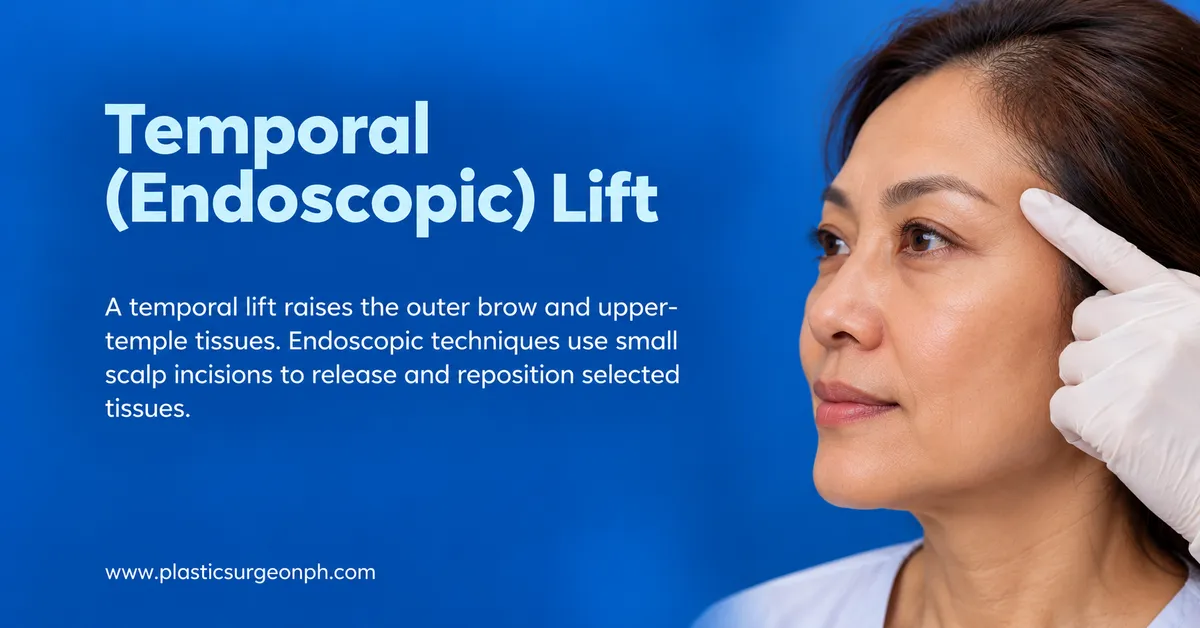
A temporal lift raises the outer brow through incisions near the hairline.