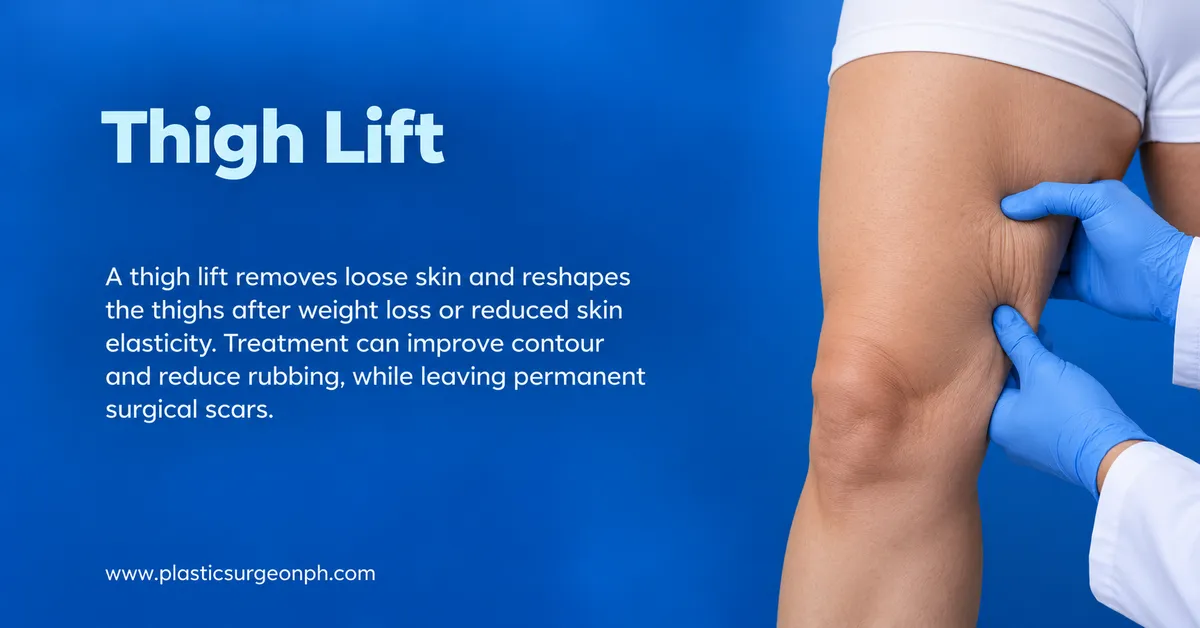
A thigh lift removes loose skin and reshapes the thighs, most often after major weight loss or loss of skin elasticity. It is more extensive than liposuction and leaves permanent scars that may lie in the groin, extend down the inner thigh or continue around the hip. Because the groin is warm and mobile, wound care can be demanding. A successful result depends on stable weight, good nutrition, realistic scar acceptance and a technique matched to where the loose tissue is located.
What is a thigh lift, and what concerns does it address?
A thigh lift, or thighplasty, removes excess skin and some underlying fat to improve the contour of the inner, front or outer thighs. It can reduce hanging folds, rubbing, hygiene difficulty, recurrent irritation and poor clothing fit. It is especially useful when skin does not contract after large weight loss. The operation is not primarily a cellulite treatment and cannot create perfectly smooth skin. It also cannot correct significant lower-leg swelling or lymphatic disease. Liposuction may be added for fat, but removing skin is what treats a loose envelope. The location of excess determines the scar and whether another body-contouring procedure is more appropriate. After substantial weight loss, a thigh procedure may be staged within a wider post-weight-loss body contouring plan.
Who is a good candidate for a thigh lift, and who is not?
Good candidates have stable weight, loose thigh skin, adequate nutrition, realistic expectations and willingness to accept substantial scars. After bariatric surgery, protein, iron and vitamin deficiencies should be corrected. Candidates must be able to walk gently after surgery and follow hygiene and compression instructions. Surgery should be postponed for nicotine use, uncontrolled diabetes, active skin infection, unstable weight, untreated anaemia or significant clot risk. Chronic leg swelling, varicose symptoms or previous lymphatic problems need assessment. A patient with mainly localised fat and firm skin may be better suited to liposuction. Those planning major further weight loss should usually wait.
What are the different types or techniques used in a thigh lift?
A short-scar medial thigh lift places the incision in the groin crease and treats mild upper-inner laxity. A vertical medial lift extends down the inner thigh for more extensive skin excess. Some patients need both horizontal and vertical components. A lateral or outer thigh lift raises tissue towards the hip and is often combined with a lower body lift. A spiral or circumferential approach addresses several surfaces after massive weight loss. Liposuction may thin adjacent fat or be staged before excision. Fascial anchoring can reduce downward scar migration. Technique should follow the direction of looseness rather than a desire for the shortest possible scar.
Are there non-surgical alternatives to a thigh lift?
Weight management and strength training can improve fat volume and muscle tone but cannot remove a large hanging skin fold. Anti-chafing products, compression garments and careful skin care may reduce rubbing and irritation. Liposuction can treat fat when elasticity is good, although it may worsen sagging in loose skin. Energy-based tightening treatments offer modest improvement for mild laxity and do not reproduce surgical removal. Cellulite treatments address dimpling rather than skin excess and have variable durability. If swelling contributes to thigh size, venous or lymphatic assessment and specialised compression may be needed. Postponing surgery is reasonable when scar acceptance or recovery support is uncertain.
How do I prepare for a thigh lift?
The surgeon assesses the thighs while standing, walking and lifting the skin in different directions. Preparation includes weight stability, nutrition review, blood tests and medical clearance as indicated. Discuss bariatric history, prior clots, varicose veins, leg swelling, rashes and groin infections. Stop nicotine for the required period. Coordinate anticoagulants, hormones, weight-loss medicines and supplements with the appropriate doctors. Arrange transport, an adult helper, loose clothing, easy access to a toilet and several weeks away from heavy work. Ask about drains, compression, urinary catheter use, scar position, hospital stay and the plan for clot prevention. Treat active fungal or bacterial skin problems before surgery. The body contouring readiness checklist can help you organize questions about weight stability, nutrition, and recovery support.
How is a thigh lift performed, and how long does it take?
After anaesthesia, the surgeon may begin with liposuction and then removes the marked skin and fat. Deep sutures anchor and support the closure, particularly in the groin. Incisions are closed in layers, and drains may be placed. A limited inner thigh lift may take two to three hours. A vertical, lateral or bilateral extended procedure commonly takes three to five hours, and combination with a body lift takes longer. Positioning must protect nerves and pressure points. Depending on the extent, health and home distance, patients may go home the same day or remain in hospital overnight or longer for monitoring and mobilisation.
What type of anesthesia is used, and who administers it?
Most thigh lifts use general anaesthesia administered by a qualified anaesthesiologist. The provider monitors breathing, circulation, temperature, fluids and pain, and coordinates clot-prevention measures with the surgical team. A small short-scar procedure may occasionally use local anaesthesia with monitored sedation, but bilateral extensive excision usually requires general anaesthesia. Tell the team about sleep apnoea, previous clots, leg swelling, heart or lung disease, allergies and prior anaesthetic reactions. Ask who will administer anaesthesia and how the facility handles bleeding, breathing problems or an unexpected admission. Proper monitoring remains essential even when the operation is described as outpatient surgery.
What results can I realistically expect, and when will I see them?
The thighs look tighter immediately, but early swelling, bruising and compression obscure the contour. The groin scar may initially appear high or pulled, and the tissues settle with time. Most swelling improves over six to twelve weeks, while the final contour and scars mature over six to twelve months or longer. Surgery can reduce folds and rubbing, but residual looseness around the knee, cellulite and asymmetry may remain. Removing too much tissue risks wound breakdown and distorted genital or groin contours, so a safe result may be less tight than a patient imagines. Revision decisions should wait until complete healing.
Will I have scars after a thigh lift, and how visible will they be?
Yes, and the scars may be conspicuous. A short medial lift places a scar along the groin crease, where underwear may conceal it but friction and moisture can affect healing. A vertical lift leaves a line down the inner thigh, sometimes towards the knee. Lateral and body-lift scars run near the hip or around the lower torso. Groin scars can migrate downward, widen or pull on nearby tissues. Scars may remain red, raised or darker for months and usually mature over a year or more. Silicone and sun protection may help after closure, but no treatment can guarantee an invisible scar.
What are the risks and possible complications of a thigh lift?
Risks include bleeding, infection, seroma, delayed healing, wound separation, skin loss, asymmetry, contour irregularity, numbness, chronic pain and poor scars. Groin wounds are vulnerable to moisture, friction and bacterial contamination. Scar migration can alter the labial or groin contour. Injury to lymphatic channels may cause prolonged swelling or a lymphatic fluid collection. Blood clots and pulmonary embolism are important because lower-body surgery can reduce mobility. Nerve injury and persistent leg swelling are less common but serious. Urgent symptoms include chest pain, breathlessness, one-sided calf swelling, fainting, fever, spreading redness, foul drainage, dark skin or rapidly increasing pain.
What is recovery like after a thigh lift, and how long does it take?
The first one to two weeks involve tightness, swelling, bruising and careful movement to avoid strain on groin and inner-thigh wounds. Walking begins in short, frequent sessions, often with a slightly wider stance. Dressings, drains and compression are managed as instructed. Hygiene after toileting is particularly important, but harsh cleaning and friction should be avoided. Many wounds close within two to four weeks, although small openings can take longer. Swelling may persist for several months. Adequate protein, hydration and nicotine avoidance are essential. Sudden leg swelling, breathlessness, fever or a rapidly worsening wound needs prompt medical attention.
When can I return to work, exercise, and normal activities?
Desk work may resume after two to three weeks if sitting and walking are comfortable. Physical jobs often require four to six weeks or longer. Driving waits until leg movement is unrestricted enough for emergency braking and sedating medicine has stopped. Gentle walking starts early, but long strides, squats, cycling and lower-body training are restricted during wound healing. More vigorous exercise generally returns after six to eight weeks with surgical clearance. Sexual activity and swimming wait until incisions are fully closed and movement does not strain the groin. Air travel soon after surgery requires individual clot-risk planning and frequent mobilisation.
What aftercare and follow-up appointments are required?
Aftercare includes drain records, incision care, prescribed compression, walking and correct use of medicines. Keep groin folds clean and dry without applying unapproved powders or ointments. Compression should support the thighs without cutting into the groin or causing numbness. Early reviews check blood supply, wound tension, fluid, infection and leg swelling. Drains are removed according to output. Later visits assess scars, symmetry, swelling and return to exercise. Seek urgent advice for fever, foul drainage, spreading redness, wound opening, severe new pain or one-sided swelling. Chest pain or breathlessness requires emergency care. Massage begins only when specifically approved.
How long do the results of a thigh lift last?
Removed skin does not grow back, and improvement can last many years when weight is stable. Ageing and gravity gradually loosen the remaining tissue, and major weight fluctuation can change the contour substantially. Exercise maintains strength but cannot prevent all skin relaxation. Good skin care, sun protection and stable nutrition support long-term appearance. A small amount of recurrent laxity is expected. Revision may treat a widened scar, residual fold or asymmetry after complete healing, but further excision can add tension and scar length. Patients who anticipate pregnancy or major further weight loss should discuss whether delaying surgery will provide a more durable result.
How much does a thigh lift cost in the Philippines, and what is included in the price?
A reasonable private Philippine range is about PHP 180,000 to PHP 350,000, while extended or combined lower-body contouring may cost more. A short groin lift and a vertical bilateral lift are not comparable operations. The quotation should identify the scar pattern and whether liposuction is included, then list the surgeon, anaesthesiologist, facility, laboratory tests, medicines, compression garments, drains, admission and follow-up. Ask whether pathology, extra hospital nights, wound supplies, treatment of seroma or scar revision is separate. Price should be considered alongside nutrition assessment, clot prevention, postoperative access and the surgeon’s experience with major weight-loss patients.
Thank you for sharing this article...
About the Author: Joan de Alta