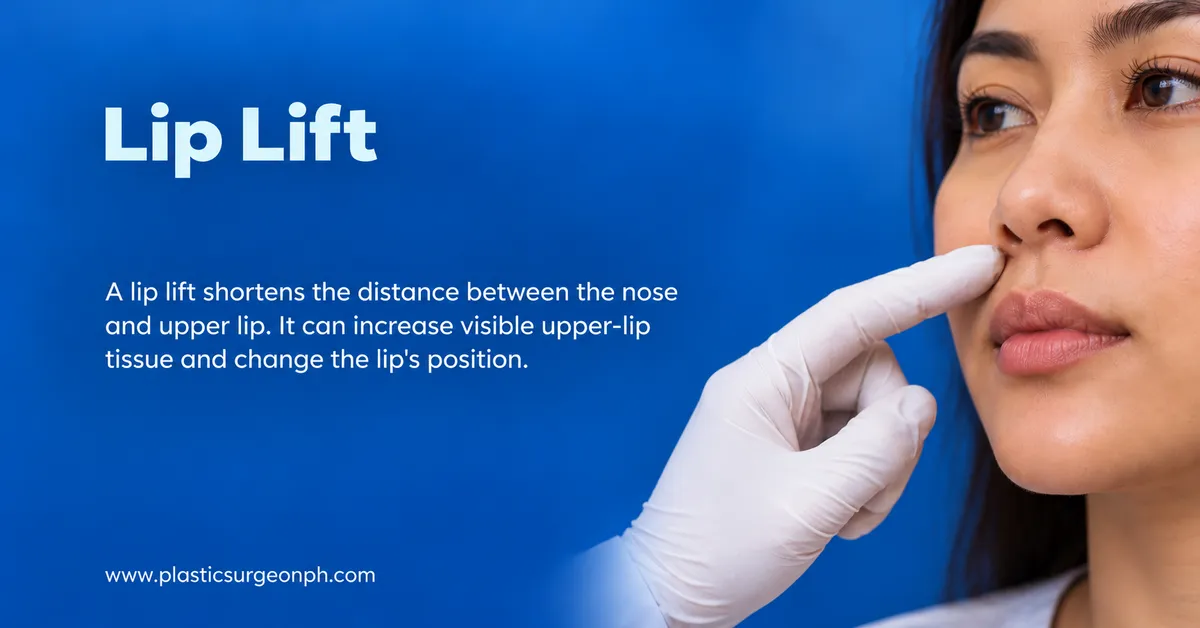
A lip lift shortens the skin distance between the nose and upper lip or raises selected portions of the lip through surgery. Unlike filler, it changes the position of the lip rather than simply adding volume. The operation can show more pink lip and upper teeth, but it leaves a permanent scar and can subtly change the nostril base or smile. Careful measurement and conservative design are essential.
What is a lip lift, and what concerns does it address?
A lip lift removes a planned strip of skin and lifts the upper lip. The common subnasal technique shortens a long philtrum, increases visible vermilion and may show more upper teeth at rest. Corner or gull-wing techniques address different parts of the lip. The operation may improve age-related lengthening or a naturally long upper-lip segment.
It does not primarily add the same three-dimensional volume as filler, correct dental position or treat every downturned mouth. Patients with excessive tooth show, a gummy smile or a short philtrum may be made worse by additional lift. The nose, nostril base, teeth, bite, smile and chin must be considered together. If the concern is lip fullness rather than the distance between the nose and upper lip, lip augmentation addresses a different change. For lips that feel too full, lip reduction pursues the opposite volume goal from augmentation.
Who is a good candidate for a lip lift, and who is not?
Good candidates have a long upper-lip skin segment, limited upper-tooth show or a thin visible vermilion caused by lip position, along with realistic expectations and suitable health. The patient should accept a permanent scar beneath the nose and understand that lip movement may feel tight for several months.
Poor candidates include people with a naturally short philtrum, excessive tooth or gum show, active cold sores or skin infection, uncontrolled illness, nicotine use and unrealistic expectations. A history of hypertrophic or pigmented scars deserves careful discussion. Dental and skeletal causes of an unusual smile should be assessed before cosmetic skin removal.
What are the different types or techniques used in a lip lift?
A subnasal or bullhorn lip lift places an incision beneath the nose and removes a curved strip of skin to elevate the central and lateral upper lip. An Italian lift uses smaller incisions beneath the nostrils for a more limited central effect. A central lift focuses on the Cupid’s bow, while a corner lift raises downturned mouth corners.
A direct vermilion or gull-wing lift removes skin immediately above the lip border, producing strong vermilion show but a more visible scar. A V-Y mucosal advancement works from inside the mouth and changes selected lip projection. Techniques are not interchangeable, and the surgeon should explain the effect on the central lip, sides, corners, nostrils and tooth show.
Are there non-surgical alternatives to a lip lift?
Hyaluronic acid filler adds temporary lip volume and can improve border definition, but it does not truly shorten the philtrum. A botulinum toxin lip flip relaxes the upper-lip muscle so a small amount of vermilion rolls outward. Its effect is subtle, temporary and can briefly affect drinking, speech or oral control.
Dental treatment may improve tooth display when tooth position is responsible. Makeup can create visual height without medical risk. Threads do not offer the same predictable, permanent shortening. Patients unsure about added fullness may try conservative reversible filler, but filler is not an exact simulation of a surgical lift.
How do I prepare for a lip lift?
The surgeon measures philtrum length, lip proportions, tooth show at rest and during smiling, nostril shape, facial balance and scar risk. Photographs capture relaxed and animated views. Discuss filler, threads, dental work, cold sores, skin conditions and previous nose surgery. Antiviral medicine may be prescribed for patients with recurrent herpes.
Stop nicotine for the required period and coordinate prescription medicine changes with the prescribing doctor. Treat active acne, infection or cold sores near the planned incision. Arrange transport if sedation is used, prepare soft food and plan at least one to two weeks away from social events. Avoid scheduling dental work close to surgery unless both clinicians approve it.
How is a lip lift performed, and how long does it take?
After detailed markings and anaesthesia, the surgeon removes a precisely measured strip of skin using the selected pattern. The deeper tissue is secured so tension is not carried only by the skin. The lip is lifted to the planned position, nostril shape is checked and the incision closes in layers with fine sutures.
Most isolated lip lifts take about one to two hours and are outpatient. Corner or combined techniques can add time. Removal should be conservative because too much lift can produce excessive tooth show, nostril distortion or difficulty achieving a natural relaxed lip.
What type of anesthesia is used, and who administers it?
Many lip lifts are performed under local anaesthesia. Oral or intravenous sedation can be added for comfort, while general anaesthesia may be used when combined with rhinoplasty, facelift or another operation.
The surgeon injects local anaesthetic. A qualified anaesthesiologist should manage intravenous deep sedation or general anaesthesia and monitor the patient. Ask who provides sedation, whether anaesthesia and recovery fees are included, and what emergency support is available.
What results can I realistically expect, and when will I see them?
A lip lift can shorten the apparent philtrum, reveal more upper-lip vermilion and increase upper-tooth show. It should create proportionate enhancement, not a permanently open mouth or exaggerated pout. It does not erase lip lines or guarantee symmetrical Cupid’s bow peaks.
The change is immediately visible but initially distorted by swelling, stiffness and suture tension. Bruising and obvious swelling improve over one to two weeks. The incision may take six to eight weeks to begin looking refined, while tightness, movement and scar maturation can continue for three to six months or longer.
Will I have scars after a lip lift, and how visible will they be?
Yes. The standard scar sits beneath the nose and follows the nostril curves and columellar base. It is designed to hide within natural shadows but remains on central facial skin. Direct vermilion and corner techniques place scars closer to the lip border or mouth corners and may be more visible.
Early scars can be red, firm, raised or darker than surrounding skin. Most fade, but a conspicuous scar is a genuine trade-off. Wound tension, infection, nicotine and sun exposure worsen healing. Silicone, laser or injection treatment may help selected scars after the surgeon determines the correct timing.
What are the risks and possible complications of a lip lift?
Risks include bleeding, infection, anaesthetic reaction, pain, swelling, numbness, asymmetry, wound separation, poor healing, unfavourable scarring and need for revision. Procedure-specific problems include nostril distortion, excessive tooth show, an unnatural Cupid’s bow, lip tightness, altered smile and undercorrection or overcorrection.
Temporary altered sensation and movement are common, while permanent changes are less common. Herpes can reactivate in susceptible patients. Tissue loss is rare but possible, especially with compromised blood flow. Seek prompt review for worsening pain, pus, fever, wound opening, pale or dark skin, rapidly increasing swelling or difficulty breathing.
What is recovery like after a lip lift, and how long does it take?
Swelling, bruising, tightness and difficulty making wide facial expressions are expected. Sutures are commonly removed around five to seven days. The incision needs careful cleaning, and the patient should avoid stretching the upper lip. Soft food and small bites may be more comfortable initially.
Many patients are socially presentable in ten to fourteen days, although the scar remains pink and the lip may feel stiff. Most bruising fades within a month. The surgical site generally heals over six to eight weeks, while a completely natural feeling can take several months.
When can I return to work, exercise, and normal activities?
Desk work may resume after five to ten days, but public-facing work may require about two weeks. Speech is usually possible, though smiling and long conversations may feel tight. Gentle walking begins early, while strenuous exercise is commonly avoided for two to four weeks.
Avoid wide mouth opening, aggressive kissing, straws if restricted, facial massage, swimming and contact activity during early healing. Dental work generally waits until the surgeon approves it because mouth stretching can stress the incision. Makeup and skincare near the scar also require clearance.
What aftercare and follow-up appointments are required?
Aftercare includes gentle incision cleaning, prescribed ointment or medicine, head elevation and avoidance of lip tension. Use antiviral medicine if prescribed. Do not pick crusts, conceal the fresh wound with makeup or apply unapproved acids and bleaching agents. Protect the scar from sun once the wound has closed.
An early review checks circulation, infection and wound tension, followed by suture removal and later scar assessment. Contact the surgeon promptly for increasing redness, pus, fever, wound separation, severe pain, skin colour change or sudden asymmetry.
How long do the results of a lip lift last?
Skin removal and lip repositioning are intended to be permanent. Ageing continues and the tissues can lengthen or relax gradually, but the philtrum generally remains shorter than it would have been without surgery. Weight changes usually have less influence than they do on fat-based procedures.
Sun protection, nicotine avoidance and proper scar care support the result. Additional filler may be used later for volume if appropriate, but it should be conservative. Revision is possible for scar or position concerns, although more skin removal has strict limits.
How much does a lip lift cost in the Philippines, and what is included in the price?
Philippine lip-lift pricing is not widely published and varies substantially. Limited promotional or social-media figures may begin near PHP 35,000, but a realistic private surgical estimate is approximately PHP 60,000 to PHP 150,000 or more depending on technique, anaesthesia, surgeon and facility. Combined rhinoplasty or corner treatment increases the total. This is an indicative range, not a national tariff.
Request a written quotation covering consultation, surgeon, anaesthesiologist if used, facility, tests, medicines, suture removal, scar follow-up and taxes. Confirm whether the quote is for a subnasal, corner, direct or combined lift. Ask whether treatment of a prominent scar or revision is included. Price should not outweigh scar planning, conservative measurement and verified surgical credentials.
Thank you for sharing this article...
About the Author: Joan de Alta

View Surgeon Profiles




Explore Available Clinics



Browse Other Procedures

Facial feminization reshapes facial features to suit personal gender goals.