Breast implant removal is more varied than the name suggests. One patient may need a straightforward removal of intact implants, while another may have rupture, infection, severe scar contracture or a suspicious fluid collection that requires extensive capsule surgery and laboratory testing. A responsible plan starts with the reason for removal and avoids promising that every patient needs the same form of capsulectomy. The likely appearance after removal and options for reshaping should be discussed before surgery.
What is breast implant removal, and what concerns does it address?
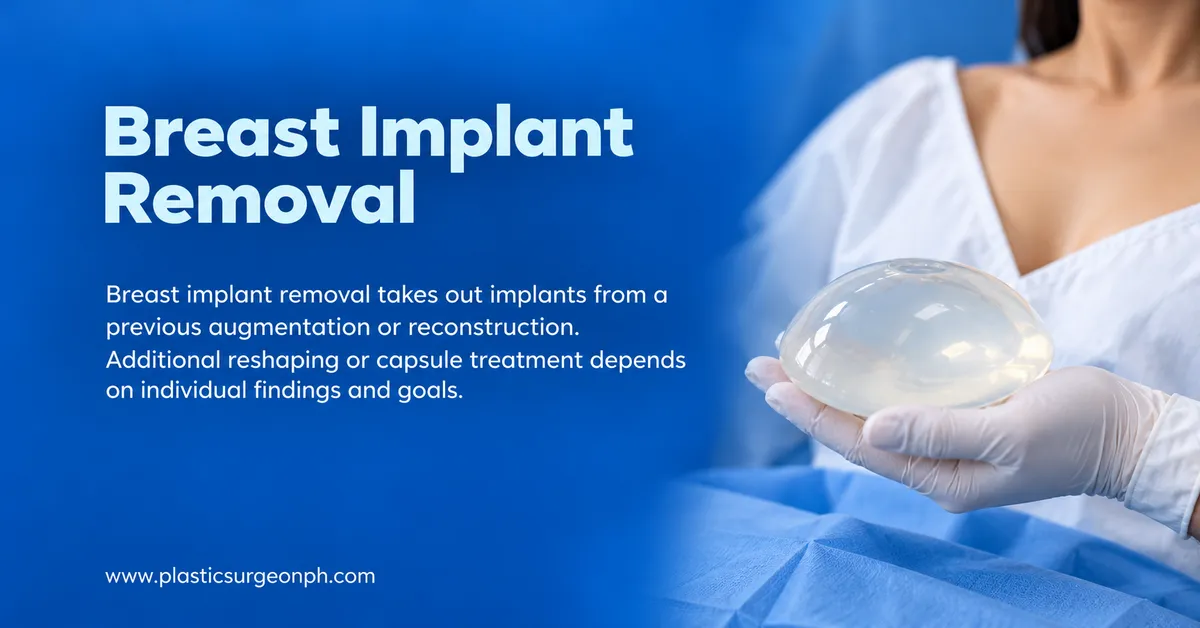
Breast implant removal, or explant surgery, removes saline or silicone implants placed for augmentation or reconstruction. It may address personal preference, implant rupture, deflation, capsular contracture, pain, infection, movement, asymmetry, implant exposure or concerns about an implant-associated condition. Some patients also report systemic symptoms they associate with implants, although symptoms can have several causes and improvement after removal cannot be guaranteed. Surgery may include removal of part or all of the surrounding capsule, treatment of leaked silicone, breast lift, fat grafting or replacement with a new implant, depending on findings and goals. The capsule also needs its own assessment, as breast implant capsulectomy and en bloc removal is a more specific decision than removing the implant itself. A patient considering another implant should also understand how breast implant revision differs from an explant without replacement. The breast implant removal and revision comparison can help clarify whether the plan involves taking an implant out, replacing it, or reshaping the breast.
Who is a good candidate for breast implant removal, and who is not?
A good candidate has a clear reason for removal, understands the likely deflation or sagging afterward and is medically fit for the required operation. Urgent assessment is appropriate for infection, implant exposure, rapidly enlarging fluid, a new mass or suspected rupture. Elective surgery may be delayed for uncontrolled illness, active nicotine use or unrealistic expectations that removal will certainly cure unrelated symptoms. A patient with no symptoms and intact implants is not automatically required to remove them. However, she should understand device surveillance and seek specialist review when new breast changes occur. Cancer-related concerns need coordinated imaging and pathology.
What are the different types or techniques used in breast implant removal?
Simple explantation removes the implant while leaving most of the capsule when it is thin and harmless. Partial capsulectomy removes selected scar tissue, while total capsulectomy attempts to remove the entire capsule. Capsulotomy opens a tight capsule without fully removing it. An en bloc resection removes the implant and capsule together with a margin when oncological principles require it, but it is not a routine wellness procedure and may be unsafe when the capsule adheres to ribs or chest muscle. Ruptured silicone requires careful gel removal. A lift, reduction or fat graft can reshape loose tissue after explantation.
Are there non-surgical alternatives to breast implant removal?
There is no non-surgical method that dissolves or removes an implant. Observation may be reasonable for an asymptomatic patient with intact devices after proper review. Imaging can evaluate suspected silicone rupture, fluid or masses, but it does not repair the device. Supportive bras, physiotherapy and treatment of other medical causes may help selected discomfort, while capsular contracture usually needs surgery when severe. Antibiotics may treat early infection but cannot always sterilise an infected implant. If the concern is appearance rather than safety, changing clothing support or accepting the current result avoids surgical risk. Decisions should follow examination, not social-media pressure.
How do I prepare for breast implant removal?
Collect the implant card, original operative report, previous imaging and details of any infection, trauma or breast symptoms. The surgeon should examine the breast, capsule, skin and nipple position and explain the expected contour after removal. Ultrasound, mammography or MRI may be needed, while late fluid or a mass may require aspiration and specialised tests before surgery. Disclose medicines, allergies, family cancer history and nicotine use. Stop smoking or vaping as directed and coordinate prescription changes with the relevant doctor. Arrange transport, support at home, a surgical bra and extra recovery time if capsulectomy or a lift is planned.
How is breast implant removal performed, and how long does it take?
The surgeon usually enters through an existing breast scar, identifies the implant and capsule and performs the planned removal. An intact implant may be removed directly. Ruptured silicone is collected carefully, and the pocket is irrigated according to the clinical situation. Diseased, calcified or contracted capsule tissue may be partly or fully excised and sent for pathology. Drains are more likely after capsulectomy. A simple removal may take one to two hours, while total capsulectomy, rupture cleaning, a breast lift or reconstruction can require three to five hours or longer. The true extent may only become clear during surgery.
What type of anesthesia is used, and who administers it?
Simple removal may occasionally be performed under local anaesthesia with sedation. General anaesthesia is common when the capsule is removed, an implant is ruptured or reshaping is added. A qualified anaesthesiologist should assess the patient and administer deep sedation or general anaesthesia while monitoring vital signs. The surgeon also uses local anaesthetic in the operative area. Ask whether the planned setting can manage bleeding, chest-wall injury or an unexpected need for wider surgery. Previous anaesthetic reactions, sleep apnoea, heart or lung disease and all medicines must be disclosed. Longer operations need appropriate clot prevention and recovery monitoring.
What results can I realistically expect, and when will I see them?
The breast becomes smaller immediately, but early swelling can disguise the final contour. Skin may look loose, the upper breast may appear empty and natural asymmetry may become more visible. Results depend on implant size, duration, tissue stretching, pregnancy, weight change and whether a lift or fat graft is performed. The breast usually settles over three to six months, while scars soften over a year. Removal may relieve implant-related tightness or pain, but no surgeon should guarantee improvement in every systemic symptom. A staged lift or fat transfer may be safer after the tissues have healed and the final volume is clear.
Will I have scars after breast implant removal, and how visible will they be?
The surgeon often reuses the existing incision beneath the breast or around the areola. The scar may need to be lengthened for an intact-capsule removal, severe contracture or leaked material. A lift adds scars around the areola, vertically down the breast and sometimes within the fold. Drains leave small marks. Previous scars can widen or become more noticeable after repeat surgery, and thin skin may reveal contour depressions. Scars typically fade over twelve months or longer but can thicken, darken or form keloids. Sun protection and surgeon-approved scar care begin only after complete wound closure.
What are the risks and possible complications of breast implant removal?
Risks include bleeding, infection, anaesthetic complications, blood clots, fluid collection, delayed healing, pain, numbness, asymmetry, poor scars and dissatisfaction. Capsule removal can injure chest muscle, ribs, lung lining or surrounding tissue, particularly when scar is densely attached. Rarely, pneumothorax can occur. Residual silicone, contour deformity, recurrent fluid and nipple-sensation change are possible. Removing an implant does not eliminate every future breast concern. Fluid, capsule or masses may require pathology. Seek urgent help for breathlessness, chest pain, rapidly increasing swelling, fever, pus, dark skin, wound opening or a new late breast enlargement.
What is recovery like after breast implant removal, and how long does it take?
Recovery after simple removal may be easier than after the original augmentation, with soreness and swelling for one to two weeks. Capsulectomy, rupture cleaning and breast lifting produce more discomfort and longer healing. A supportive bra and drains may be used. Keep the upper body elevated, walk gently and avoid pulling or lifting. Bruising usually improves over two weeks, while swelling, firmness and emotional adjustment can continue for several months. The breasts may look temporarily wrinkled or uneven as tissues contract. Drainage, fever, sudden one-sided swelling or worsening chest discomfort should be reported immediately rather than treated as routine recovery.
When can I return to work, exercise, and normal activities?
After uncomplicated removal, desk work may resume in five to ten days. Total capsulectomy or a combined lift often requires ten to fourteen days or longer, and physical work may require three to six weeks. Gentle walking begins early. Driving waits until comfortable arm movement returns and sedating medicine is stopped. Heavy lifting, running and upper-body exercise are usually restricted for four to six weeks. Drains, open wounds or extensive chest-wall dissection may extend the schedule. Patients should arrange help with young children and household tasks. The operating surgeon should clear swimming, underwire bras, massage and return to strenuous duties.
What aftercare and follow-up appointments are required?
Aftercare includes wound cleaning, prescribed medicine, supportive garments and drain recording when applicable. Do not manipulate the breast or start massage unless instructed. Early reviews assess bleeding, infection, fluid and skin circulation. Pathology and fluid-test results must be discussed, not simply filed. Later visits monitor contour, scars and whether a lift or fat graft is appropriate. Continue ordinary breast screening and keep copies of the explant and pathology records. Urgent contact is needed for fever, severe pain, new swelling, pus, wound separation, breathing difficulty or a new mass. Symptoms months or years later still deserve assessment.
How long do the results of breast implant removal last?
Implant removal is permanent unless another implant is placed later. However, the natural breasts continue to age and respond to pregnancy, hormones and weight change. Stretched skin may contract partly during the first year, but the degree cannot be predicted. Fat transfer can add volume, although only part of the graft survives. A lift can improve position, but gravity continues. Removing the entire capsule is not a guarantee that all symptoms or future capsule-related issues disappear. Long-term follow-up is based on the reason for surgery, pathology findings and ordinary breast health rather than on one universal explant schedule.
How much does breast implant removal cost in the Philippines, and what is included in the price?
Published local figures place straightforward removal near PHP 110,000, while a practical range is approximately PHP 120,000 to PHP 250,000. Total capsulectomy, ruptured silicone, pathology, hospital care or a combined lift can bring the total to PHP 250,000 to PHP 450,000 or more. The written quote should separate implant removal, capsulectomy, surgeon, anaesthesiologist, facility, imaging, laboratory tests, pathology, drains, medicines and follow-ups. Ask whether the fee changes if unexpected rupture or extensive scar is found. Medical or cancer-related indications may have benefits, but PhilHealth, HMO and insurer approval should be confirmed in writing.
Thank you for sharing this article...
About the Author: Joan de Alta

View Surgeon Profiles

Certified as a Diplomate by the Philippine Board of Plastic Surgery (PBPS).

Completed plastic and reconstructive surgery training at MakatiMed in 2020.