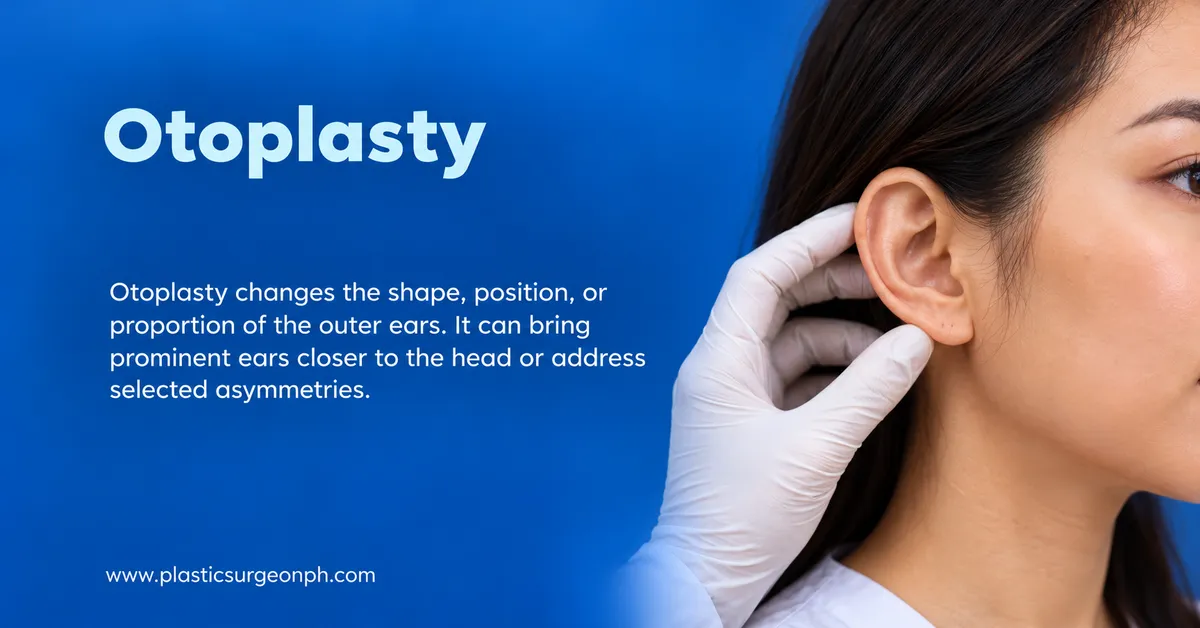
Otoplasty changes the shape, position or proportion of the external ears. It is commonly performed for prominent ears, but it can also treat selected cartilage folds, asymmetry, stretched earlobes or congenital differences. The operation should create a natural ear that fits the face, not an ear pulled unnaturally flat against the head. In children, the decision must include the child’s own wishes and ability to cooperate with recovery.
What is otoplasty, and what concerns does it address?
Otoplasty is surgery of the visible outer ear. It can bring prominent ears closer to the head, create a missing antihelical fold, reduce an enlarged conchal bowl, reshape the rim, correct selected asymmetries or repair an earlobe. Reconstructive ear surgery can also address injury or congenital conditions, although complex microtia reconstruction is much more extensive than routine cosmetic ear pinning.
Otoplasty does not usually improve hearing because it changes the external cartilage rather than the eardrum, middle ear or inner ear. A patient with hearing loss, drainage or recurrent infection needs an ENT assessment. Cosmetic correction can reduce teasing or self-consciousness, but it should be chosen voluntarily and not as punishment for looking different. A missing or underdeveloped ear needs the more extensive assessment described in ear reconstruction and microtia repair.
Who is a good candidate for otoplasty, and who is not?
Healthy children may be considered from about age five, when the ear has achieved much of its growth and cartilage can support correction. The child should understand the plan at an age-appropriate level, cooperate with dressings and personally agree to surgery. Teenagers and adults should have realistic goals, stable health and no nicotine use.
Active or untreated ear infection, uncontrolled medical conditions, poor wound-healing risk and unrealistic expectations require postponement. Surgery is not appropriate when a child strongly objects or cannot follow instructions. Patients prone to keloids should discuss their history because scars behind the ear can become raised. Significant congenital absence or hearing-canal problems require a specialised reconstructive team.
What are the different types or techniques used in otoplasty?
Cartilage-sparing techniques use permanent internal sutures to fold and hold the ear, commonly creating or strengthening the antihelix. Cartilage-scoring or cutting techniques weaken, reshape or remove selected cartilage. Conchal setback reduces the depth or projection of the central bowl. Many operations combine these methods to address more than one anatomical cause of prominence.
Incisions are usually behind the ear, although small front incisions can be hidden within natural folds. Earlobe reduction, torn-lobe repair and reconstruction use different patterns. Incisionless suture techniques may suit limited deformities but are not appropriate for every ear and still carry suture and recurrence risks.
Are there non-surgical alternatives to otoplasty?
In newborns, ear moulding started during the first weeks of life can reshape soft cartilage without surgery. The window is limited because cartilage becomes firmer as maternal hormones decline. Parents should seek early paediatric or plastic-surgery assessment rather than buying unverified devices.
Older children and adults do not have a reliable permanent non-surgical method for prominent ears. Adhesive products can temporarily hold the ear but may irritate skin and do not remodel mature cartilage. Hairstyle and accessories are non-medical options. Filler and threads are not standard substitutes for structural otoplasty.
How do I prepare for otoplasty?
The surgeon examines both ears from several angles, identifies the cartilage cause of prominence, measures asymmetry and photographs the ears. Discuss hearing symptoms, infections, skin disease, previous surgery, keloids, allergies and all medicines. Children may need paediatric clearance, while adults require testing based on health and anaesthesia.
Stop nicotine as instructed and coordinate prescription medicine changes with the relevant doctor. Arrange transport, a responsible adult and time away from school or work. Prepare button-front clothing, a clean soft headband if recommended and a safe sleeping arrangement that avoids pressure on either ear. Explain the recovery plan to children honestly without frightening detail.
How is otoplasty performed, and how long does it take?
After anaesthesia, the surgeon usually makes an incision behind the ear. Cartilage is folded, scored, reduced or repositioned, and permanent sutures secure the new shape. The ear is compared with the opposite side while avoiding excessive setback. Skin is closed with fine sutures, and a protective dressing is placed around the head.
Bilateral cosmetic otoplasty commonly takes one and a half to three hours. A focused earlobe repair may be shorter, while reconstruction takes longer and may require stages. Most routine cases are outpatient. The operation should correct the specific deformity instead of applying the same suture pattern to every patient.
What type of anesthesia is used, and who administers it?
Adults and cooperative teenagers may have local anaesthesia with sedation. Young children generally require general anaesthesia so they remain still and comfortable. Extensive reconstruction also commonly uses general anaesthesia.
The surgeon injects local anaesthetic. A qualified anaesthesiologist should administer deep sedation or general anaesthesia, assess the patient beforehand and monitor recovery. Ask about fasting, the anaesthesia provider, facility licence and pain-control plan, particularly for a child.
What results can I realistically expect, and when will I see them?
The ears should appear less prominent and better balanced while keeping natural curves and a small space behind the ear. Exact symmetry is not realistic because ears differ before surgery and cartilage responds differently on each side. The goal is improvement that does not call attention to surgical overcorrection.
Change is visible when the bulky dressing is removed, but swelling can make the ears look thick, uneven or overly close to the head. Much of this improves over several weeks. Final contour and scar maturation take three to six months or longer. A small degree of relaxation can occur as cartilage heals.
Will I have scars after otoplasty, and how visible will they be?
Most scars lie behind the ear in the natural crease and are not visible from the front. Small anterior incisions can be hidden within folds. Earlobe procedures place scars according to the repair pattern. Complex reconstruction may create additional scars at donor sites, such as the rib area.
Scars can widen, thicken, darken or form keloids, particularly in susceptible patients. Infection and excessive tension worsen them. Report raised or itchy scar growth early because treatment is more effective when started promptly. Use silicone or massage only when the surgeon approves it.
What are the risks and possible complications of otoplasty?
Risks include bleeding, haematoma, infection, anaesthetic reaction, pain, numbness, swelling, asymmetry, poor scarring and need for revision. A haematoma beneath ear skin can damage cartilage and needs prompt assessment. Infection of cartilage, called chondritis, can deform the ear if not treated quickly.
Permanent sutures may become palpable, extrude or cause infection. Cartilage can relapse, overcorrect or form sharp edges. Excessive setback can create a telephone-ear or pinned appearance. Skin loss is uncommon. Seek urgent review for severe or increasing pain, rapidly growing swelling, fever, foul drainage, pale or dark skin, dressing pressure or a sudden change in ear shape.
What is recovery like after otoplasty, and how long does it take?
A padded head dressing protects the ears during the first days. Pressure, throbbing, swelling, bruising and temporary numbness are expected. Pain that becomes severe or is much worse on one side can signal a haematoma or overly tight dressing and should be reported immediately.
After the bulky dressing is removed, a soft headband may be worn continuously and later at night according to the surgeon’s plan. External sutures are removed in about one to two weeks when non-dissolving material is used. Most swelling improves over several weeks, while tenderness and scar maturation continue longer.
When can I return to work, exercise, and normal activities?
Adults often return to desk work in about one week. Children may return to school after one to two weeks if the ears can be protected and the school can prevent rough play. Sleeping on the back avoids pressure. Glasses and masks should not rub the incision.
Strenuous exercise commonly waits three to four weeks. Contact sports, swimming and activities involving helmets need a longer restriction, often six weeks or more. Haircuts, colouring and earrings require clearance. Driving is postponed while taking sedating pain medicine.
What aftercare and follow-up appointments are required?
Keep the dressing clean and dry, take prescribed medicine and do not insert objects beneath a bandage to scratch. Once permitted, clean incisions gently and use the headband exactly as instructed. A very tight headband can injure tissue, while no protection may allow accidental folding or impact.
Early follow-up checks circulation, haematoma, infection and dressing pressure. Later visits assess sutures, symmetry, scars and recurrence. Contact the team immediately about worsening pain, fever, discharge, sudden swelling, skin colour change, exposed sutures or accidental trauma.
How long do the results of otoplasty last?
Otoplasty results are intended to be permanent. Cartilage can relax slightly during healing, and recurrence is possible if sutures break or the cartilage strongly resists the new shape. Normal ageing changes the ear gradually but does not usually reverse a successful setback.
Protecting the ears from trauma during early healing is essential. Permanent internal sutures generally remain unless they become exposed or infected. A revision is possible but may be more complex because of scar and altered cartilage.
How much does otoplasty cost in the Philippines, and what is included in the price?
Public Philippine listings range from about PHP 20,000 to PHP 55,000 for selected cosmetic ear procedures, while hospital-based bilateral otoplasty with anaesthesia may cost about PHP 60,000 to PHP 150,000 or more. Earlobe repair, routine ear pinning and major reconstruction have very different fees and should not be grouped together.
Ask whether the quotation covers one or both ears, surgeon, anaesthesiologist, facility, medicines, tests, dressings, headband, suture removal and follow-ups. For a child, confirm paediatric anaesthesia and recovery charges. Reconstructive treatment for a congenital condition may have different benefit rules, but coverage requires direct written confirmation.
Thank you for sharing this article...
About the Author: Joan de Alta

View Surgeon Profiles

Certified as a Diplomate by the Philippine Board of Plastic Surgery (PBPS).


Explore Available Clinics



Browse Other Procedures
Abdominal etching uses selective liposuction to define abdominal contours.
Canthoplasty and canthopexy reshape or reinforce the outer eyelid corner.