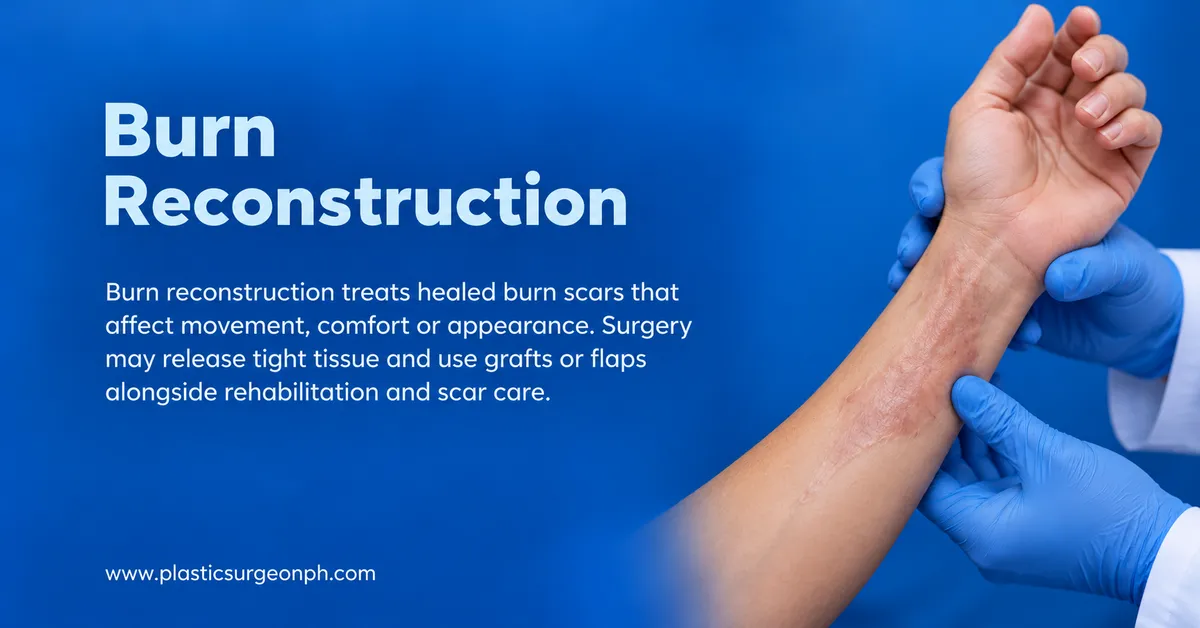
Surviving a serious burn may be only the first part of recovery. A healed burn can leave tight scars, unstable skin, altered facial features, pain, itching and restricted movement. Burn reconstruction brings together plastic surgery, rehabilitation, scar management and emotional support to improve function and appearance. It is often performed in stages, with priorities chosen according to safety and daily needs. This guide focuses on reconstruction after the acute emergency has been controlled, although some reconstructive decisions begin during the original admission.
What is Burn Reconstruction, and what concerns does it address?
Burn reconstruction treats damage left by thermal, electrical, chemical or friction burns after life-saving care and wound closure. It addresses scar contractures that pull joints or eyelids out of position, limit the mouth or neck, restrict breathing or walking, and interfere with work or self-care. It can also strengthen fragile wounds, restore lost tissue, improve contour and reduce highly raised, itchy or painful scars. Reconstruction may be early when a contracture threatens vision, airway or movement, or delayed until scars have matured. It cannot return skin to its exact pre-burn state, but it may produce meaningful gains in mobility, comfort, protection and social confidence. A burn wound may first need skin grafting for coverage before later scar or contour work.
Who is a good candidate for Burn Reconstruction, and who is not?
Good candidates have a healed or controlled wound and a specific functional or reconstructive problem that surgery can reasonably improve. They should be medically stable, nutritionally supported, free from uncontrolled infection and able to participate in therapy, splinting and wound care. Children may need reconstruction as scars fail to grow with them. Surgery may be deferred for active sepsis, open unstable wounds, severe malnutrition, poorly controlled diabetes or heart and lung disease, ongoing nicotine use, or inability to complete rehabilitation. A scar that is still rapidly changing may be observed unless delay risks permanent disability. Psychological readiness and realistic expectations also matter because one operation rarely completes major burn care.
What are the different types or techniques used in Burn Reconstruction?
The simplest procedure may be a Z-plasty, which rearranges triangular flaps to lengthen a tight scar and redirect it. Larger contractures can be released and covered with a split-thickness or full-thickness skin graft. Local, regional or free flaps bring healthier tissue with its own blood supply to exposed tendons, bones or joints. Tissue expansion may create nearby skin with a better colour and texture match. Other options include serial excision, eyelid or lip reconstruction, tendon or nerve procedures, fat grafting, dermabrasion and laser treatment. Surgeons combine techniques according to scar depth, available donor tissue, joint position, growth and the patient’s rehabilitation plan.
Are there non-surgical alternatives to Burn Reconstruction?
Yes, and they are often the first line or an essential partner to surgery. Physiotherapy and occupational therapy maintain joint movement and teach safe stretching. Splints position joints while scars contract, and pressure garments or silicone products may help selected raised scars. Moisturising, massage, sun protection and itch treatment support comfort and skin care. Steroid injections, certain vascular or fractional lasers, and camouflage products may improve symptoms or appearance without an incision. These measures cannot replace missing tissue or reliably release a severe mature contracture. If an eyelid cannot close, a neck scar restricts breathing, or a joint is progressively losing movement, surgery may be the safer functional treatment.
How do I prepare for Burn Reconstruction?
Preparation includes photographs, measurements of movement, scar assessment and a review of the original burn, operations and donor sites. The surgeon may order blood tests, imaging or vascular studies and involve rehabilitation, anaesthesia, nutrition, pain, psychology or other specialties. Optimise protein and calorie intake, diabetes control and anaemia. Stop cigarettes, vaping and nicotine products well before surgery because they reduce blood flow and increase graft or flap loss. Report any open area, fever or new redness. Ask where a graft or flap will come from and how that donor area will be cared for. Arrange help, transport, dressings, equipment and time for therapy, not only time for the operation. For consultation research, review Dr. Glenn Angelo Genuino’s profile, then confirm experience with this operation, credentials, and follow-up arrangements directly.
How is Burn Reconstruction performed, and how long does it take?
The surgeon releases or removes restrictive scar until the involved part can be placed in a safer position. The resulting defect is then closed directly, rearranged with nearby skin, covered with a graft, or reconstructed with a flap. A splint, bolster dressing, negative-pressure dressing or temporary pins may protect the correction. Small scar rearrangements may take one to two hours and can sometimes be day surgery. A broad graft or regional flap may take two to five hours and require admission. Free-flap reconstruction can take six to twelve hours or longer. Treatment is frequently staged so each operation has a clear functional goal and donor sites are used responsibly.
What type of anesthesia is used, and who administers it?
Small revisions may be performed under local anaesthesia, sometimes with monitored sedation. Larger contracture releases, grafts, procedures in children and most flap operations use general anaesthesia. Regional nerve blocks may be added for an arm or leg to improve pain control. A qualified anaesthesiologist administers sedation, regional or general anaesthesia and monitors breathing, circulation, temperature and blood loss. Major burn survivors can have difficult airways, lung injury, altered medicine requirements and significant heat or fluid loss, so anaesthetic planning is particularly important. Ask whether the hospital has the nursing, blood bank, intensive care and flap-monitoring resources appropriate for the planned operation.
What results can I realistically expect, and when will I see them?
Improved position or movement may be evident immediately after a contracture is released, but dressings, swelling and pain initially limit what you can see or do. Grafts often look patchy, dark or pink before settling, while flaps remain swollen for weeks. Functional progress depends heavily on therapy and may continue for six to twelve months. Texture and colour differences usually remain because transferred skin is not identical to burned skin. Raised scars may flatten but can recur, particularly during growth or when rehabilitation is incomplete. A realistic result is better movement, wound stability, comfort and proportion. Complete restoration of unburned appearance, normal sensation or unrestricted motion cannot be guaranteed.
Will I have scars after Burn Reconstruction, and how visible will they be?
Yes. Reconstruction replaces or rearranges existing scars and creates planned incisions and often a donor-site scar. A graft may differ in colour, thickness and texture from nearby skin, and a split-thickness graft donor site may resemble a broad colour change. Flap donor sites leave linear or grafted scars elsewhere. Surgeons place incisions along useful boundaries where anatomy permits and choose tissue that balances function with appearance. New scars commonly remain pink, firm or itchy for months before softening. People prone to hypertrophic scars or keloids need early surveillance. Scar care may include silicone, pressure, massage, injections or laser once healing is secure and the surgeon approves.
What are the risks and possible complications of Burn Reconstruction?
Possible problems include bleeding, infection, fluid collection, delayed healing, wound separation, chronic pain, numbness, anaesthetic complications and blood clots. A skin graft may not attach fully, especially over infection, moving tissue or poor circulation, and may require further grafting. A flap can suffer partial tissue loss or, rarely, complete failure. Contracture can recur as scars tighten or a child grows. Other risks include poor colour match, contour irregularity, injury to nerves or vessels, stiffness, donor-site problems and a need for more surgery. Splints or pins can cause pressure or infection if not monitored. Early reporting of colour change, severe swelling, fever or worsening pain can protect the result.
What is recovery like after Burn Reconstruction, and how long does it take?
Recovery depends more on the reconstruction than on the scar’s visible size. A small Z-plasty may need one to two weeks of wound care. A graft is often immobilised for about five days while it attaches, followed by gradual movement and several weeks of dressings. A flap may require hospital monitoring, elevation and a longer period before weight bearing or strenuous use. Swelling and sensitivity can last months. Therapy often restarts early but follows the surgeon’s limits to avoid pulling apart the repair. Patients should expect temporary dependence on family or caregivers. Major reconstruction may take six to twelve weeks for basic recovery and a year for scar maturation and functional refinement.
When can I return to work, exercise, and normal activities?
Desk work after a small revision may be possible in one to two weeks if pain is controlled and the wound can be protected. Physical work, school sports and exercise may require four to eight weeks or longer after grafting, and major flap surgery can require several months. Driving must wait until you can move safely, are no longer taking sedating medicine and are not restricted by a splint. A lower-limb procedure may limit standing or weight bearing, while a hand or neck release affects different tasks. Return should be based on wound strength, graft or flap survival and therapy goals, not only on the calendar or how the scar looks.
What aftercare and follow-up appointments are required?
Keep dressings dry and intact unless instructed otherwise, elevate the treated limb, take medicines correctly and protect graft or flap sites from pressure. Attend early checks because loss of blood supply can become urgent. Call immediately for a pale, blue, cold or unusually swollen flap, spreading redness, fever, foul drainage, bleeding, severe pain, shortness of breath or a damaged splint. Once healed, follow the programme for moisturising, massage, silicone, pressure garments, stretching and sun protection. Physiotherapy or occupational therapy may continue for months. Reviews assess motion, scar thickness, growth, garment fit and recurrence, and help decide whether another stage would add worthwhile function.
How long do the results of Burn Reconstruction last?
A well-healed graft, flap or scar rearrangement can provide durable coverage and function for many years. Results are not completely static. All scars contract to some degree, children grow, joints change and transferred tissue may stretch or bulk differently over time. A released contracture can return, especially after a severe burn, poor splint use or interrupted therapy. Sun exposure and new injury can also change fragile skin. Long-term exercise, moisturising and scar surveillance help preserve gains. Some patients need planned refinements or repeat releases years later. The durable benefit should therefore be judged by sustained comfort, movement and tissue stability rather than by expecting one operation to prevent every future change.
How much does Burn Reconstruction cost in the Philippines, and what is included in the price?
Philippine private-hospital costs vary too widely for one reliable package price. As a rough planning guide, a small scar release may cost about PHP 60,000 to PHP 150,000, while a graft or local flap may be PHP 120,000 to PHP 350,000. Major staged or free-flap reconstruction can reach PHP 400,000 to more than PHP 1,000,000, especially with prolonged admission or intensive care. Obtain an itemised estimate covering surgeon and anaesthesiologist fees, operating room, hospital stay, graft or flap supplies, blood, tests, medicines, dressings, splints and therapy. PhilHealth may provide a procedure-specific case-rate deduction. Government hospitals and medical assistance programmes may reduce out-of-pocket cost, but availability and waiting time differ.
Thank you for sharing this article...
About the Author: Joan de Alta

View Surgeon Profiles

Certified as a Diplomate by the Philippine Board of Plastic Surgery (PBPS).



Explore Available Clinics


Browse Other Procedures
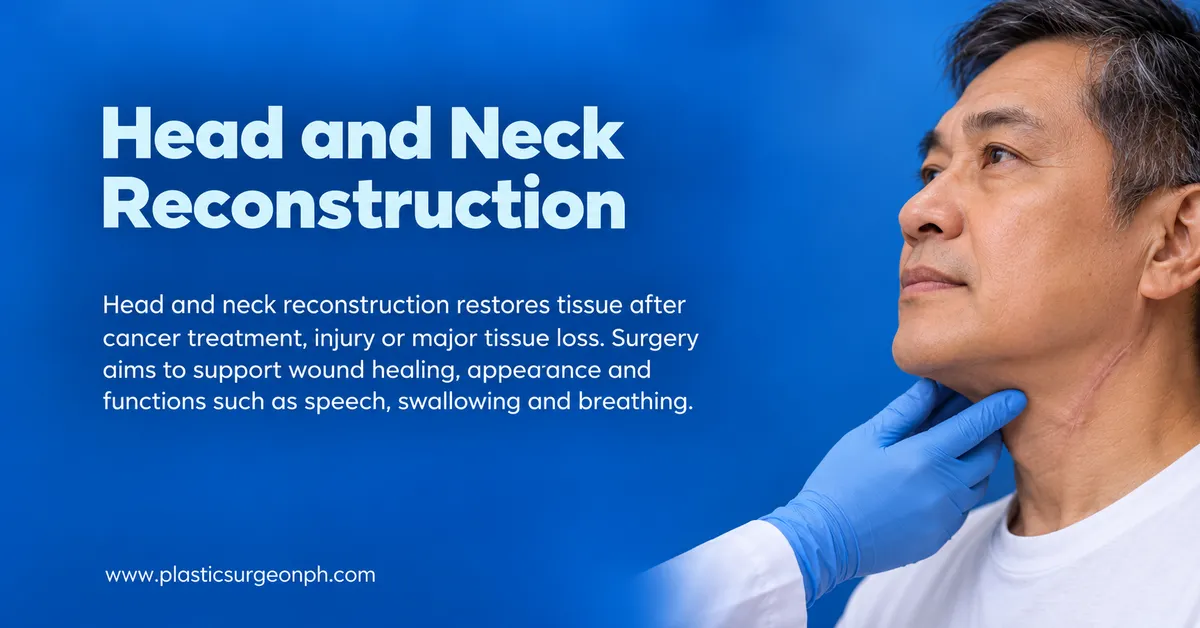
Head and neck reconstruction repairs tissue to restore essential functions.