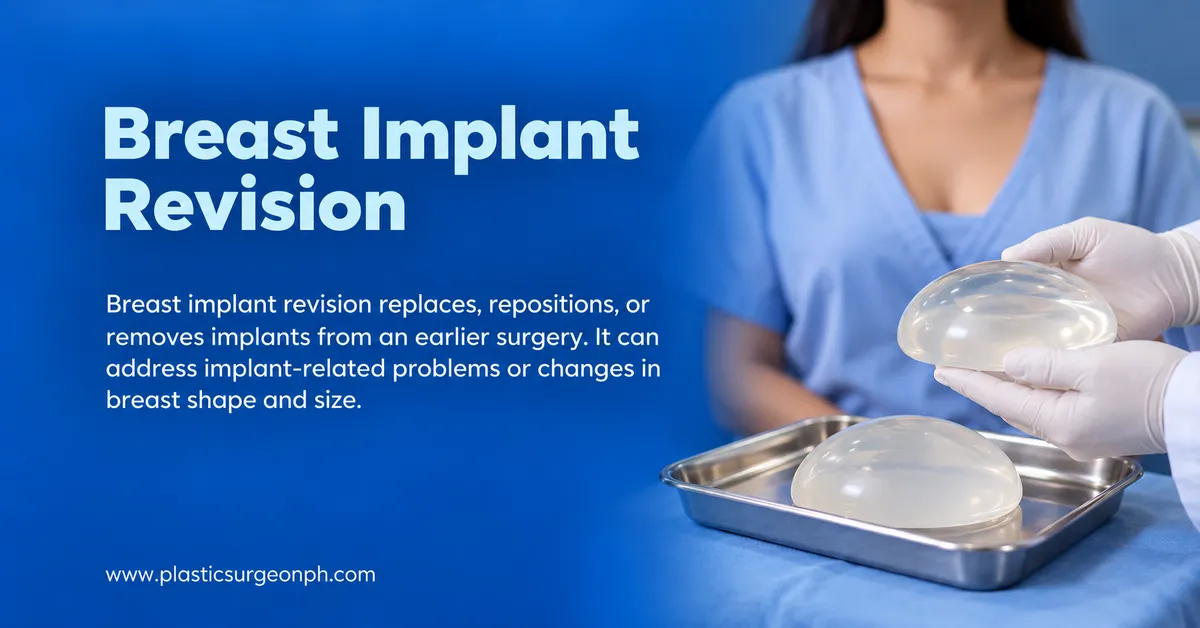
Breast implant revision corrects a previous augmentation or reconstruction that no longer meets the patient’s medical or aesthetic needs. It is not simply a routine implant exchange. Scar tissue, stretched skin, altered muscle and limited tissue coverage make revision more complex than first-time augmentation. Therefore, the plan must identify each problem separately, such as rupture, contracture, malposition, sagging or size dissatisfaction, and explain what surgery can realistically improve.
What is breast implant revision, and what concerns does it address?
Breast implant revision removes, replaces or repositions implants and may alter the surrounding capsule, implant pocket, breast tissue or skin. It can address rupture, saline deflation, capsular contracture, pain, rippling, implant visibility, asymmetry, bottoming out, double-bubble deformity, sideways movement, infection or a change in desired size. Revision may also combine implant exchange with a breast lift, reduction, fat grafting or removal without replacement. Some operations are medically necessary, while others are elective. A careful diagnosis matters because changing implant size alone will not correct every pocket, skin or nipple problem. A revision consultation starts with the original breast augmentation plan and the reasons the present result needs reassessment. Some patients instead decide on breast implant removal, without placing a new implant. The breast implant removal and revision comparison can help clarify whether the plan involves taking an implant out, replacing it, or reshaping the breast.
Who is a good candidate for breast implant revision, and who is not?
Good candidates have a stable, defined concern, suitable health, realistic expectations and access to original implant information when possible. Urgent surgery may be required for infection, exposure or severe complications. Cosmetic revision is generally delayed until tissues have settled after recent surgery unless a time-sensitive problem exists. Continued nicotine use, uncontrolled disease, active infection and repeated impulsive size changes are reasons to postpone. Very thin tissues may not safely cover another large implant. A patient must understand that revision cannot recreate untouched anatomy and may require more scars, smaller implants, staged surgery or complete removal.
What are the different types or techniques used in breast implant revision?
Techniques include implant exchange, removal, pocket tightening called capsulorrhaphy, pocket release, partial or total capsulectomy and change of implant plane. Acellular dermal matrix or surgical mesh may support selected weak tissues, although these materials add cost and possible complications. A breast lift treats stretched skin and low nipples. Fat grafting can camouflage rippling or improve soft-tissue coverage. Severe malposition may require internal sutures and temporary activity restrictions. Ruptured implants require removal of leaked material. When implant-associated disease is suspected, surgery and pathology follow an oncological plan rather than an ordinary cosmetic revision.
Are there non-surgical alternatives to breast implant revision?
Observation is reasonable for minor stable asymmetry or an intact implant that causes no concern after proper assessment. A supportive bra can improve comfort, while physiotherapy may help unrelated chest or shoulder pain. Imaging can monitor implant integrity but cannot repair rupture or malposition. Filler injection around breast implants is not a routine correction and can cause lumps, infection and imaging problems. Fat grafting is surgical, even when described as minimally invasive. Capsular contracture, significant displacement, exposure and rupture usually require surgery when treatment is indicated. The risks of revision should be weighed against living safely with a small imperfection.
How do I prepare for breast implant revision?
Bring the implant card, operative report, previous photographs, imaging and a timeline of symptoms. The surgeon should examine skin thickness, scars, nipple position, pocket dimensions and chest-wall asymmetry. Ultrasound or MRI may be needed for rupture, and late fluid or masses need proper aspiration and testing before elective surgery. Discuss the desired size and an alternative plan if tissue quality cannot support it. Stop nicotine as directed, coordinate prescription medicines and complete required laboratory or breast tests. Arrange help, transport and adequate leave. Revision planning should include consent for reasonable intraoperative changes when the actual capsule differs from imaging.
How is breast implant revision performed, and how long does it take?
The surgeon usually reopens an existing scar, removes the implant and inspects the pocket and capsule. Ruptured material is cleared, diseased scar may be excised and the pocket is tightened or released. A new implant is inserted only after the space is prepared and contamination risk is controlled. Additional tissue support, fat grafting or a lift may be performed. A simple exchange can take one to two hours, while capsulectomy, major pocket reconstruction or combined lifting commonly requires three to five hours or more. Drains may be used. Some decisions are made during surgery because scar thickness and tissue strength cannot be fully predicted.
What type of anesthesia is used, and who administers it?
Most revisions use general anaesthesia, particularly when the capsule, pocket or breast skin requires substantial work. A limited exchange may occasionally use local anaesthetic with sedation. A qualified anaesthesiologist should assess the patient, administer deep sedation or general anaesthesia and monitor recovery. The surgeon also injects local anaesthetic. Revision can involve more bleeding and longer operating time than primary augmentation, so the facility must have appropriate emergency resources. Disclose sleep apnoea, allergies, previous nausea or difficult airway, heart and lung conditions, and all medicines. Ask whether anaesthesia, recovery and possible overnight observation are included in the quotation.
What results can I realistically expect, and when will I see them?
Revision can improve size, position, softness and symmetry, but scarred tissues impose limits. Natural rib and breast asymmetry remains. A repaired pocket can stretch again, fat grafts may partly absorb and a lift cannot stop future ageing. The breasts look changed immediately, although swelling, bruising and high implant position can obscure the result. Most settling occurs over three to six months, while scars and firmness improve for a year or longer. The goal is a safer, more balanced and durable result, not a guarantee of perfection. Major reconstruction may need staged fat grafting or a second procedure.
Will I have scars after breast implant revision, and how visible will they be?
Existing scars are reused when they provide safe access, but they may need to be lengthened. A breast lift adds periareolar, vertical and possibly fold scars. Fat grafting creates tiny donor and injection marks. Repeat surgery can make scars wider, firmer or more pigmented because circulation and tissue planes have changed. Scars generally fade over twelve to eighteen months, although keloids or hypertrophic scars may occur. Internal scar also matters because it shapes the implant pocket. Sun protection, nicotine avoidance and approved silicone treatment support healing. No responsible surgeon should promise that a revision will leave the same or less visible scarring.
What are the risks and possible complications of breast implant revision?
Risks include bleeding, infection, anaesthetic problems, blood clots, fluid, delayed healing, pain, numbness, asymmetry and poor scars. Implant problems can recur, including contracture, rupture, rippling, malposition, exposure and visible edges. Capsule removal can injure chest muscle, ribs or lung lining. Support materials can become infected or fail. Fat grafting may form lumps or oil cysts. Breast and nipple sensation can change, and tissue or nipple loss is possible after extensive lifting. Rare implant-associated cancers require specific testing and treatment. Fever, new mass, rapidly enlarging breast, drainage, breathing difficulty or exposed material needs prompt care.
What is recovery like after breast implant revision, and how long does it take?
Recovery ranges from several days after a simple exchange to several weeks after capsulectomy, pocket repair and lifting. Expect swelling, tightness, bruising and temporary altered sensation. Drains and a specialised bra may be required. Pocket repairs often need strict limits on arm movement, sleeping position and implant pressure. Pain should gradually improve. Tissue may feel firm or uneven for months. Emotional recovery can also be difficult because revision patients often fear another disappointing result. Sudden swelling, fever, pus, wound opening, increasing redness, shortness of breath or severe pain should be reported immediately. Do not judge symmetry from daily photographs during early swelling.
When can I return to work, exercise, and normal activities?
Desk work may resume in seven to fourteen days, but major reconstruction or visible bruising may require longer. Gentle walking starts early. Driving waits until arm movement is safe and sedating medicine is no longer needed. Heavy lifting, running and chest exercise are usually restricted for four to six weeks, and pocket repair may require a longer period. The surgeon may prescribe a stabilising band, surgical bra or specific sleep position. Contact sport and pressure from tight equipment must wait until the implant is stable. Patients should arrange childcare and avoid lifting luggage, pets or grocery bags during early healing.
What aftercare and follow-up appointments are required?
Follow the exact wound, drain, bra and activity instructions for the reconstruction performed. Do not improvise massage, compression or implant manipulation, because a manoeuvre suitable for one pocket repair may damage another. Early visits assess bleeding, infection, skin circulation and implant position. Pathology results must be reviewed when capsule or fluid is submitted. Later appointments monitor settling, support materials, scars and recurrence. Keep the new implant card and updated operative report. Continue breast screening and device surveillance. Contact the team urgently for fever, sudden movement, one-sided enlargement, severe pain, drainage, wound separation, exposed implant or new neurological or breathing symptoms.
How long do the results of breast implant revision last?
A successful revision can last many years, but neither implants nor repaired tissues carry a lifetime guarantee. The new implant can rupture or contract, and the pocket can stretch with gravity, pregnancy, weight change or oversized devices. A lift continues to age, while fat grafts change with body weight. Long-term monitoring remains necessary. Avoiding nicotine, maintaining stable weight and following activity instructions improve durability but cannot remove all risk. Another revision may eventually be required. Patients should choose the smallest operation that reliably addresses the problem rather than repeatedly enlarging or changing implants in pursuit of minor differences.
How much does breast implant revision cost in the Philippines, and what is included in the price?
Revision cost varies more than primary augmentation. A straightforward exchange may be around PHP 200,000 to PHP 300,000, while capsulectomy, new implants, pocket reconstruction, mesh, fat grafting or a lift can bring the total to PHP 300,000 to PHP 600,000 or more. Some published fees exclude the new implant and anaesthesia. Request an itemised quote for the surgeon, assistant, anaesthesiologist, facility, implant, support material, imaging, pathology, drains, medicines and follow-up. Confirm whether implant warranty assistance applies and who pays if surgery changes after rupture or extensive capsule is found. Medical indications require written benefit confirmation.
Thank you for sharing this article...
About the Author: Joan de Alta

View Surgeon Profiles

Certified as a Diplomate by the Philippine Board of Plastic Surgery (PBPS).



Explore Available Clinics


Browse Other Procedures
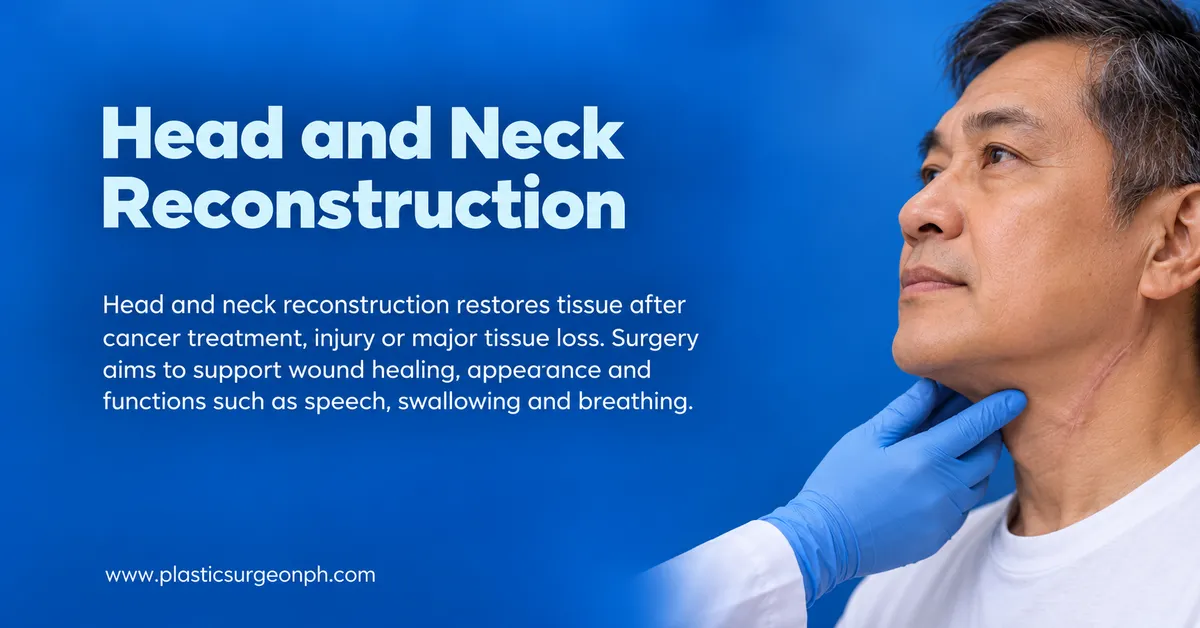
Head and neck reconstruction repairs tissue to restore essential functions.