What is Nerve Repair and Reconstruction, and what concerns does it address?
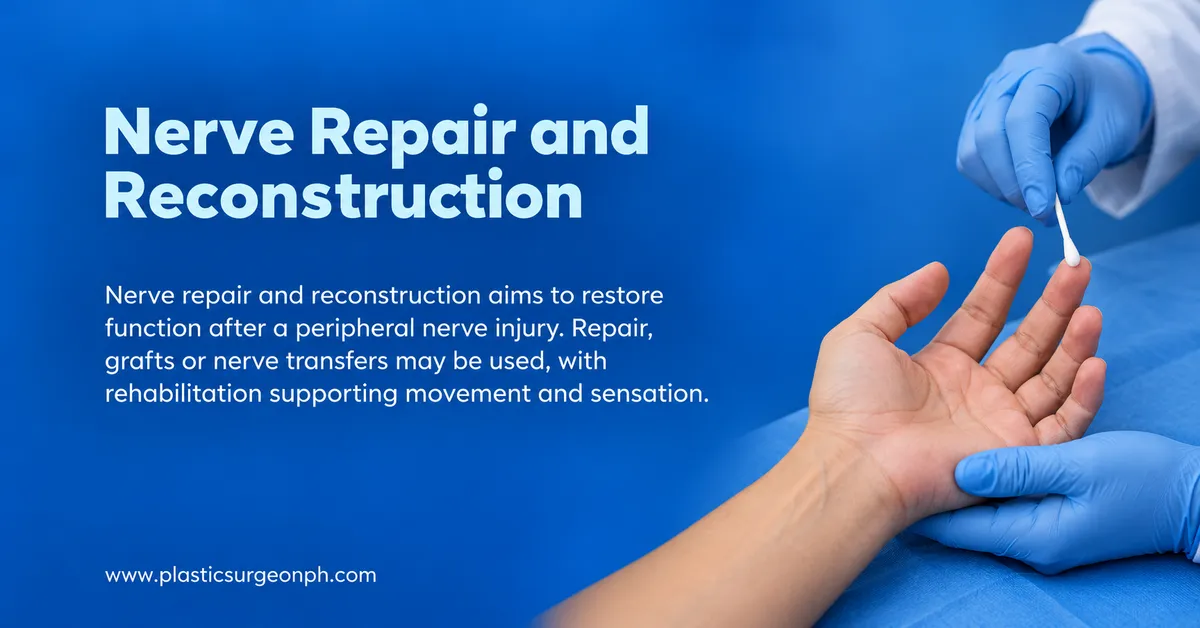
Nerve Repair and Reconstruction attempts to restore continuity or function when a peripheral nerve has been cut, crushed, scarred, stretched or damaged by tumour or previous surgery. Peripheral nerves carry movement, feeling and sometimes automatic functions such as sweating. When a nerve is injured, the correct plan depends on the mechanism, level, time since injury, distance to the target muscle or skin and condition of the wound. Nerve surgery cannot always restore normal function, and rehabilitation is as important as the operation. A consultation should distinguish an aesthetic preference from symptoms that need medical assessment first. The safest plan is always based on anatomy, health, skin quality and the change that is genuinely achievable, rather than a filter, a single photograph or a fixed package. Injuries involving the shoulder and arm nerve network may need the specialised assessment described in brachial plexus surgery. When the damaged nerve controls facial movement, facial paralysis reconstruction may require a specialised plan for expression and eye protection.
Who is a good candidate for Nerve Repair and Reconstruction, and who is not?
A good candidate is generally patients with a documented nerve injury or disabling compression who can benefit from timely repair, graft, transfer, decompression or reconstruction after specialist examination and nerve testing. They should be at or near a stable weight, able to stop smoking and vaping as instructed, and prepared to follow aftercare. Nerve Repair and Reconstruction is usually not appropriate for people with an untreated contaminated wound, absent or non-salvageable target tissue, severe medical instability, an injury too old for reinnervation of a target muscle without an alternative plan, or expectations of immediate normal sensation and strength. An experienced surgeon may recommend treatment of a medical issue, a period of weight stability, counselling, or a different procedure before elective surgery.
What are the different types or techniques used in Nerve Repair and Reconstruction?
Direct repair, called neurorrhaphy, joins clean nerve ends without tension. If a gap remains, the surgeon may use an autograft, processed allograft or conduit in selected sensory gaps. Nerve transfer reroutes a less critical functioning nerve or fascicle to a more important target closer to the muscle. Neurolysis releases a nerve from scar. Tendon transfer, muscle transfer or sensory reconstruction may be added when nerve regeneration alone is unlikely to restore useful function. There is no universally best technique. Your surgeon should explain the incision, tissue plane, device or graft if relevant, what is reversible, and why a more conservative or staged approach may be safer for your body.
Are there non-surgical alternatives to Nerve Repair and Reconstruction?
observation, splinting, hand therapy, pain management, electrical studies, treatment of the underlying disease, and adaptive devices may be appropriate in selected injuries. Waiting too long after a clean severed nerve can reduce the chance of useful recovery, so urgent specialist assessment is important after major lacerations or trauma. Non-surgical options can be worthwhile when they match the concern, but they should not be sold as equal to a surgical correction when they cannot address the same anatomy. A responsible consultation compares likely benefit, downtime, cost over time and risk rather than treating surgery as the only answer.
How do I prepare for Nerve Repair and Reconstruction?
Preparation commonly includes detailed history and examination, nerve-conduction studies or electromyography when useful, ultrasound or MRI for selected injuries, wound and fracture assessment, nicotine cessation, discussion of donor nerve trade-offs, and a therapy plan before surgery. Give the surgical team a complete list of prescribed medicines, supplements, allergies, previous operations and anesthesia problems. Do not stop prescribed blood thinners or other medicines without the doctor who prescribed them. Arrange a responsible adult, transport and recovery support if anesthesia or sedation is planned.
How is Nerve Repair and Reconstruction performed, and how long does it take?
With magnification or an operating microscope, the surgeon exposes the damaged nerve, removes unhealthy scar only as needed and selects direct repair, graft, transfer or release. Fine sutures and sometimes tissue glue align nerve fascicles without tension. The wound is closed and may be protected in a splint so the repair is not stretched. The length of surgery is usually about one to six hours, depending on the nerve, number of injuries, need for grafts, associated tendon or vessel repair and use of microsurgery. Timing varies with anatomy, safety checks, whether both sides are treated and whether another operation is combined. A longer operation is not automatically a better one. Careful planning, meticulous bleeding control and safe closure are more important than speed.
What type of anesthesia is used, and who administers it?
regional anesthesia with sedation may suit a focused upper-limb repair. General anesthesia administered by a consultant anesthesiologist is common for complex, multi-level, paediatric or traumatic reconstruction. Before surgery, disclose snoring or sleep apnea, heart or lung disease, allergies, previous nausea after anesthesia and every medicine or supplement you use. In the Philippines, ask who will administer the anesthetic, what credentials they hold, and whether the facility is equipped for the planned level of care.
What results can I realistically expect, and when will I see them?
Nerve regeneration is slow, often described as roughly a millimetre per day after an initial healing period, although recovery is not perfectly predictable. Tingling, shooting sensations or gradual muscle flickers can occur before useful function returns. Recovery can take many months to years, and may remain incomplete despite technically successful repair. The aim is improvement in proportion, function or reconstruction, not perfection. Natural asymmetry, healing differences and ongoing ageing remain. Review before-and-after photographs of patients with similar anatomy, and ask what would count as an acceptable result, a complication and a possible revision in your own case.
Will I have scars after Nerve Repair and Reconstruction, and how visible will they be?
The incision follows the injured area or a route that safely exposes the nerve. Graft harvest can add a donor-site scar and numbness. Scars may be tender early and can affect glide of nearby tendons or the nerve itself. Scar quality is influenced by incision tension, infection, sun exposure, genetics, skin tone, nicotine use and aftercare. Once the wound has healed, silicone-based scar care, sun protection and, when needed, supervised scar treatment may improve appearance. No surgeon can promise an invisible scar.
What are the risks and possible complications of Nerve Repair and Reconstruction?
All operations carry general risks such as anesthesia reaction, bleeding, infection, blood clot, delayed healing, pain, numbness, poor scarring, asymmetry and the need for revision. Procedure-specific concerns include infection, bleeding, worsened pain or neuroma, incomplete recovery, persistent numbness or weakness, stiffness, scar tethering, donor-site sensory loss, injury to nearby vessels or tendons, complex regional pain syndrome, need for tendon transfer or revision surgery. Seek urgent medical advice for severe or escalating pain, sudden swelling, fever, breathlessness, chest pain, wound separation, foul drainage, loss of colour or sensation, or any symptom your surgeon identifies as urgent.
What is recovery like after Nerve Repair and Reconstruction, and how long does it take?
Splinting protects some repairs for days or weeks, while other nerve transfers encourage early controlled motion. Sensory precautions are important because a numb hand can be burned or injured without warning. Hand therapy, occupational therapy or physiotherapy usually continues long after the incision has healed. Recovery is not only about when you feel well enough to go out. Internal healing and scar maturation take longer than the first visible improvement. Follow the written instructions from your own team because the appropriate restrictions can change when procedures are combined, drains are used, or healing is slower than expected.
When can I return to work, exercise, and normal activities?
For work, return varies from one to two weeks for sedentary work after a limited repair to several months for heavy manual work, driving, climbing or safety-critical jobs. movement is prescribed according to the repair. Avoid stretching the repaired nerve, heavy gripping, contact sports and resistance training until the surgeon and therapist confirm that healing and function permit it. Return to driving only when you are no longer taking sedating pain medicines and can make an emergency movement comfortably. Household tasks, travel and intimacy should also be cleared according to the operation, because a wound can look healed before deeper tissues are strong enough for strain.
What aftercare and follow-up appointments are required?
early wound review is followed by repeated strength, sensation, range-of-motion and pain assessments over months. Nerve studies may be repeated when progress is unclear. Therapy attendance and home exercises strongly influence outcome. Keep all appointments even if you feel well. Follow-up lets the team detect fluid collection, infection, scar problems, implant issues or functional concerns early. Take photographs only as instructed, maintain a list of questions, and contact the clinic promptly instead of relying on online advice if something feels wrong.
How long do the results of Nerve Repair and Reconstruction last?
Any regained nerve function can be durable, but it depends on the original injury, reinnervation time, ongoing disease and scar formation. Late reconstruction may improve function by transfer or adaptation even when normal nerve recovery is no longer possible. A healthy lifestyle supports but does not freeze a result. Ask how pregnancy, weight change, sun exposure, exercise, illness, devices or implants may affect longevity in your situation, and whether future maintenance, imaging or revision should be part of your financial plan.
How much does Nerve Repair and Reconstruction cost in the Philippines, and what is included in the price?
As a broad private-sector planning guide in the Philippines, Nerve Repair and Reconstruction may cost PHP 120,000 to PHP 500,000 or more. This is not a quotation and can change with the surgeon’s experience, city, hospital, medical complexity, anesthesia, implants or grafts, and whether the procedure is reconstructive. A written plan should state the affected nerve, imaging and nerve tests, microscope or graft materials, anesthesia, hospital charges, splints, therapy, repeat studies and whether staged tendon or muscle reconstruction might be needed. Obtain a written, itemised estimate and confirm which costs apply if an overnight stay, pathology, complication treatment or revision becomes necessary.
Thank you for sharing this article...
About the Author: Joan de Alta

View Surgeon Profiles

Certified as a Diplomate by the Philippine Board of Plastic Surgery (PBPS).



Explore Available Clinics



Browse Other Procedures
Capsulectomy removes the scar tissue around breast implants when indicated.