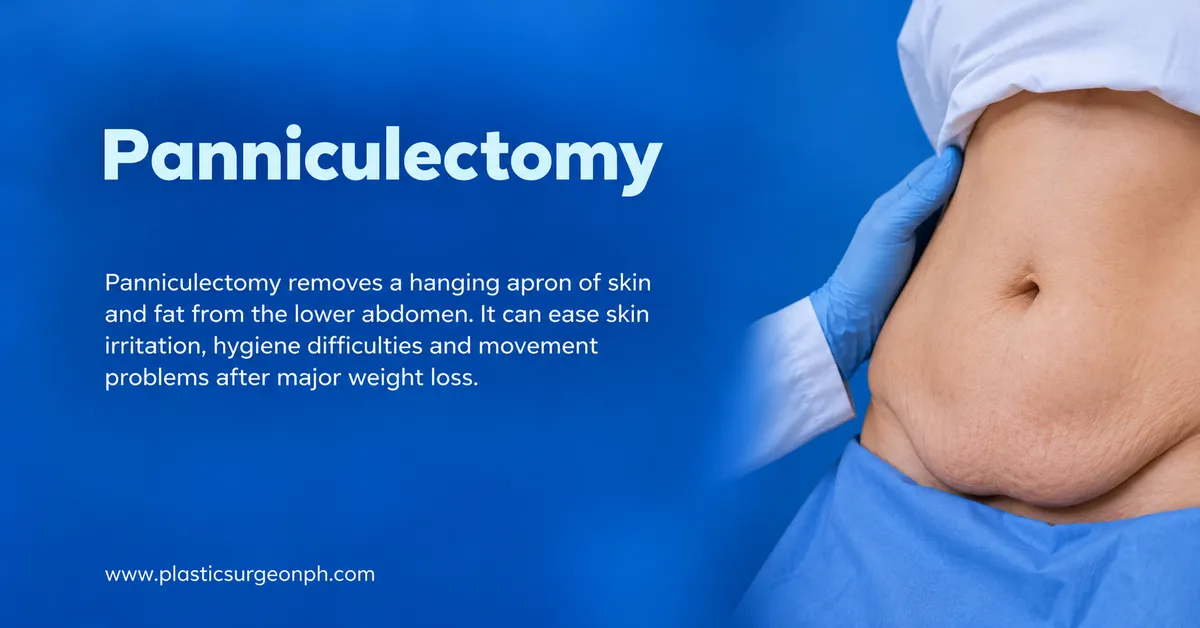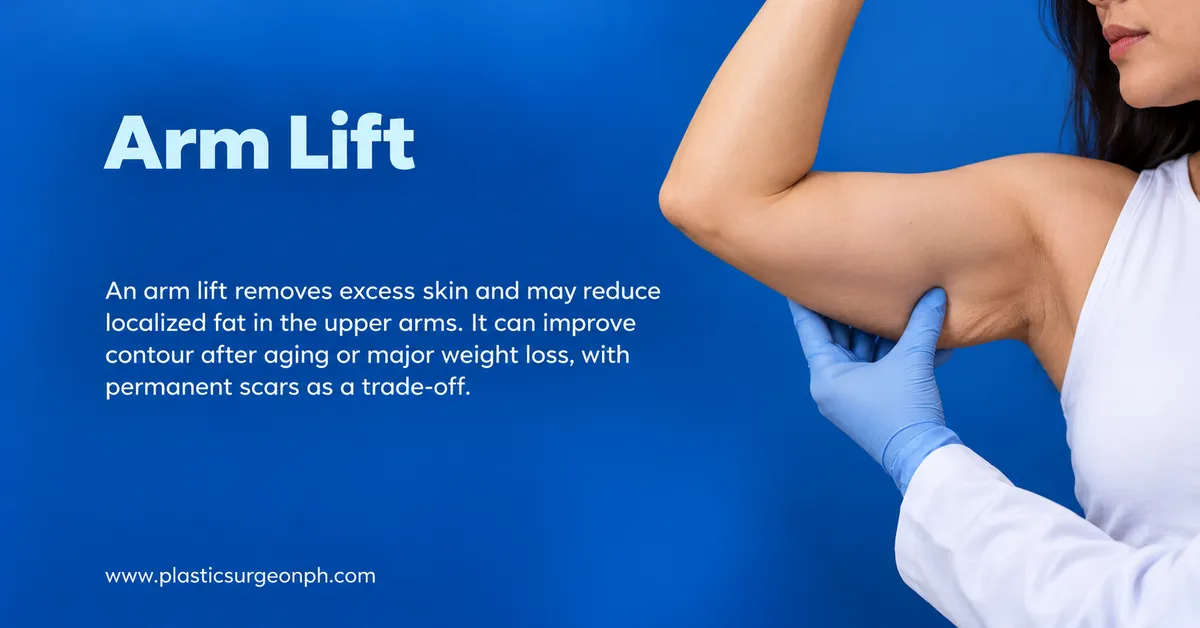
An arm lift removes loose skin from the upper arms and can make the contour firmer after ageing or major weight loss. The trade-off is a visible scar, often extending from the armpit towards the elbow. Liposuction alone may suit firm skin with excess fat, but it cannot reliably shrink a substantial hanging fold. A careful consultation balances the amount of improvement against scar length, wound-healing risk and the possibility that more than one stage may be appropriate.
What is an arm lift, and what concerns does it address?
An arm lift, medically called brachioplasty, removes excess upper-arm skin and may also reduce localised fat. It treats loose tissue that hangs or moves despite stable weight and exercise, particularly after major weight loss. The operation can improve arm proportion, comfort in clothing and irritation within folds. It does not build muscle, prevent future ageing or eliminate every stretch mark. The surgeon must preserve important nerves, lymphatic channels and blood supply while removing enough tissue to improve contour. If loose skin continues onto the side of the chest, an extended procedure may be required and the scar will be longer. When loose skin affects several areas after weight loss, post-weight-loss body contouring involves broader planning than an arm lift alone. A body lift focuses on other areas of loose tissue and has different scars and recovery needs.
Who is a good candidate for an arm lift, and who is not?
Good candidates have stable weight, bothersome upper-arm skin excess, reasonable health and realistic acceptance of a long scar. Nutrition should be adequate, especially after bariatric surgery. The operation is often appropriate when skin has lost elasticity and will not contract after exercise. Surgery should be postponed for nicotine use, uncontrolled diabetes, active infection, serious untreated illness, unstable weight or poor nutrition. Significant arm swelling requires evaluation for lymphatic or venous disease before cosmetic surgery. A patient with mainly fat and tight skin may benefit more from liposuction. Anyone who considers any visible arm scar unacceptable is not a suitable candidate for full brachioplasty.
What are the different types or techniques used in an arm lift?
A mini arm lift removes limited skin near the armpit through a shorter scar and suits mild upper-arm laxity. Standard brachioplasty uses a scar from the armpit towards the elbow, placed along the inner or back-inner arm according to anatomy and surgeon preference. Extended brachioplasty continues onto the chest to treat a lateral chest roll. Liposuction may be combined to reduce fat and help contour transitions, but aggressive suction can endanger thin skin. Some surgeons stage liposuction and skin removal in higher-risk cases. The excision pattern is customised with the arms raised and lowered so closure is firm but not excessively tight.
Are there non-surgical alternatives to an arm lift?
Resistance training can improve muscle tone, and stable weight management may reduce fat, but neither removes a substantial empty skin envelope. Liposuction is a less scar-intensive surgical option when skin elasticity is good. Non-surgical energy devices may create mild tightening in selected patients with limited laxity, yet results are smaller and less predictable than excision. Compression sleeves and clothing can improve comfort and appearance temporarily. If arm enlargement comes from lymphoedema rather than fat or loose skin, it needs specialist assessment and compression therapy, not routine brachioplasty. A patient who is not ready for the scar may reasonably postpone surgery without harming future options.
How do I prepare for an arm lift?
Preparation includes examination of skin excess, fat distribution, scars, sensation, shoulder movement and any history of arm swelling or lymph-node surgery. Weight and nutritional status should be stable. Blood tests and medical clearance vary with age and health. Stop nicotine for the period ordered and discuss anticoagulants, weight-loss medicines and supplements with the prescribing doctor and surgeon. Arrange transport, help with meals and household tasks, and loose front-opening clothing. Prepare pillows that support both arms without compressing the armpits. Ask about incision placement, drains, compression, admission and how the plan changes if loose skin extends onto the chest. The body contouring readiness checklist can help you organize questions about weight stability, nutrition, and recovery support.
How is an arm lift performed, and how long does it take?
After anaesthesia, the surgeon may perform conservative liposuction and then removes a planned ellipse of skin and underlying fat. Deeper supportive sutures reduce tension before the skin is closed. Care is taken around nerves and lymphatic structures. A mini lift may take one to two hours, while standard bilateral brachioplasty usually takes two to three hours. Extended treatment or combination with breast or torso contouring may take longer. Small drains may be used depending on the technique and amount of dissection. Many patients go home the same day, but hospital observation may be advised after lengthy combined surgery or for medical reasons.
What type of anesthesia is used, and who administers it?
Standard and extended arm lifts commonly use general anaesthesia administered by a qualified anaesthesiologist. A limited mini lift may sometimes use local anaesthesia with monitored sedation. The anaesthesia provider monitors breathing, circulation, temperature, fluids and pain, while the surgical team pads the arms and protects pressure points. Local anaesthetic can supplement postoperative comfort. Disclose sleep apnoea, previous blood clots, heart or lung disease, allergies and prior anaesthetic reactions. Ask who will administer anaesthesia and whether the facility can manage an airway problem, bleeding or an unexpected need for admission. A shorter scar does not remove the need for safe monitoring.
What results can I realistically expect, and when will I see them?
The reduction in hanging tissue is visible immediately, but swelling and a firm, high-looking contour are expected early. The arms soften and settle over six to twelve weeks, while scars continue changing for twelve to eighteen months. The result can improve clothing fit and reduce chafing, but it does not create perfect symmetry or erase all wrinkles. Residual laxity near the elbow or armpit may be intentionally preserved to protect movement and closure. Liposuction-related swelling can temporarily obscure transitions. Final assessment is usually made after six to twelve months. Minor scar or contour revision may be discussed only after tissues have matured.
Will I have scars after an arm lift, and how visible will they be?
Yes. Scar visibility is the principal trade-off. A mini lift leaves a scar mainly within the armpit. A standard lift creates a line from the armpit towards the elbow, and an extended lift continues onto the side of the chest. The exact position changes how visible the scar is with arms at the sides or raised. Scars may remain red, darker, raised or wide, especially under tension or in keloid-prone skin. They generally fade over a year or longer but never disappear. Silicone, sun protection and selected scar treatments may help after the wound fully closes. Scar placement should be discussed while standing and moving.
What are the risks and possible complications of an arm lift?
Risks include bleeding, infection, seroma, delayed healing, wound separation, skin loss, conspicuous scars, asymmetry, contour irregularity, numbness and chronic pain. Temporary swelling of the hands and forearms can occur. Less commonly, injury to sensory nerves or lymphatic channels may cause persistent altered sensation or arm swelling. Excessively tight closure can restrict movement or widen the scar. Blood clots and anaesthetic complications are possible, especially with long combined surgery. Seek urgent review for rapidly increasing swelling, severe pain, pale or dark skin, fever, pus, spreading redness, hand weakness or numbness, chest pain, shortness of breath or one-sided leg swelling.
What is recovery like after an arm lift, and how long does it take?
The arms feel tight, swollen and bruised during the first week. They are elevated on pillows, and patients avoid reaching, pushing or pulling. Dressings and a light compression garment may be used, but overly tight sleeves can affect circulation. Drains, if present, are removed according to output. Most wounds close within two to three weeks, although the armpit and elbow-end areas can heal more slowly because of movement. Swelling improves over six to twelve weeks, while numbness and scar firmness may last months. Adequate protein and nicotine avoidance support healing. New hand swelling, colour change or weakness requires prompt assessment.
When can I return to work, exercise, and normal activities?
Desk work often resumes after one to two weeks if the arms can be supported and the commute is manageable. Work requiring lifting, overhead reach or repetitive arm motion may need four to six weeks or longer. Gentle walking starts soon after surgery. Driving waits until shoulder and elbow movement is comfortable and sedating medicine is stopped. Avoid lifting children, heavy bags and gym weights for about four to six weeks. Range-of-motion exercises progress according to the surgeon’s instructions, since both stiffness and excessive early stretching can cause problems. Swimming waits until wounds are fully closed, and sun protection remains important for exposed scars.
What aftercare and follow-up appointments are required?
Aftercare includes keeping incisions clean and dry as instructed, supporting the arms, using prescribed compression and taking medicines correctly. Record drain output if drains are present. Check the fingers for normal colour, warmth and movement, and report a garment that causes increasing numbness or severe pain. Early visits assess circulation, fluid, wound edges and infection. Later appointments monitor swelling, shoulder movement, scars and contour. Silicone products usually begin only after complete closure. Contact the team for fever, foul drainage, rapidly expanding swelling, wound opening, new weakness or worsening hand swelling. Scar massage and lymphatic treatment require specific clearance.
How long do the results of an arm lift last?
Removed skin does not return, and the contour improvement can last many years. Nevertheless, ageing gradually reduces elasticity, and major weight gain or loss can stretch the remaining tissue. Stable weight, regular activity and sun protection help maintain the result. Muscle development can improve definition but does not change the surgical scar. A small amount of recurrent laxity is normal with time. Revision may address a widened scar, residual fold or contour irregularity once healing is complete, but additional excision can lengthen the scar and increase tension. Patients planning major weight loss should generally reach and maintain their target before surgery.
How much does an arm lift cost in the Philippines, and what is included in the price?
A typical private Philippine estimate is about PHP 150,000 to PHP 300,000, with extended or combined procedures costing more. Public listings may show lower starting prices that exclude anaesthesia, hospital use or extensive skin removal. The quotation should identify mini, standard or extended brachioplasty and state whether liposuction is included. It should also list the surgeon, anaesthesiologist, facility, tests, medicines, garments, drains, admission and follow-up. Ask whether pathology, wound supplies, treatment of a fluid collection or scar revision is separate. Compare scar pattern and scope carefully because a small armpit excision is not equivalent to a full arm-to-chest contouring operation.
Thank you for sharing this article...
About the Author: Joan de Alta

View Surgeon Profiles

Certified as a Diplomate by the Philippine Board of Plastic Surgery (PBPS).



Explore Available Clinics



Browse Other Procedures
A temporal lift raises the outer brow through incisions near the hairline.

Tuberous breast correction reshapes breasts with a tight, constricted base.