Liposuction is a contouring operation, not a shortcut for major weight loss. It can reduce stubborn fat in selected areas, but the quality of the result depends on skin elasticity, underlying muscle and disciplined control of how much fat is removed. More litres and more treatment areas do not automatically create a better result. Large-volume or combined liposuction increases fluid, anaesthetic and blood-clot risks and should be planned in an appropriately equipped facility.
What is liposuction, and what concerns does it address?
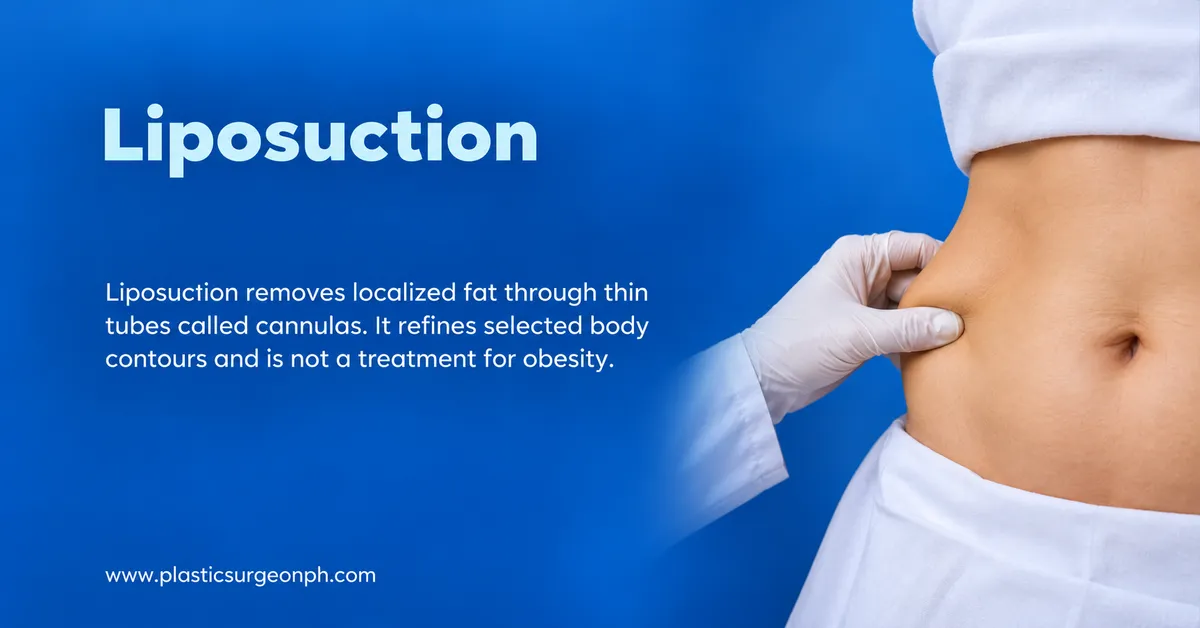
Liposuction removes localised subcutaneous fat through thin tubes called cannulas. Common areas include the abdomen, waist, back, hips, thighs, arms, chest, knees, chin and neck. It can improve disproportion and smooth a contour that remains despite stable weight and healthy habits. It does not treat obesity, visceral fat around internal organs, cellulite, stretch marks or substantial loose skin. Liposuction also cannot replace a tummy tuck, arm lift or thigh lift when skin is significantly lax. The best candidate sees it as refinement of body proportion, not as a method to reach a weight-loss target. For more selective abdominal muscle definition, abdominal etching and high-definition liposuction uses a narrower contouring plan than general fat removal. The liposuction and tummy tuck comparison can help you discuss whether fat, loose skin, or the abdominal wall is the main concern.
Who is a good candidate for liposuction, and who is not?
Good candidates are near a stable, healthy weight, have localised fat, reasonably elastic skin and medical fitness for surgery. They understand that the scale may change little even when measurements improve. Surgery should be delayed for uncontrolled diabetes, serious heart or lung disease, active infection, high clot risk without a safe plan or ongoing nicotine use. Very loose skin, poor muscle tone and visceral abdominal fullness are not corrected well by liposuction alone. Patients seeking removal of dangerously large volumes, instant weight loss or a perfect surface are poor candidates. Pregnancy and active major weight change also make results unpredictable.
What are the different types or techniques used in liposuction?
Tumescent liposuction uses fluid containing saline, local anaesthetic and medicine that narrows blood vessels. Suction-assisted liposuction removes fat with manual cannula movement, while power-assisted devices use vibration. Ultrasound-assisted liposuction applies sound energy to selected fibrous areas, and laser-assisted systems use heat. Each device has benefits and risks, including burns or fluid collections, and no machine replaces surgical judgment. Treatment may be limited to one area or performed as 360-degree contouring around the trunk. High-definition liposuction aims to reveal muscle borders but requires suitable anatomy and carries greater contour risk if overdone.
Are there non-surgical alternatives to liposuction?
Nutrition, regular activity and medical weight management are the first options when overall fat is the concern. Non-surgical fat reduction using controlled cooling, radiofrequency, ultrasound or injectable treatment may produce modest change in small areas, but results are slower and less predictable than liposuction. These methods do not remove loose skin or visceral fat. Skin-tightening devices may slightly improve mild laxity. Clothing, compression and posture can change appearance without medical risk. For significant skin excess, excisional surgery may be more effective. The proper alternative depends on whether the problem is fat, skin, muscle separation or overall weight rather than on advertising claims.
How do I prepare for liposuction?
The surgeon should examine the patient standing, assess skin quality and mark the exact treatment areas. Medical assessment includes weight stability, medicines, previous surgery, hernia, clot history and anaesthetic risk. Laboratory tests and clearance depend on volume and health. Stop nicotine as directed and coordinate changes to anticoagulants or other prescriptions with the treating doctor. Maintain hydration and normal nutrition rather than crash dieting. Arrange transport, an adult companion, compression garments and home support. Large-area treatment may require an overnight plan. Understand the estimated aspirate volume, facility setting and whether another procedure would better treat loose skin. For consultation contacts and listed services, review the NEWLIFE Aesthetic Plastic Surgery profile and confirm the proposed procedure and facility directly with the clinic.
How is liposuction performed, and how long does it take?
After anaesthesia, small incisions are made and tumescent fluid is placed. Cannulas pass through the fat in controlled tunnels, and suction removes a measured volume while preserving a smooth layer beneath the skin. The surgeon repeatedly checks symmetry and avoids aggressive surface scraping. Incisions may be left partly open for drainage or closed with sutures. One small area can take under an hour, while multi-area or circumferential contouring can take two to five hours. Operating time and safe aspirate limits depend on patient size, fluid balance, anaesthesia and combined procedures. Large-volume cases may require hospital monitoring.
What type of anesthesia is used, and who administers it?
Small-area tumescent liposuction may use local anaesthesia with the patient awake or lightly sedated. Multiple areas, high volumes or combined operations often use deep intravenous sedation or general anaesthesia. A qualified anaesthesiologist should administer deep sedation or general anaesthesia and monitor fluids, temperature, breathing and circulation. Even local-anaesthetic liposuction requires dose calculation because excessive local anaesthetic can be toxic. Ask who monitors the patient, how fluid and blood loss are measured and whether emergency transfer or admission is available. Disclose sleep apnoea, heart rhythm problems, kidney disease, clot history and all medicines and supplements.
What results can I realistically expect, and when will I see them?
The treated area may look swollen rather than smaller at first. Bruising and fluid retention can temporarily increase weight. Early contour improvement appears over two to six weeks, while swelling and firmness continue resolving for three to six months. Skin contraction varies with age, genetics, stretch marks, previous weight change and the amount removed. Natural asymmetry, cellulite and surface texture remain. A realistic result is improved proportion and clothing fit, not a perfectly flat abdomen or a guaranteed number of kilograms. Small contour irregularities may soften, but some require observation, massage when approved, energy treatment, fat grafting or revision.
Will I have scars after liposuction, and how visible will they be?
Liposuction uses several small incisions, commonly three to six millimetres, placed in folds or inconspicuous positions where possible. Each entry point leaves a scar. Early marks may be dark, firm or slightly indented and can take a year to fade. Some become raised or pigmented, especially in patients prone to keloids. Cannula friction can also irritate the skin around an opening. Scars are more numerous with circumferential or high-definition treatment. Once incisions have closed, sun protection and surgeon-approved silicone may help. Do not apply whitening agents, acids or strong massage to fresh wounds.
What are the risks and possible complications of liposuction?
Risks include bleeding, infection, anaesthetic problems, blood clots, fluid imbalance, seroma, prolonged swelling, numbness, pain, asymmetry, loose skin and contour irregularities. Significant complications include pulmonary embolism, fat embolism, organ perforation, fluid overload, local-anaesthetic toxicity, skin burns from energy devices, skin loss and severe infection. Risk rises with larger volumes, longer surgery and multiple combined procedures. Uneven removal can create waves or depressions that are difficult to correct. Seek urgent help for shortness of breath, chest pain, confusion, fainting, fever, rapidly increasing pain, very little urine, calf swelling or spreading redness.
What is recovery like after liposuction, and how long does it take?
Expect swelling, bruising, drainage from ports, soreness and temporary numbness. Compression garments may be worn for several weeks, but they should not cause severe pain, colour change or breathing restriction. Light walking begins early. Most bruising improves over two to three weeks, while swelling and firmness may fluctuate for months. Areas can feel lumpy before softening. Hydration, normal nutrition and prescribed medicine support recovery. Do not begin aggressive massage or external devices without approval. Fever, worsening redness, severe asymmetric pain, breathlessness, dizziness or reduced urine output requires prompt medical advice. Large-volume patients need closer monitoring.
When can I return to work, exercise, and normal activities?
After a small area, desk work may resume in three to seven days. Multi-area or 360-degree liposuction may require one to two weeks, and physically demanding work can take longer. Gentle walking starts on the day of surgery or soon after. Driving waits until movement is comfortable and sedating medicine is stopped. Exercise usually returns gradually after two to four weeks, while strenuous training may wait four to six weeks. Compression schedules vary. Swimming waits until incisions close. Air travel soon after large-volume surgery can increase clot risk, so timing and preventive measures should be discussed individually.
What aftercare and follow-up appointments are required?
Aftercare includes garment use, incision care, hydration, walking and prescribed medicines. Absorbent pads may be needed while tumescent fluid drains. Keep garments clean, smooth and correctly sized. Early visits assess fluid balance, infection, skin condition and seroma. Later reviews track swelling and contour. Massage or lymphatic therapy should be performed only when the surgeon approves the timing and provider. Maintain stable weight because remaining fat cells can enlarge. Seek urgent review for fever, severe pain, spreading redness, shortness of breath, chest pain, fainting, calf swelling or dark skin. Do not rely on a massage therapist to diagnose a complication.
How long do the results of liposuction last?
Removed fat cells do not regenerate in the same number, so contour change can be long-lasting. However, remaining fat cells enlarge with weight gain, and fat may accumulate in treated and untreated areas. Pregnancy and ageing also alter skin and body shape. Liposuction does not prevent future visceral fat or skin laxity. Stable weight, exercise and balanced nutrition help maintain proportion. A revision may address residual deposits or irregularity after full healing, but repeated aggressive suction can thin the tissue and worsen contour. The result should therefore be judged only after swelling has settled for at least several months.
How much does liposuction cost in the Philippines, and what is included in the price?
Philippine prices vary by area and volume. Small local-anaesthetic treatment may begin around PHP 50,000 to PHP 90,000, while abdominal or multi-area liposuction commonly costs PHP 120,000 to PHP 250,000. Extensive 360-degree or hospital-based treatment may reach PHP 250,000 to PHP 450,000 or more. The quotation should list treatment areas, estimated volume, surgeon, anaesthesiologist, facility, tests, medicines, garments, admission and follow-up. Confirm whether lymphatic therapy or treatment of seroma is separate. Comparing a one-area promotion with circumferential surgery is misleading. Safety limits, facility capability and surgeon credentials matter more than maximum volume per peso.
Thank you for sharing this article...
About the Author: Joan de Alta

View Surgeon Profiles

Certified as a Diplomate by the Philippine Board of Plastic Surgery (PBPS).


Explore Available Clinics



Browse Other Procedures
Nipple and areola reduction reduces nipple size or shrinks areola diameter.
Abdominal etching uses selective liposuction to define abdominal contours.