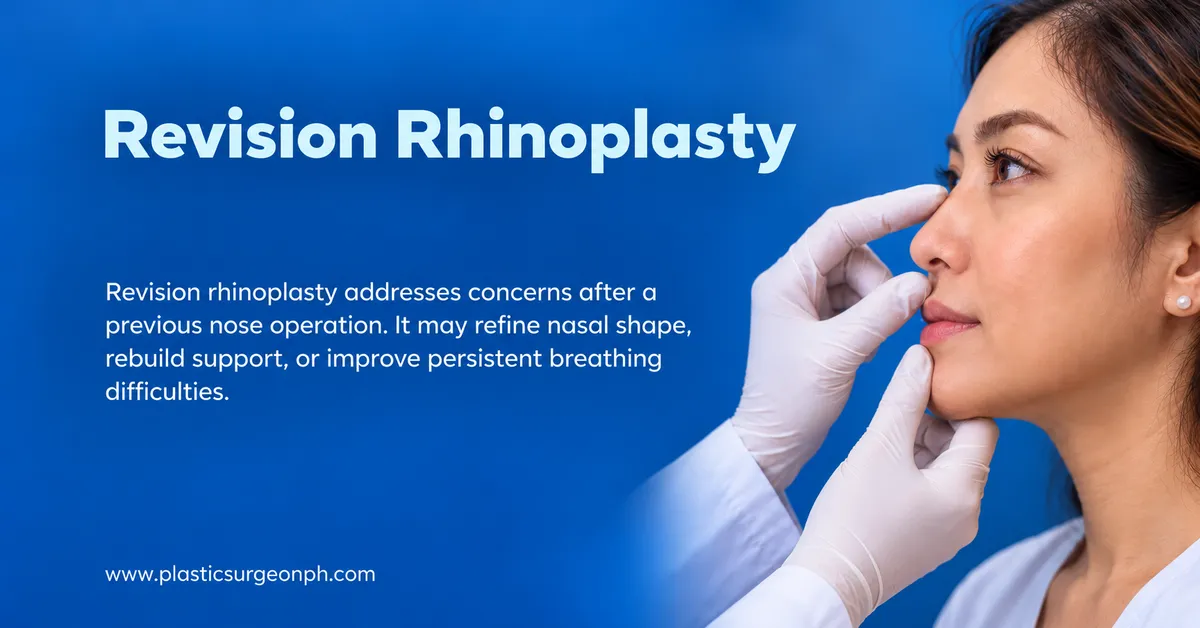
Revision rhinoplasty is surgery performed after an earlier nose operation to improve appearance, breathing or both. It is generally more difficult than primary rhinoplasty because normal tissue planes have been replaced by scar, support may be missing and graft options may be limited. A successful plan begins with patience and a precise diagnosis of what can realistically be improved.
What is revision rhinoplasty, and what concerns does it address?
Revision rhinoplasty can address persistent deviation, asymmetry, an overly high or low bridge, a pinched or drooping tip, visible implant edges, implant movement, nostril distortion, scar-related irregularity or dissatisfaction after previous surgery. Functional indications include new or persistent obstruction, nasal valve collapse, septal perforation and weakened support.
The term covers a wide range. A minor revision may smooth a small irregularity, while major reconstruction may require removal of an implant, release of dense scar and rebuilding with ear or rib cartilage. The aim is improvement from the present condition. It cannot always recreate the untouched nose or deliver the result that would have been possible before the first operation. Persistent obstruction may require the functional assessment discussed in septorhinoplasty, depending on what happened in the first operation.
Who is a good candidate for revision rhinoplasty, and who is not?
A good candidate has a stable, clearly defined concern, realistic expectations and adequate health. The patient should understand why the first result is unsatisfactory and accept the added uncertainty of operating through scar tissue. Most cosmetic revisions are assessed after at least twelve months, when swelling and scar activity have matured. Thick skin and extensive tip work may require even more patience.
Early surgery may be necessary for infection, implant extrusion, tissue injury or severe airway compromise, but it is not appropriate simply because the nose looks swollen or uneven at a few weeks. Nicotine use, uncontrolled disease, active infection, repeated impulsive operations and expectations of absolute perfection are strong reasons to delay or decline surgery. Psychological distress deserves support alongside anatomical assessment.
What are the different types or techniques used in revision rhinoplasty?
An open approach is often used because it exposes altered anatomy, although a focused closed revision may suit a small problem. Techniques include scar release, tip resuturing, bone correction, septal reconstruction, implant removal or replacement, and support of the internal or external nasal valves. Camouflage grafts can soften small irregularities, while structural grafts rebuild weakened areas.
Remaining septal cartilage may be insufficient. Ear cartilage is useful for curved, flexible grafts, while rib cartilage provides greater volume and strength for major reconstruction. Fascia or other soft tissue may cover edges and improve contour. In selected cases, a synthetic implant is retained or replaced, but infection, thin skin and previous extrusion may make autologous tissue a safer choice. If rib grafting is proposed, compare your own and donor rib cartilage before deciding how the material will be obtained.
Are there non-surgical alternatives to revision rhinoplasty?
Hyaluronic acid filler can camouflage a small depression or asymmetry in carefully selected patients. It cannot remove an implant, correct significant obstruction, rebuild weak support or make the nose smaller. The altered blood supply after surgery can increase the consequences of vascular injury, so post-rhinoplasty filler requires exceptional caution and an experienced physician.
Observation is often the best early alternative because swelling, firmness and unevenness can improve for twelve months or longer. Taping or steroid injection may be recommended for selected scar patterns, but these are medical decisions and can cause harm when used indiscriminately. Psychological support may also help when distress is disproportionate to a small, stable irregularity.
How do I prepare for revision rhinoplasty?
Collect the first surgeon’s operative report, implant details, graft information, preoperative photographs and records of complications. Tell the revision surgeon about every injection, thread, infection and procedure, even if performed years earlier. Examination should assess skin thickness, scars, septum, valves, available cartilage and donor sites. Nasal endoscopy or imaging may be needed for functional concerns.
Stop nicotine as directed and complete medical testing and clearance. Discuss medicines and supplements honestly, and never stop prescribed anticoagulants without coordination. Plan for more swelling and a longer period of uncertainty than after a primary operation. Arrange adequate leave, a responsible adult, transport and access to the surgeon if a problem develops. Use the revision rhinoplasty consultation checklist to organize records and questions before discussing another operation.
How is revision rhinoplasty performed, and how long does it take?
After anaesthesia, the surgeon carefully enters through previous or revised incisions, separates scarred tissue and identifies the remaining framework. Unstable or distorted structures are corrected. An infected, displaced or unsuitable implant may be removed. Cartilage grafts are carved and secured to rebuild the septum, valves, bridge or tip. Fine soft-tissue grafts may camouflage contour transitions.
A small revision can take one to two hours, while major reconstruction often requires three to six hours or more. Rib harvest and severe scar add time. External and internal splints may be placed. The final plan sometimes changes during surgery because the true condition of cartilage, implant capsule and scar cannot be fully known from the outside.
What type of anesthesia is used, and who administers it?
Minor scar or contour revisions may be possible under local anaesthesia with or without sedation. Major revision rhinoplasty is commonly performed under general anaesthesia because it is lengthy and may involve graft harvest and airway reconstruction.
A qualified anaesthesiologist should assess the patient and administer deep sedation or general anaesthesia in an appropriately equipped facility. Previous anaesthetic problems, sleep apnoea, allergies, heart or lung conditions and difficult airway history must be disclosed. Ask who will monitor the patient and whether an overnight stay might be required.
What results can I realistically expect, and when will I see them?
Revision can improve shape and breathing, but it carries greater limits than a first operation. Scar tissue, thin or damaged skin and missing support may prevent perfect correction. The realistic goal may be a safer, more stable and more balanced nose rather than the exact digital image a patient prefers.
Initial improvement appears after splint removal, but swelling is often more persistent and uneven than after primary rhinoplasty. The bridge may settle over months, while tip definition can take twelve to twenty-four months. Breathing also changes as internal swelling resolves. A result should not be judged from early selfies or day-to-day differences.
Will I have scars after revision rhinoplasty, and how visible will they be?
The surgeon often reuses and refines an existing columellar or nostril scar. Additional alar incisions may be required for nostril correction. Ear cartilage harvest leaves a scar hidden in front of or behind an ear crease. Rib cartilage harvest leaves a short scar on the chest, positioned with consideration for clothing or the breast fold where possible.
Previously operated skin may heal less predictably. Scars can widen, darken, thicken or contract. Internal adhesions can also affect airflow. The surgeon may recommend taping, silicone or other scar treatment after the incisions have closed. Sun protection and nicotine avoidance remain important.
What are the risks and possible complications of revision rhinoplasty?
Revision carries the usual risks of bleeding, infection, anaesthesia, poor healing, scarring, pain, numbness, asymmetry and dissatisfaction, plus a higher chance of persistent irregularity or further revision. Specific problems include graft warping, absorption or visibility, implant infection or extrusion, skin thinning, skin loss, septal perforation and continued obstruction.
Ear harvest can change contour or sensation. Rib harvest can cause pain, chest-wall contour change, calcified cartilage difficulty and, rarely, pneumothorax. Scarred tissues have less predictable blood supply. Seek urgent help for worsening pain, fever, foul discharge, heavy bleeding, pale or dark skin, visible implant exposure, chest pain, shortness of breath or visual symptoms. For an existing implant, review the signs of implant-related complications and ask which need prompt assessment.
What is recovery like after revision rhinoplasty, and how long does it take?
Early recovery resembles primary rhinoplasty, with congestion, swelling, bruising, pressure and an external splint for about a week. Donor-site discomfort may be more noticeable than nasal pain, particularly after rib harvest. Swelling often lasts longer because scar tissue drains less efficiently.
Plan at least two weeks of visible downtime and accept that small asymmetries may fluctuate for months. Keep the head elevated, do not blow the nose until cleared and protect all donor sites. Follow instructions for taping or saline rather than improvising. Emotional patience is a genuine part of revision recovery.
When can I return to work, exercise, and normal activities?
Many patients return to desk work in about ten to fourteen days, but those with extensive bruising, rib harvest or public-facing duties may need longer. Gentle walking is usually encouraged early. Heavy lifting and strenuous exercise are commonly delayed for four to six weeks, sometimes longer after chest graft harvest.
Contact activities must wait until the reconstructed nose is stable. Driving is unsafe while taking sedating medicine. Ask about glasses, air travel, swimming and return to dusty or physically risky work. A staged return is safer than trying to meet a fixed social deadline.
What aftercare and follow-up appointments are required?
Aftercare may include wound cleaning, saline, splint care, prescribed pain relief, antibiotics in selected cases and protection of the donor site. Never manipulate a graft, implant or protruding suture. The surgeon may use longer taping or more frequent internal cleaning because scar and swelling require close observation.
Follow-up generally continues for at least a year. Early visits assess skin blood supply, infection, splints and donor wounds. Later visits evaluate airway, scar maturation and graft stability. Contact the surgeon promptly for increasing redness, severe pain, drainage, fever, sudden obstruction, skin colour change or any exposed material.
How long do the results of revision rhinoplasty last?
Successful structural correction is intended to last many years and often permanently. Nevertheless, cartilage can warp or absorb, implants can develop late problems and the nose continues to age. Trauma and further procedures may change the outcome.
A stable framework, healthy skin and careful aftercare improve durability. Repeated revisions should not be treated casually because each operation adds scar and may reduce options. If a small imperfection remains, the risks of another surgery may outweigh the likely benefit.
How much does revision rhinoplasty cost in the Philippines, and what is included in the price?
Current Philippine estimates published in 2026 place many revision rhinoplasty cases around PHP 250,000 to PHP 600,000 or more. A small correction may cost less, while major reconstruction with rib cartilage, implant removal, prolonged theatre time or hospital admission may exceed this range. Revision usually costs more than primary surgery because planning, operating time and graft requirements are greater.
The written quotation should list the surgeon, anaesthesiologist, hospital or surgical facility, implant removal, new implant or graft, ear or rib harvest, tests, medicines, splints, admission and follow-ups. Clarify whether the fee includes treatment of complications or a later minor revision. Do not choose a revision surgeon on price alone. Relevant revision experience, documented credentials and a safe facility are especially important.
Thank you for sharing this article...
About the Author: Joan de Alta

View Surgeon Profiles




Explore Available Clinics

Browse Other Procedures
Facial feminization reshapes facial features to suit personal gender goals.