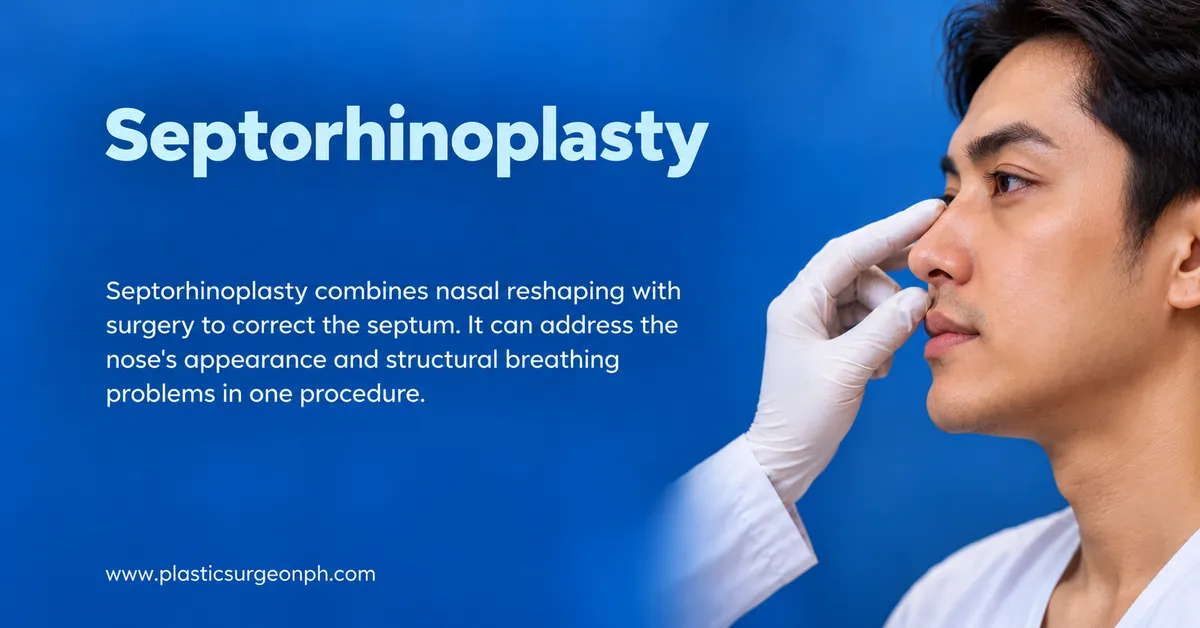
Septorhinoplasty combines external nasal reshaping with internal surgery to improve the septum and, when needed, other parts of the airway. It is appropriate when form and function must be planned together. A nose can look straight but remain blocked, or it can breathe better after septoplasty while an external deviation remains. Septorhinoplasty addresses these connected problems in one operation when clinically suitable.
What is septorhinoplasty, and what concerns does it address?
The septum is the wall of cartilage and bone that divides the nasal passages. When it is bent, damaged or poorly supported, it may contribute to obstruction, recurrent nosebleeds, facial pressure or visible deviation. Septorhinoplasty straightens or reconstructs the septum while also changing external nasal shape. It can address a crooked nose, post-traumatic deformity, dorsal hump, low bridge, broad or weak tip and asymmetry together with impaired airflow.
The operation may also treat nasal valve collapse, enlarged turbinates or weak sidewalls if these contribute to symptoms. Not every blocked nose is caused by structure. Allergy, sinus disease, infection and medication effects require separate assessment. A proper plan distinguishes mucosal swelling from problems that surgery can physically correct. After major tissue loss, nasal reconstruction may be needed in addition to restoring airway and shape. If appearance and airflow are both concerns, the rhinoplasty and septorhinoplasty comparison can help you frame questions about the proposed plan.
Who is a good candidate for septorhinoplasty, and who is not?
A good candidate has persistent structural obstruction, an external concern, realistic goals and health that permits surgery. Previous trauma, congenital deviation, septal collapse or failed earlier septoplasty may support the indication. The patient should be able to describe when blockage occurs, which side is affected and how symptoms respond to medical treatment.
Surgery may not help when symptoms arise mainly from uncontrolled allergy, sinus inflammation or another untreated condition. Active infection, nicotine use, uncontrolled illness, bleeding problems and unrealistic expectations require correction or postponement. Facial growth should generally be complete unless a specialist identifies a compelling functional reason to operate earlier. Patients with severe sleep symptoms may also need investigation for sleep apnoea rather than assuming nasal surgery is the only answer.
What are the different types or techniques used in septorhinoplasty?
Septorhinoplasty may use a closed or open approach. The septum is straightened by carefully removing, scoring, repositioning or reinforcing selected cartilage and bone while preserving enough support. Spreader grafts or flaps can widen and stabilise the internal nasal valve. Batten grafts may support weak sidewalls, while tip grafts and sutures refine shape and maintain airflow.
Inferior turbinate reduction may be added when enlarged turbinates remain obstructive despite appropriate medical care. A severely damaged septum may require reconstruction with ear or rib cartilage. Bone cuts can straighten the bony pyramid. The exact combination depends on examination, photographs, prior surgery and sometimes nasal endoscopy or imaging. It should not be a standard package applied identically to every patient.
Are there non-surgical alternatives to septorhinoplasty?
Saline rinses, allergy management, prescribed nasal steroid sprays and other medical treatment can reduce swelling when the lining of the nose contributes to blockage. External nasal strips or internal dilators may temporarily support a weak valve and can offer useful diagnostic information. Septoplasty alone may be sufficient when the external nose does not need reshaping.
Filler can camouflage a minor external irregularity but cannot straighten the internal septum or reliably improve breathing. It also carries vascular risk. Threads do not reconstruct a collapsed airway. If symptoms come from chronic sinusitis, allergy or sleep apnoea, treatment should target that condition. A combined assessment by a plastic surgeon with functional nasal expertise and, when appropriate, an ENT specialist is useful.
How do I prepare for septorhinoplasty?
Preparation includes a complete health and medicine review, internal and external examination, standardised photographs and discussion of both breathing and appearance. The clinician may use endoscopy, a decongestant test, allergy assessment or imaging when the history suggests additional disease. Previous operative notes and scans are valuable. Baseline photographs and clearly ranked goals reduce misunderstanding.
Complete required tests and medical clearance. Stop all nicotine as directed and coordinate any change to blood thinners or other prescription medicine with the prescribing doctor. Treat active infection before surgery. Arrange at least two weeks away from demanding duties, transport home, an adult companion and easy access to the surgical team. Prepare for mouth breathing and temporary congestion rather than expecting immediate free airflow.
How is septorhinoplasty performed, and how long does it take?
Under anaesthesia, the surgeon accesses the septum through internal incisions, with a columellar incision added for an open approach. Deviated cartilage and bone are mobilised and reshaped while an adequate L-shaped support is preserved or rebuilt. The external bones, bridge and tip are then corrected. Grafts may reinforce the valves, tip, sidewalls or bridge. Turbinate treatment may be performed when indicated.
Incisions are closed, and internal splints, soft packing or an external splint may be applied. The procedure commonly takes two to four hours. Major trauma, revision, rib grafting or complex valve reconstruction can take longer. The length of surgery varies because functional stability and symmetry must be checked throughout the operation.
What type of anesthesia is used, and who administers it?
General anaesthesia is commonly selected because the operation involves the airway, bone and cartilage and may take several hours. Some limited cases can be performed with local anaesthesia and intravenous sedation, but this decision should reflect the extent of surgery and patient safety, not price alone.
A qualified anaesthesiologist should conduct the pre-anaesthetic assessment, administer general anaesthesia or deep sedation and monitor the patient throughout. Ask whether the facility can manage airway problems, bleeding and unexpected admission. The anaesthesia plan should account for sleep apnoea, asthma, allergies, heart conditions, previous reactions and all medicines or supplements.
What results can I realistically expect, and when will I see them?
The realistic goal is measurable improvement in airflow and a nose that looks straighter or better balanced, not perfect symmetry or guaranteed resolution of every breathing symptom. Allergy and other mucosal conditions can continue after the structure is corrected. Objective airflow and subjective comfort do not always change at the same speed.
The external change is apparent after splint removal, but swelling obscures detail. Internal swelling may make breathing feel worse during the first weeks. Airflow usually improves gradually as swelling and crusting settle. Much of the cosmetic swelling resolves over several months, while final tip definition and scar maturation commonly take twelve months or longer.
Will I have scars after septorhinoplasty, and how visible will they be?
A closed approach keeps planned incisions inside the nostrils. An open approach adds a short columellar scar that usually fades well. Alar base reduction, if included, creates scars around the nostril groove or sill. Rib or ear cartilage harvesting creates a separate donor-site scar.
Scars can become raised, dark, wide or tender, although careful placement and aftercare reduce visibility. Internal scars can also form adhesions that narrow the airway. Report increasing blockage rather than assuming it is normal. Sun protection and surgeon-approved scar care help external scars mature, but no treatment makes every scar invisible.
What are the risks and possible complications of septorhinoplasty?
General risks include bleeding, infection, anaesthetic reaction, blood clots, poor healing, scarring, numbness, pain and dissatisfaction. Specific risks include persistent or worsened obstruction, septal perforation, internal adhesions, altered smell, excessive dryness, asymmetry, contour irregularity and the need for further surgery. Grafts can warp, shift or absorb. An implant can become infected or extrude.
Rare complications include serious infection, skin injury and leakage of fluid surrounding the brain after deep injury, although this is exceptionally uncommon. Donor sites can develop pain, contour change, pneumothorax in rib harvest or ear shape change. Urgent review is required for heavy bleeding, high fever, worsening blockage with severe pain, foul green discharge, clear continuous watery drainage, chest symptoms or visual changes.
What is recovery like after septorhinoplasty, and how long does it take?
The first week usually involves congestion, facial pressure, swelling, bruising and mouth breathing. Internal splints can feel uncomfortable but should not be moved by the patient. An external splint is often removed at about one week. Crusting and variable airflow can continue for several weeks.
Saline care and follow-up cleaning may be important for functional recovery. Do not blow the nose until cleared, and sneeze with the mouth open. Sleep elevated and avoid hot environments, bending and straining early on. Most people look socially presentable in about two weeks, but the internal lining and external framework continue healing for months.
When can I return to work, exercise, and normal activities?
Plan about ten to fourteen days away from office work, and longer for dusty, hot or physically strenuous jobs. Gentle walking is usually encouraged. Heavy lifting, running and gym training are commonly restricted for four to six weeks. The exact schedule depends on bleeding risk and the extent of reconstruction.
Contact sport and any activity likely to injure the nose require a longer pause, often several months. Avoid swimming until the surgeon confirms that the internal and external wounds are ready. Air travel, use of continuous positive airway pressure, wearing glasses and return to work in healthcare or industrial environments need individual advice.
What aftercare and follow-up appointments are required?
Aftercare may include saline mist or rinses, prescribed pain medicine, wound cleaning and sometimes antibiotics. Use decongestant sprays only if specifically directed because overuse can worsen congestion. Keep the splint dry and do not remove internal material yourself. Protect the nose from pressure, smoke, dust and sun.
Early follow-up allows splint and suture care and inspection for bleeding, infection or septal haematoma. Later appointments assess airflow, internal healing, graft stability and cosmetic settling. Seek urgent care for persistent heavy bleeding, worsening pain, fever, foul discharge, sudden severe obstruction, chest pain, shortness of breath or a change in vision.
How long do the results of septorhinoplasty last?
The structural correction is intended to be long-lasting. The septum and nasal framework can still change with ageing, trauma, scar contraction or cartilage behaviour. Allergy and inflammatory disease may continue to affect breathing even when the operation remains structurally successful.
Protecting the nose from injury and following long-term medical treatment for allergy or sinus disease help preserve the benefit. If symptoms or shape remain concerning, allow the tissues to mature before elective revision unless the surgeon identifies an urgent functional complication. A stable result is usually judged at twelve months or later.
How much does septorhinoplasty cost in the Philippines, and what is included in the price?
There is no reliable national tariff. Based on current Philippine private-sector estimates for comprehensive structural rhinoplasty, combined septal and external reconstruction may cost roughly PHP 180,000 to PHP 450,000 or more. Complex valve reconstruction, rib grafting, hospital admission or revision can increase the total. This range is an informed guide, not a quotation.
Ask for itemised fees for the surgeon, ENT involvement if any, anaesthesiologist, operating room, graft or implant, turbinate treatment, tests, medical clearance, medicines, splints, admission and follow-up. If part of the surgery is medically necessary, ask the hospital and HMO or insurer for written pre-authorisation. Cosmetic reshaping and unapproved charges are commonly excluded even when a functional component may qualify for benefits.
Thank you for sharing this article...
About the Author: Joan de Alta

View Surgeon Profiles

Certified as a Diplomate by the Philippine Board of Plastic Surgery (PBPS).



Explore Available Clinics


Browse Other Procedures
Congenital reconstruction treats differences in body structures from birth.