

Liposuction medical tourism requires assessment, practical recovery support and a continuing-care plan after leaving the treating clinic. The operation and return ticket are only part of that plan. Arrange a suitable place to recover, reliable practical help, access to clinical review, and enough flexibility to stay longer if healing or a new symptom makes travel inappropriate.
Your arrangements should match the actual extent of liposuction, any additional procedures, and your health. A friend who had one small area treated may not provide a useful model for a larger operation. A flight booking, a package description, or a garment supplied by the clinic does not establish that the complete overseas-care plan is appropriate for you.
Liposuction medical tourism: Begin the medical discussion before booking the itinerary
Provide the proposed surgeon with your medical and surgical history, medication and supplement list, allergies, nicotine use, and previous recovery problems. Mention earlier treatment in the same areas and any implanted devices. Be clear about the result you want and the areas you expect to be treated. A remote consultation should identify questions rather than remove the need for assessment.
Speak with your usual clinician before traveling as well. The CDC advises preparation before overseas medical treatment and planning for possible complications. Discuss existing conditions, continuity of medicines, and the proposed journey. Ask which records should be shared and whether additional assessment is needed before an elective operation abroad.
Confirm what happens if an in-person examination changes the recommendation. The surgeon may propose a different extent of treatment, further investigation, postponement, or no surgery. Avoid making every reservation dependent on an immediate operation after arrival. Clarify cancellation and change policies before making commitments that are difficult or expensive to alter.
Verify the care team and the actual facility
Identify who will operate, who is responsible for anesthesia, where surgery will take place, and who will conduct postoperative reviews. Ask how relevant qualifications and experience can be checked. The surgeon-selection guide provides questions that go beyond a clinic’s advertising or a coordinator’s responsiveness.
Request direct daytime and after-hours clinical contacts. Ask where an unplanned examination would occur, who covers care if the surgeon is unavailable, and what arrangements exist for hospital transfer. The facility emergency-planning guide can help you ask about the specific operation and facility rather than a clinic group’s general reputation.
If an agency or concierge coordinates the trip, establish which organization supplies each service and which decisions remain with the clinical team. A transport contact cannot clear a wound concern for travel. Keep the surgeon’s details and the facility address accessible to you and the person helping you recover.
Compare the whole care proposal
Ask for a written, itemized proposal covering treatment areas, technique, anesthesia, facility use, planned monitoring, follow-up, and any separately arranged services. Confirm whether garments, dressings, nursing, transport, or accommodation are included. The liposuction quote guide explains why a surgeon’s fee or a package headline is not the entire treatment budget.
Ask who pays for an additional review, investigation, or treatment if a problem develops. Include potential changes to accommodation, flights, local transport, and your companion’s stay. Check insurance terms directly with the insurer rather than assuming routine travel cover pays for complications of a planned cosmetic procedure.
Clarify the difference between a scheduled cosmetic follow-up and urgent medical care. A clinic’s package may describe included visits without covering every possible service. Financial and logistical arrangements should be understood before treatment, while a new emergency should still receive prompt assessment regardless of an unresolved administrative question.
Choose accommodation that supports the actual recovery plan
Discuss distance to the clinic, stairs, elevators, bathroom access, bed height, and space for a companion before booking. Ask whether meal delivery and reliable transport are available. A room promoted for recovery may not suit your mobility, dressing care, or the positions the team recommends. Verify practical features instead of relying only on photographs.
Plan help with bags, meals, appointments, and other tasks you may not manage comfortably at first. If professional nursing is needed, establish who provides it and what it includes. A companion can assist with communication and daily tasks but does not replace a nurse or a clinician who can examine a concern.
Keep the early recovery itinerary free of strenuous sightseeing and commitments that cannot be changed. The general surgery-travel guide helps review the wider trip. A family visit or beach outing should fit medical instructions rather than becoming the reason those instructions are shortened or ignored.
If part of the trip involves staying with relatives in another province or traveling between islands, include that stage in the plan. Being in the Philippines does not necessarily mean you are close to the treating clinic. Give the team realistic travel times and ask where reviews and urgent assessments would occur. A family address should be assessed for access to care just as carefully as a hotel.
Make garments and wound care workable before discharge
Ask the team to explain and demonstrate the care you will follow at your accommodation. Clarify which dressings or drains are present, what observations should be recorded, and how to obtain help if supplies or instructions are unclear. Patient information from ASPS emphasizes individualized instructions for care, activity, and follow-up.
For a prescribed garment, confirm fit, intended use, removal instructions, and how the team will assess a pressure-related concern. The compression garment guide discusses those questions. Do not add tighter layers, boards, or products from another patient’s routine because you assume they will accelerate recovery or make travel safer.
Tell the team if you cannot carry out a care task because of restricted movement, pain, dizziness, poor vision, or a language barrier. Resolve the practical problem before leaving the facility. Written instructions should match what you were shown and be understandable to the person who will help you, with your permission.
Treat return travel as a clinical decision
Surgery and prolonged travel can increase blood-clot risk. Discuss the whole itinerary, including airport waiting, connecting flights, road transfers, and the journey from your arrival airport to home. A larger seat can improve practical comfort without establishing medical fitness to travel. The surgeon needs a realistic account of the demands involved.
There is no single safe-to-fly date for everyone having liposuction. Agree on a review before departure and ask which findings could justify postponement. Wound condition, symptoms, mobility, medication needs, other procedures, and your health history all belong in that assessment. A date printed in a package should not override an individualized clinical judgment.
Ask how recommended movement and postoperative restrictions can be followed during the journey. Do not start blood thinners or change prescribed medicines on your own. The activity and travel article helps connect general advice to real tasks, including lifting luggage and managing a long period away from your accommodation.
Know when a message or return flight is the wrong next step
Sudden breathlessness, chest pain, collapse, or confusion after surgery requires immediate emergency assessment. Do not wait for a remote photo review or board a flight to seek care later at home. New one-sided leg swelling or pain also needs urgent medical assessment because a clot is one possible explanation.
Contact the surgical team promptly for increasing redness, fever, drainage, a wound opening, or worsening pain. Ask where to obtain assessment if they cannot see you quickly. Keep relevant addresses and contacts accessible without depending on one phone. Make sure the person helping you knows the plan and can describe the recent operation.
Arrange the handover before leaving
Identify a clinician who can assess you after you return and confirm the arrangement directly. Do not assume a usual doctor has agreed to provide specialist postoperative care. Remote reviews may assist communication, but photographs cannot replace every examination. The follow-up planning guide explains why responsibilities should be agreed before the operation. Compare liposuction medical tourism packages by the complete care proposal rather than the operation price and return ticket alone.
Request the operative summary, discharge instructions, relevant test results, medication details, and information about any devices or additional procedures. Keep readable copies available for subsequent clinicians. Clarify how to contact the original team when a question arises and who will coordinate care if advice from different professionals appears to conflict.
Include recovery after arrival home when arranging leave, childcare, driving, and other responsibilities. The journey ending does not mean you are ready for every normal activity. A workable overseas plan lets your clinical needs determine the next step, including staying longer, seeking local care, or deciding against surgery when adequate support cannot be arranged.
Frequently asked questions about liposuction medical tourism
Can I request an interpreter for the consent discussion?
Ask the clinic how interpretation will be provided before booking. Confirm that you can ask questions directly and receive instructions in a language you understand. A companion may help, but appropriate clinical communication remains essential.
Can I ask for a medical leave note without sharing cosmetic details?
Tell the clinic what documentation you need and what you are comfortable disclosing. Check your employer’s requirements separately. The clinic cannot necessarily guarantee that a particular note will satisfy them.
Should I tell the team about tattoos near the treatment area?
Yes. Show their location and disclose recent tattooing, reactions, or skin problems. Ask how incisions or contour changes might affect the artwork and let the surgeon assess the skin.
Can I add dental treatment to the same trip?
Discuss the nature and timing of the dental work with both treating clinicians before booking. Medications, infection, and recovery needs may affect the plan. Being abroad already is not sufficient reason to combine elective treatment.
Does clinical photography automatically permit advertising use?
Clarify the purpose of each consent document. Ask separately about images kept in your clinical record and publication on a website or social media. Record your preferences before granting promotional permission.
Thank you for sharing this article...
About the Author: Joan de Alta





Read Related Blog Posts

Check plan exclusions, authorization, and expenses before nasal surgery.

Compare surgery quotes by scope, care team, facility, and follow-up care.
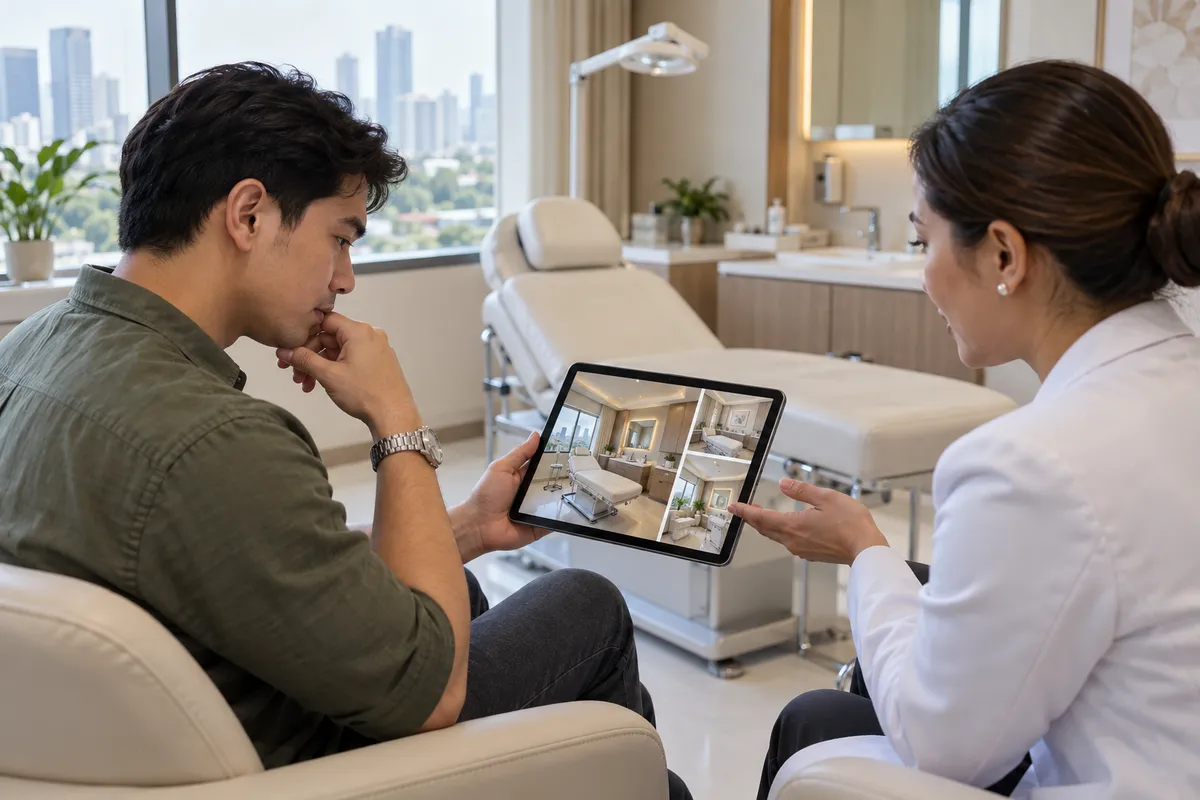
Use clinic photos to frame questions about the actual setting and staff.
